
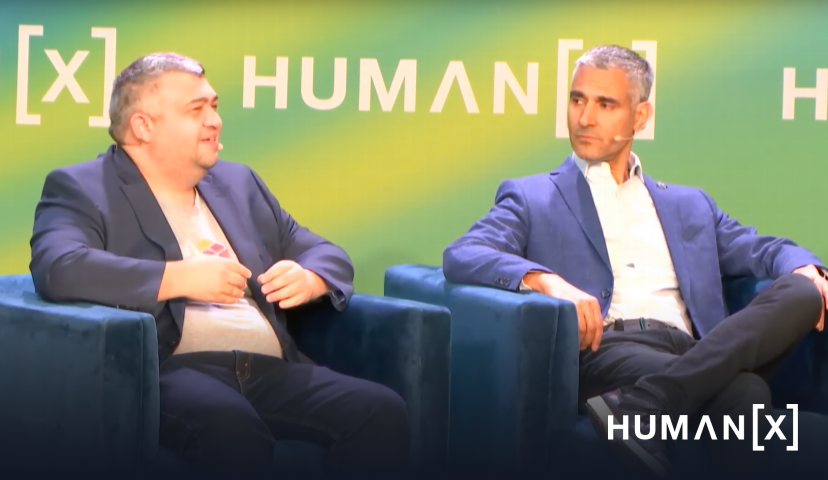
Cybercriminals are moving faster, and with AI in their arsenal, they’re becoming more dangerous. At the recent HumanX 2025 conference, Itai Tevet, CEO and co-founder of Intezer, and Arif Janmohamed, partner at Lightspeed Venture Partners, joined Ksenia Se, founder of Turing Post, for a panel discussion titled “AI at the Frontlines of Cyber Threat Protection.”
Together, they explored how security teams can use AI to make defense operations more proactive and responsive. The main takeaways from the discussion were clear: The cybersecurity landscape is evolving rapidly, defenders must use AI to stay ahead, and now’s the time to prepare your organization for the shift.
Attackers are evolving to blend into the noise
Cybercriminals have wasted no time exploiting generative AI. Personalized phishing attacks, deepfakes, and malicious code generation are becoming alarmingly accessible. But what’s worse, as Itai pointed out, is that attackers aren’t just trying to bypass detection anymore; they’re aiming to be ignored.
Instead of launching blatant, high-severity attacks, cybercriminals are taking actions that register as low-severity, often overlooked alerts. By intentionally blending into the noise, attackers increase the risk of their malicious activities going unnoticed until serious damage is done. By the time the breach is noticed, it’s often too late.
That’s where AI SOC solutions, such as Intezer’s, come into play. Intezer’s Autonomous SOC Platform mimics the way human security analysts work to investigate every alert — even the low-severity ones. This isn’t just automation. It’s intelligence at scale. By taking on tedious, repetitive tasks, AI lets security teams focus on strategy and high-priority threats.
➡️ Learn how Intezer’s Autonomous SOC Platform works here.
Why humans are still critical
AI is powerful but imperfect and not a replacement for human expertise. However, it would be naive to think the human role in detection and incident response won’t change. Cybersecurity professionals must evolve into strategic leaders rather than tactical responders.
Itai likened the incoming transformations to the DevOps movement. Developers and infrastructure teams traditionally operated in silos to write code, manage infrastructure, and ensure applications ran smoothly. This separation often resulted in slow deployments and inefficient processes. Instead, the DevOps movement encouraged the teams to collaborate, communicate, automate, and continuously improve to enable faster innovation and improved stability.
A similar shift is happening in cybersecurity. With AI by their side, analysts who once chased false positive alerts will redirect their focus to designing smarter autonomous processes and ensuring AI systems remain effective against evolving adversarial tactics. The transformation is already underway, with cybersecurity professionals focusing more on strategic oversight, implementing AI agents to carry out tasks, and refining decision-making frameworks to outpace attackers.
👉 See what the agentic AI buzz is all about here.
How to get the AI SOC right
While the promise of the AI SOC is exciting, enterprises must have clear implementation plans to ensure AI-driven security solutions remain effective and reliable. Itai and Arif closed the discussion by offering some sage advice to organizations looking to adopt AI into their cybersecurity practices:
- Embrace autonomous processes: AI thrives on handling repetitive, seemingly low-severity alerts, freeing security analysts to focus on high-severity threats. It’s time to embrace it.
- Invest in upskilling your team: As cybersecurity professionals become strategic overseers, it’s critical to equip them with the skills to refine, manage, and improve AI systems.
- Adopt a layered security approach: Combining AI-driven detection with human decision-making and oversight creates the most effective defense. It’s all about enhancing the security team — not replacing them.
- Continuously evaluate AI performance: Establish clear benchmarks to ensure AI tools perform better than traditional approaches and evolve to meet new threats. Companies that establish scientific benchmarks and performance indicators will get the best results from AI-driven solutions.
👉 Check out this blog post to learn more about Intezer’s scientific approach to quality assurance.
Cybercriminals aren’t slowing down, and neither should you. The sooner defenders embrace AI-driven security solutions, the better off they’ll be to meet new threats head-on.
Watch the full discussion below to hear more insights from Itai and Arif. 👇

Intezer
Count on Intezer AI SOC to triage, investigate and respond to every alert at unmatched speed and accuracy.
In this article
Share article
Related Articles
.svg)
AI SOC
The emergence of the tierless SOC
AI is retiring the SOC pyramid. Learn how a tierless AI SOC investigates 100% of alerts with forensic evidence while your analysts supervise outcomes.
.svg)
Research
5 min
NinjaMare and the enterprise security epidemic hiding behind a harmless label
The PUA label, aka "potentially unwanted application" means nuisance. Adware, toolbars, and other things that change your settings without asking. Our research team's findings say this label is far more serious than a mere nuisance.
.svg)
Alert Triage
AI SOC
3 min
We let a fruit fly brain triage 12,716 real SOC Alerts. Here is what happened.
On behalf of people who run SOCs, we explore how a fly brain triages alerts compared with a boring linear model you could train in eleven seconds.