
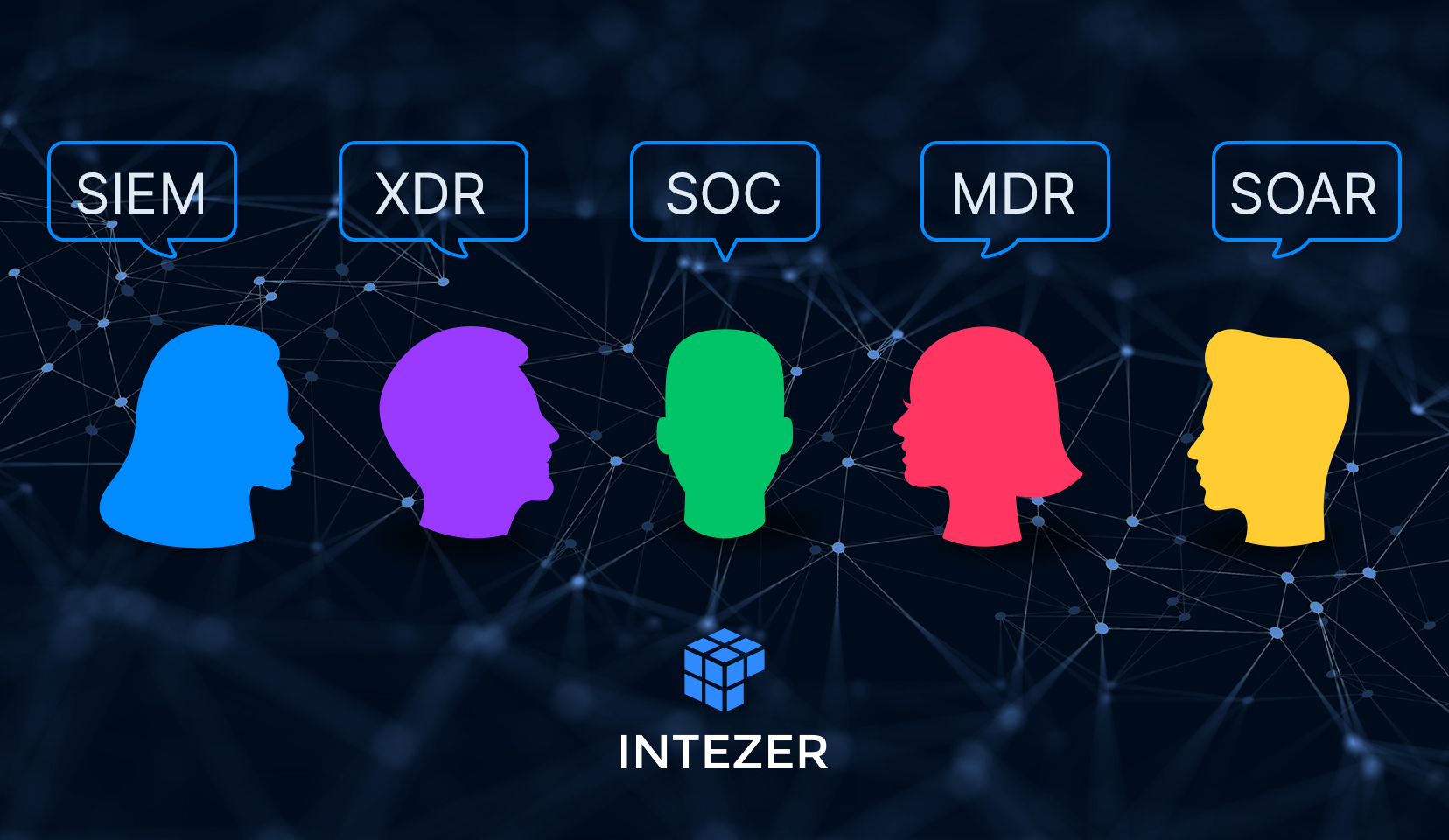
Gartner’s recent Innovation Insight: AI SOC Agents report is an encouraging signal that the concept of an “AI-powered SOC” has reached mainstream awareness. The report recognizes the potential of AI technologies to transform how security operations centers function, especially in augmenting analysts through automation and intelligent workflows.
Yet, while Gartner’s analysis succeeds in capturing the momentum of this space, it falls short in clarifying how and where AI actually fits within the security operations stack. By treating “AI SOC” as a monolithic, undifferentiated category, the report overlooks the crucial distinctions between detection, triage and response, each of which requires a very different kind of AI capability and delivers very different value.
A closer look at Gartner’s analysis
Gartner’s report provides a valuable overview of how AI SOC can assist with detection, alert investigation, and even response recommendation. We wholeheartedly agree with Gartner’s advice that CISOs should evaluate which security activities are “volumetric, troublesome, or low-performing, and which would benefit the most from augmentation with the application of AI”. However, presenting all of the AI SOC functions (and vendors) as part of a single undifferentiated security ecosystem, can be confusing.
This broad framing misses the fact that an AI model designed to improve SIEM detection logic operates on entirely different data, architecture, and feedback loops than one built to support analyst decision-making or response automation. The result is a flattening of a nuanced market into one monolithic category, useful for taxonomy, but not for decision-making.
For CISOs, this lack of segmentation makes it hard to answer the key strategic question: Where should we apply AI first to get tangible operational value?
By contrast, our view is that organizations should start by identifying which part of their operations needs augmentation most, then evaluate AI solutions purpose-built for that domain.
A clearer way to frame the AI SOC market
To understand where AI truly fits in and how it can deliver measurable outcomes, it helps to zoom out and look at the broader security operations stack. As we described in a previous blog post, "Making sense of the AI SOC market", we see three main layers where AI can add value:
Detection (SIEM, XDR)
The first layer converts raw telemetry into actionable alerts. Here, AI can strengthen correlation logic, improve detection models, and reduce false positives. This is largely about data pattern recognition and automation of repetitive analysis.
Triage and Investigation (SOC / MDR)
The middle layer is where human analysts determine which alerts are real incidents worth escalating. This is where AI can truly emulate analyst reasoning, gathering context, cross-referencing intelligence, and presenting likely root causes. Done well, AI here acts as a co-analyst, not a replacement.
Response and Case Management (SOAR)
The final layer coordinates remediation and manages incident workflows. AI can accelerate playbook creation, automate routine case handling, and improve overall response time through dynamic decision logic.
Each layer offers opportunities for AI—but they are fundamentally different problems to solve. When vendors use the term “AI SOC” without specifying which layer they’re addressing, it creates confusion and unrealistic expectations.
A more practical evaluation framework
To move the conversation forward, we recommend a more structured approach to evaluating AI SOC solutions.
Step 1: Identify your target layer
Ask: Which layer of our operations needs the most improvement. Is it detection (SIEM/XDR/Cloud), triage (SOC/MDR), or response (SOAR)?
This helps narrow the field to the right class of solutions rather than chasing the broad “AI SOC” label.
Step 2: Define measurable outcomes
Especially for alert triage and investigation (which is usually handled by an internal SOC or external MDR), establish metrics to compare performance, such as:
- Reduction in mean time to detect (MTTD)
- Noise reduction rate
- Scale of alert coverage
- Consistency across SOC shifts or analyst tiers
- Triage accuracy
These metrics allow organizations to compare vendors on tangible outcomes, not vague AI promises.
Step 3: Evaluate transparency and integration
An effective AI SOC solution should clearly explain its reasoning, integrate easily with your existing tools, and allow human oversight. The goal is augmentation, not opacity.
Read more about why the "AI SOC agent" narrative misses the point.
The way forward
Gartner deserves credit for bringing visibility to an emerging market, but their analysis underscores how early and fluid this space still is. The future of the AI SOC isn’t one product category. It's a set of AI capabilities applied intelligently across the detection–triage–response continuum.
Organizations that treat AI as a modular capability rather than a monolithic product will see the most success. The key is knowing your operational priorities and matching them to the layer where AI can have the greatest impact.
Conclusion
AI is not a magic “SOC-in-a-box.” It’s a set of technologies that, when properly targeted, can transform specific parts of security operations. Gartner’s latest report captures the enthusiasm, but not yet the structure, of this market.
At Intezer, we believe the path forward starts with clarity. Understanding the distinct layers of the SOC, the role AI plays in each, and the outcomes that matter most. Only then can organizations cut through the noise and choose the right AI SOC partner for their needs.
Explore how Intezer delivers complete peace of mind for your security operations!

Zev Schonberg
Zev Schonberg is a product marketing manager with years of experience in deep tech.
As a lead contributor at Intezer, Zev authors research-driven analysis and thought leadership that explores how modern security operations centers can better detect, investigate, and respond to threats at scale.
In this article
Share article
Related Articles
AI SOC
3 min
Analyst firm SACR recognizes Intezer in the AI SOC category
What makes an AI SOC trustworthy? SACR's 2026 research points to evidence, context and verified action. See how Intezer was evaluated.
Company News
4 min
Intezer Workflows. The AI SOC is now complete
Detect, triage, investigate, respond. The entire SOC lifecycle now runs in one platform with AI executing and humans supervising.
CISO
CISO Playbook: Putting Claude to work in security operations
This playbook is for security leaders who know AI belongs in the SOC, but need a practical model for where it actually fits. It’s written for CISOs, SOC leaders, detection engineers, and security teams dealing with alert volume, manual triage, reporting drag, and pressure to justify AI investment.