
Torq Security: Use Cases, Pros/Cons & Top 11 Alternatives
In this article

What Is Torq Security?
Torq Security is a security automation platform designed to streamline and optimize security operations centers (SOCs) through advanced automation, artificial intelligence, and integration capabilities. It provides a unified environment where security teams can automate repetitive tasks, orchestrate complex workflows, and respond to incidents with greater efficiency. By reducing manual intervention, Torq Security aims to improve response times, lower operational costs, and minimize human error.
The platform is built to support modern security needs, including the management of high alert volumes, investigation of threats, and coordination of incident response activities, with a focus on hyperautomation and AI-driven decision-making. Its integrations with a wide range of security tools further allow it to provide end-to-end automation and actionable insights.
Key capabilities of Torq security include:
- AI SOC platform: Unifies AI agents, automation, investigations, case management, and response workflows into a single platform that accelerates incident handling and scales SOC operations.
- Agentic AI for security operations: Uses AI agents to perform multi-step investigations, collect evidence, summarize findings, recommend actions, and coordinate responses with human oversight.
- Security hyperautomation: Automates complex cross-tool workflows for enrichment, case creation, remediation, notifications, and reporting using AI-driven decisions and predefined policies.
- Automated alert triage: Enriches, prioritizes, and correlates alerts with threat intelligence to generate verdicts, route incidents, or trigger automated response workflows.
- Investigation and case management: Centralizes alerts, evidence, threat intelligence, response actions, and investigation history to improve analyst collaboration and incident tracking.
Torq security alternatives and competitors include:
- AI SOC and Autonomous SOC Platforms:Intezer, Prophet Security, Dropzone AI
- Security Orchestration, Automation, and Response (SOAR) Platforms:Tines, Cortex XSOAR, Splunk SOAR, Swimlane Turbine, FortiSOAR
- SIEM Platforms with Built-In Automation:Google Security Operations, Microsoft Sentinel, Exabeam
This is part of a series of articles about SOAR security
Key Capabilities of Torq Security
AI SOC Platform
Torq Security provides an end-to-end AI SOC platform that combines agentic AI and security hyperautomation to help SOC teams triage, investigate, and respond to threats at enterprise scale. The platform is designed to act as a central operating layer for security operations, connecting alerts, investigations, cases, automation workflows, and response actions into a unified process. This helps teams move faster from initial detection to validated incident response, while maintaining visibility into the reasoning and actions behind each step.
The platform is especially relevant for SOCs dealing with high alert volumes, fragmented tooling, and repetitive Tier 1 tasks. Torq positions the AI SOC as a way to scale SOC capacity by automating triage, enrichment, prioritization, and response coordination, allowing analysts to focus on the most critical threats instead of manually processing every alert.
Agentic AI for Security Operations
Torq uses agentic AI to support security operations with AI agents that can perform multi-step security work across alerts, investigations, and response workflows. These agents can help gather evidence, analyze context, summarize findings, recommend next steps, and coordinate actions across connected security tools. Torq describes this as combining AI agents, case management, and hyperautomation to improve incident response speed, scale, and quality.
This agentic approach is different from basic automation because it is designed to support reasoning-oriented SOC tasks, not only predefined rule execution. For example, AI agents can assist with threat hunting, investigation summaries, evidence collection, and response coordination, while still supporting human-on-the-loop confirmation for sensitive actions. This allows organizations to automate more of the investigation lifecycle without losing analyst oversight or operational control.
Security Hyperautomation
Torq’s security hyperautomation capabilities allow organizations to automate complex, cross-tool SOC workflows. The platform can connect security tools, data sources, and operational systems so that alerts can trigger enrichment, case creation, routing, containment, remediation, notification, and reporting actions. This helps reduce manual handoffs and makes response processes more consistent across different teams and environments.
Hyperautomation is central to Torq’s value proposition because it extends beyond simple playbooks. It enables dynamic workflows that can incorporate AI-driven decisions, case context, threat intelligence, severity scoring, and predefined response policies. This allows SOC teams to standardize common processes while still adapting workflows to the specific risk level and context of each alert or incident.
Automated Alert Triage
Torq Auto Triage helps SOC teams process alerts by generating verdicts, recommended actions, and triage outcomes that can flow into case management, automated response agents, and agentic workflows. This makes triage the entry point into a broader AI SOC process, rather than a disconnected task handled separately from investigation and response.
The platform is designed to reduce alert fatigue by automating enrichment, prioritization, and early-stage analysis. Alerts can be scored by severity, correlated with relevant telemetry and threat intelligence, and either routed to the right responder or resolved through predefined playbooks when appropriate. This helps analysts spend less time on repetitive review and more time on complex, high-risk incidents.
Investigation and Case Management
Torq includes AI-driven case management capabilities that help SOC teams organize alerts, investigation context, response steps, and outcomes in one place. Cases can include enriched evidence, correlated telemetry, threat intelligence, severity scoring, investigation summaries, and recommended next steps. This gives analysts a more complete view of each incident and helps reduce the time spent switching between separate tools.
Case management also supports more consistent incident handling by connecting triage results to response workflows. Torq’s platform can route cases to the right responder, coordinate automated or human-approved response actions, and preserve documentation of the investigation and actions taken. This makes it easier for SOC teams to track progress, escalate issues, review decisions, and improve operational accountability over time.
Common Torq Security Use Cases
Torq Security supports a range of security automation use cases that help SOC teams reduce manual work, accelerate incident response, and apply consistent workflows across security operations. Its integrations with security, identity, and cloud platforms enable automated investigation, orchestration, and remediation for common operational scenarios.
Key use cases include:
- SOC automation: Automates alert triage, incident escalation, and response workflows across the SOC, helping analysts focus on complex investigations while improving consistency and reducing manual effort.
- Phishing investigation and response: Automates phishing email analysis by extracting indicators of compromise (IOCs), enriching them with threat intelligence, and triggering remediation actions such as URL blocking or user notifications.
- Identity threat response: Detects and responds to identity-based threats by monitoring user activity and automating actions such as account suspension, password resets, or multi-factor authentication enforcement.
- Cloud security operations: Automates cloud security workflows, including configuration monitoring, misconfiguration remediation, policy enforcement, vulnerability management, and compliance across multi-cloud environments.
Key Torq Security Limitations
Although Torq Security receives positive feedback for its automation capabilities and flexibility, users have identified several areas where the platform can be challenging to use or maintain. These limitations were reported by users on the G2 platform.
- Lacks forensic alert triage and investigation.Torq is a relative newcomer to triage and investigation and their AI SOC solution relies heavily on LLMs, which can result in hallucinations.
- Licensing can be complex. Users note that the licensing model is detailed and may require regular attention to ensure products are licensed correctly.
- There is a learning curve. While the documentation is comprehensive, the platform offers many features and best practices that can take time for new users to learn.
- Advanced features may require training. Teams may need additional training to use advanced capabilities effectively and customize reports.
- The search experience can be inconsistent. Some users report that selected data is not always retrieved correctly, and they believe the search functionality could be improved.
- The administrative interface can be less intuitive. Certain administrative tasks may require extra effort because parts of the interface are not always straightforward to navigate.
- Some integrations require vendor assistance. In some situations, users have needed help from the Torq support team to enable integrations with third-party tools.
- Troubleshooting can be difficult. When scans or communications fail, identifying the exact point of failure can be challenging.
- Platform updates may require workflow adjustments. Users have encountered errors after changes in connected tools, requiring workflow steps to be updated to maintain compatibility.
- Debugging complex workflows could be improved. Users working with nested logic and multiple branching paths report that debugging can be difficult and suggest a more advanced visual debugger or simulation environment.
- Resource usage may temporarily affect system startup. Some users report higher resource consumption during operating system startup, resulting in slower boot times before performance returns to normal.
Notable Torq Security Alternatives and Competitors
In light of the limitations above, many organizations are evaluating alternatives to Torq. The table below summarizes some of the leading alternative solutions. We cover each of these in more detail below.
How we selected these tools: We shortlisted security automation and AI SOC platforms based on their ability to triage alerts, investigate incidents, orchestrate cross-tool workflows, and coordinate response across the security stack.
| Category | Solution | Best For | Key Strengths | Things to Consider |
|---|---|---|---|---|
| AI SOC Platforms | 1. Intezer | SOC teams automating full alert triage and forensic investigation | Investigates 100% of alerts with forensic depth and high verdict accuracy | Primarily suitable for enterprises |
| AI SOC Platforms | 2. Prophet Security | Teams wanting autonomous, reasoning-based alert investigation | AI agents that plan and run investigations like an analyst | Emerging platform with limited independent peer reviews |
| AI SOC Platforms | 3. UnderDefense | Teams that want every alert verdicted on top of their existing security stack | AI triage plus 24/7 senior analysts, CISO Copilot, and an included IR retainer | Runs on your existing stack, so coverage depends on the tools you already own |
| SOAR Platforms | 4. Tines | Teams building no-code security and IT workflows | Flexible workflow builder with broad API connectivity | Complex workflows can be hard to debug and navigate |
| SOAR Platforms | 5. Cortex XSOAR | SOCs standardizing playbook-driven incident response | Large playbook and integration marketplace, war room | Steep learning curve and higher licensing cost |
| SOAR Platforms | 6. Splunk SOAR | Splunk customers automating response workflows | 2,800+ automated actions and visual playbook editor | Expensive; integration outside Splunk can be involved |
| SOAR Platforms | 7. Swimlane Turbine | Enterprises and MSSPs scaling low-code automation | High-throughput low-code automation with Hero AI | Deployment and playbook design need skilled engineers |
| SOAR Platforms | 8. FortiSOAR | Fortinet-aligned SOC, NOC, and OT automation | 700+ connectors, 6,500 playbooks, FortiAI assistance | Steep learning curve; documentation gaps for some cases |
| SIEM Platforms | 9. Google Security Operations | Teams unifying SIEM, SOAR, and threat intel | Petabyte-scale search, curated detections, Gemini AI | Implementation is complex; pricing can be hard to model |
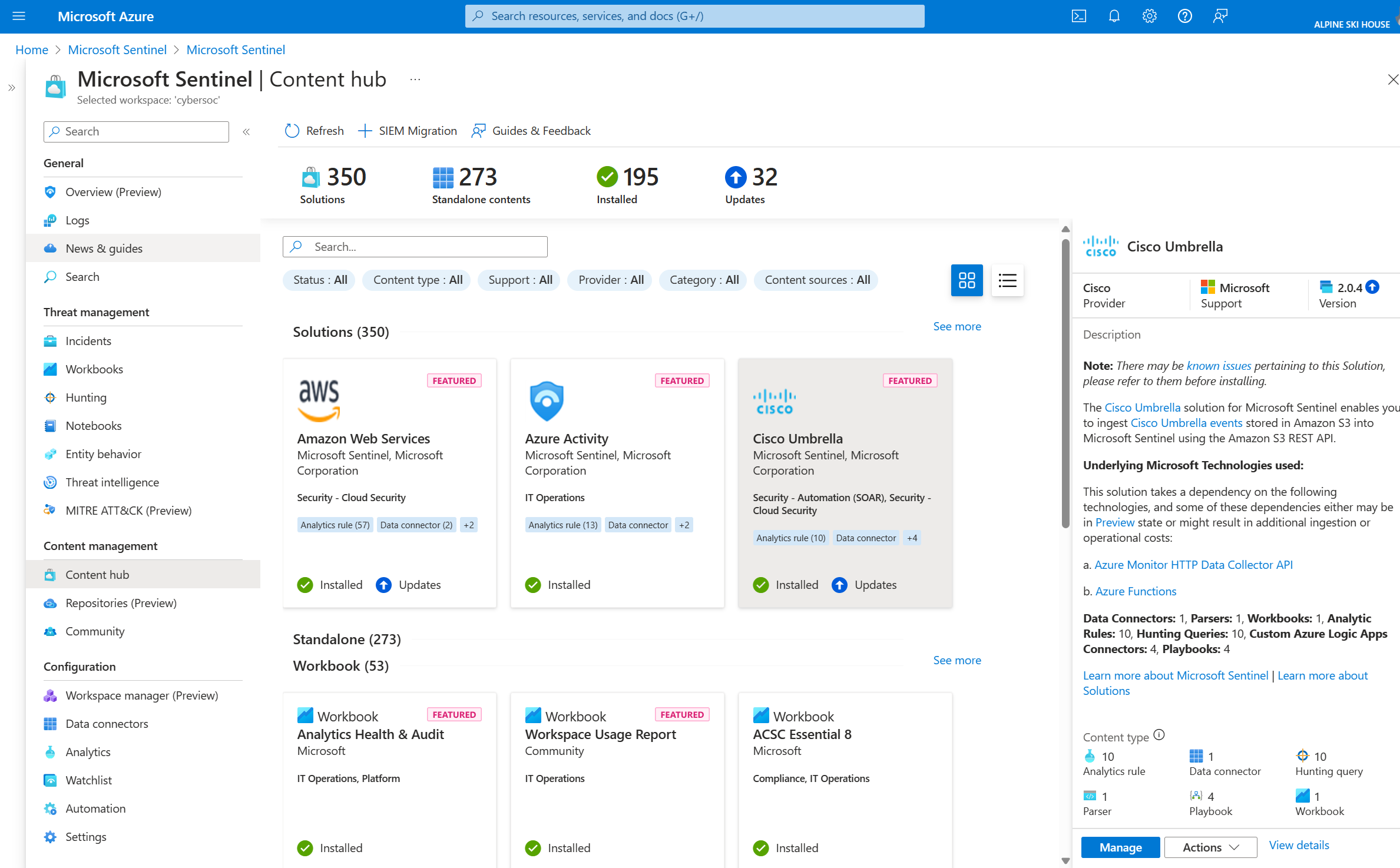
| SIEM Platforms | 10. Microsoft Sentinel | Microsoft-centric SOCs wanting cloud-native SIEM | Cloud-native SIEM with built-in SOAR, UEBA, and Copilot | Ingestion-based cost and KQL learning curve |
| SIEM Platforms | 11. Exabeam | Teams prioritizing behavioral analytics and TDIR | UEBA and agent behavior analytics with AI-driven TDIR | Setup complexity; fewer prebuilt playbooks so far |
Related content: See our guide to the top AI SOC platforms.
AI SOC and Autonomous SOC Platforms
1. Intezer

Best for: SOC teams automating full alert triage and forensic investigation.
Strengths: Investigates every alert at forensic depth with high verdict accuracy.
Things to consider: The interface can feel detail-heavy for new users.
Intezer is an AI SOC platform that automatically triages and investigates security alerts across endpoint, identity, phishing, network, cloud, and SIEM sources. It combines agentic AI reasoning with deterministic forensic techniques, including endpoint forensics, memory analysis, reverse engineering, network artifact analysis, and sandboxing.
The platform investigates every alert, including low-severity ones, and escalates only a small share that need a person, with clear context and recommended actions. It connects to existing security tools, feeds investigation outcomes back into detection engineering, and can automate response actions with human approval or route incidents to a SOAR or ticketing system.
Key features include:
- Full alert coverage.Triages 100% of incoming alerts regardless of severity, so low and medium signal alerts are investigated rather than ignored.
- Forensic investigation.Combines endpoint analysis, memory scanning, reverse engineering with agentic AI to determine whether activity is malicious.
- Agentic AI triage.Uses deterministic forensic analysis alongside agentic AI to auto-resolve false positives and surface real threats with supporting evidence.
- Response workflows.A built-in workflow engine replaces standalone SOAR for SOC automation, closing alerts back in source tools, isolating devices, disabling users, and running human approval loops, all triggered by forensic verdicts. Workflows can be generated from plain-language descriptions and refined visually.
- Detection engineering feedback. Feeds investigation results back into SIEM and EDR detection rules to improve MITRE ATT&CK coverage and reduce recurring noise.
- Integrations and access.Connects to SIEMs, EDRs, phishing pipelines, ticketing, and existing SOAR tools for teams migrating gradually, and can be operated through a REST API, Python SDK, and MCP.
- Pricing is based on number of endpoints and not alert volume, allowing customers to send 100% of their alerts with predictable and scalable pricing.
Intezer is highly rated on Gartner Peer Insights. See what users have to say.
Limitations:
- Requires mature telemetry to work. Investigation quality depends on the customer’s existing EDR/SIEM health. Organizations with immature tooling won’t get full value out of the box.
- MITRE ATT&CK coverage has a realistic ceiling with Intezer benchmarking 60–70% as “top-tier” and flags anything higher as likely inflated. Some technique categories remain outside reliable coverage for any vendor.
- Focused on enterprise-size customers with a minimum of 1,000 employees.
2. Prophet Security
Best for: Teams wanting autonomous, reasoning-based alert investigation.
Strengths: AI agents plan and run investigations the way an analyst would.
Things to consider: Emerging platform with limited independent peer reviews.
Prophet Security is an agentic AI SOC platform that uses autonomous AI agents to triage, investigate, and respond to alerts, and to run threat hunts. Its reasoning agents summarize each alert, build an investigation plan, ask probing questions, and pivot across the connected stack to gather evidence before reaching a determination.
The platform spans alert investigation and remediation, scalable threat hunting, and continuous detection tuning. It identifies true positives, prioritizes critical threats, and supports both autonomous remediation for high-confidence cases and human-in-the-loop decision points for complex ones.
Key features include:
- Agentic AI SOC analyst: Summarizes alerts, builds an investigation plan, and gathers evidence across the stack to reach a determination.
- Autonomous and supervised response: Enables rapid resolution with autonomous remediation for high-confidence threats and human-in-the-loop review for complex cases.
- AI threat hunter: Lets analysts start hunts in natural language, run always-on and scheduled hunts, and use a library of pre-codified hunt templates.
- Adaptive reasoning: Ingests organizational context and learns from analyst feedback to refine reasoning logic and align with policies.
- Transparent investigations: Shows its reasoning for every investigation, including the investigative plan, the queries used, and the evidence gathered.
- Bi-directional connectors: Integrates with security tools and case management to support the full investigation lifecycle rather than simple alert ingestion.
Limitations (based on publicly available sources):
- Emerging track record: As a newer platform, it has less independent peer-review coverage than long-established SOAR and SIEM vendors.
- Scope boundaries: It focuses on triage, investigation, hunting, and detection tuning, so it works alongside a SIEM rather than replacing detection or log retention.
- Autonomy governance: As an agentic system built on frontier models, teams need to define accountability and data-handling controls for autonomous decisions.
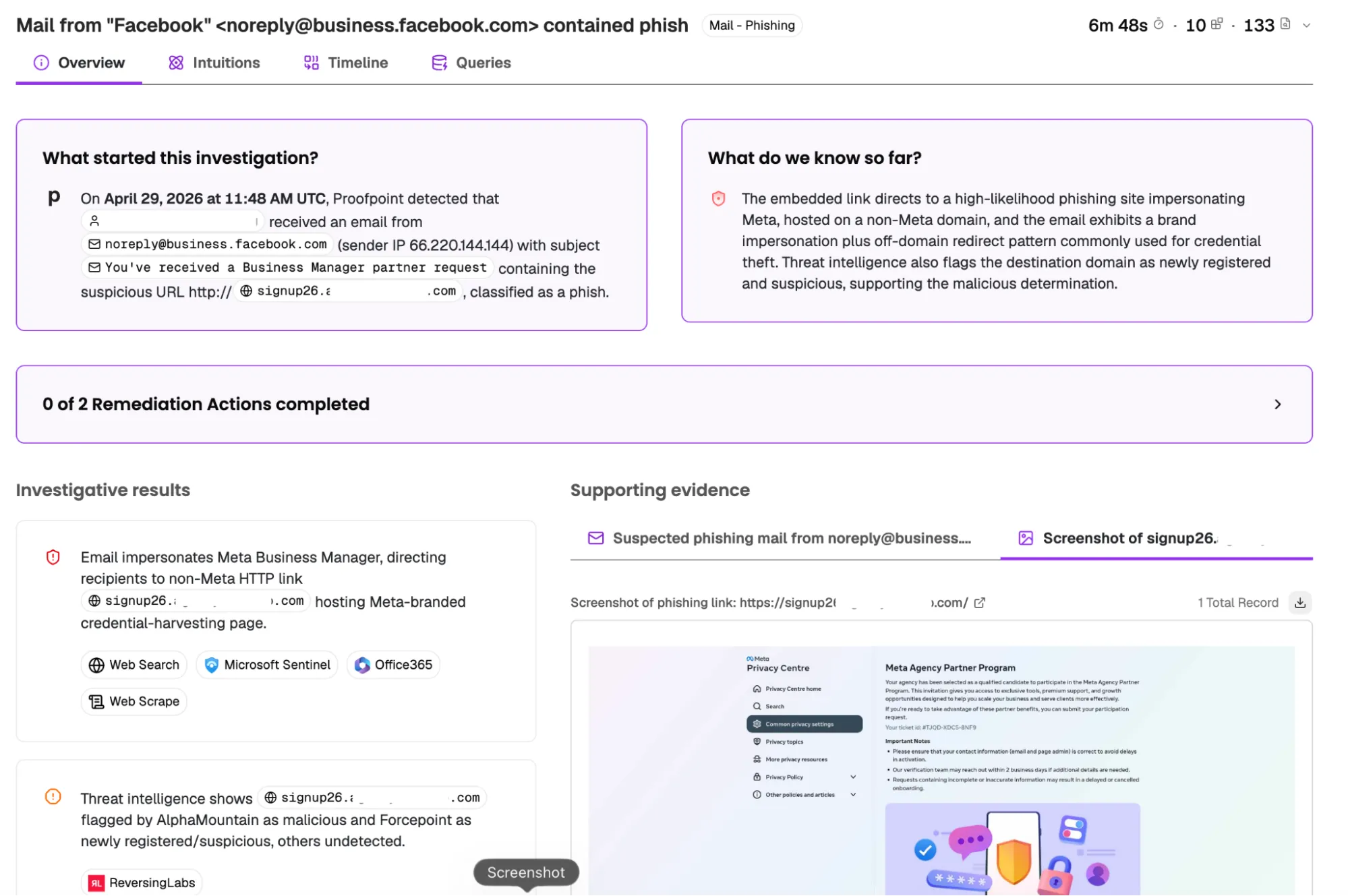
Source: Prophet Security
3. UnderDefense Agentic AI SOC

Best for: Teams that want every alert verdicted on top of their existing security stack.
Strengths: AI triage plus 24/7 senior analysts, CISO Copilot, and an included IR retainer.
Things to consider: Runs on your existing stack, so coverage depends on the tools you already own.
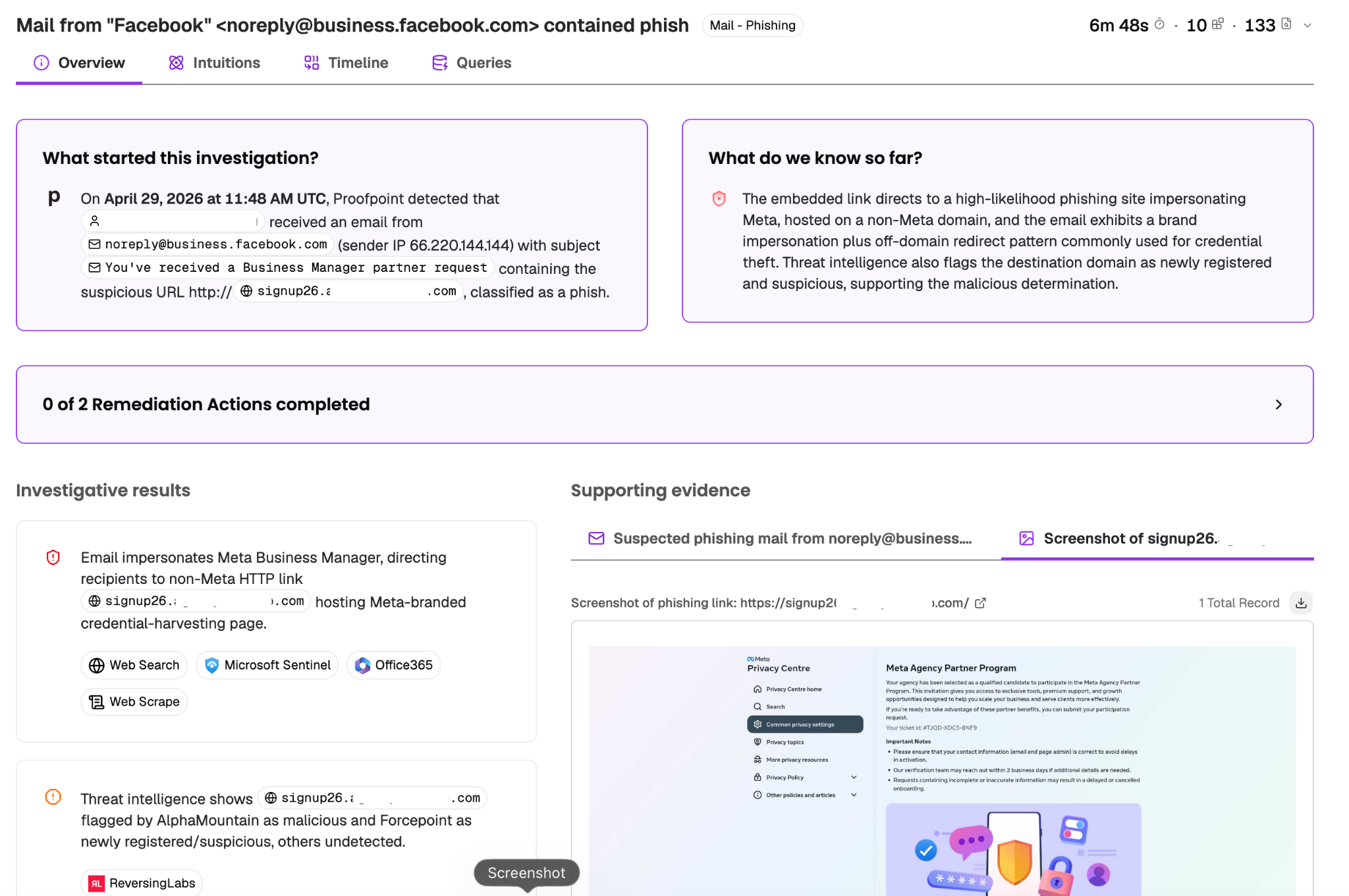
UnderDefense Agentic AI SOC runs on top of the security stack you already own. Every alert gets a verdict – nothing deprioritized, nothing missed. When context is missing, AI asks your team directly. When a breach needs humans on a keyboard, senior analysts are already there – reachable over Slack, Teams, or email, hunting threats across every environment, 24/7, with no handoff delays and no gaps in coverage.
Key features include:
- Your existing security investments stay intact: No replacement projects, no new procurement cycles. AI operates on top of what you already own and tested.
- Every alert gets a verdict, not a summary: Nothing slips through. AI delivers a conclusion with evidence – your team decides what to act on, not what to look at.
- Fewer escalations that go nowhere: AI resolves ambiguous alerts by gathering missing context automatically. Your analysts stop chasing and start deciding.
- CISO Copilot: Answers plain-language questions about security posture in seconds, without building a dashboard or opening a ticket.
- Included IR Retainer: A dedicated team of senior analysts steps in for hands-on containment, with no separate contract to negotiate during an incident.
Security operations at machine speed, with humans where it counts. That is not a roadmap item, it is how UnderDefense ships today.
Security Orchestration, Automation, and Response (SOAR) Platforms
4. Tines

Best for: Teams building no-code security and IT workflows.
Strengths: Flexible workflow builder with broad API connectivity.
Things to consider: Complex workflows can be hard to debug and navigate.
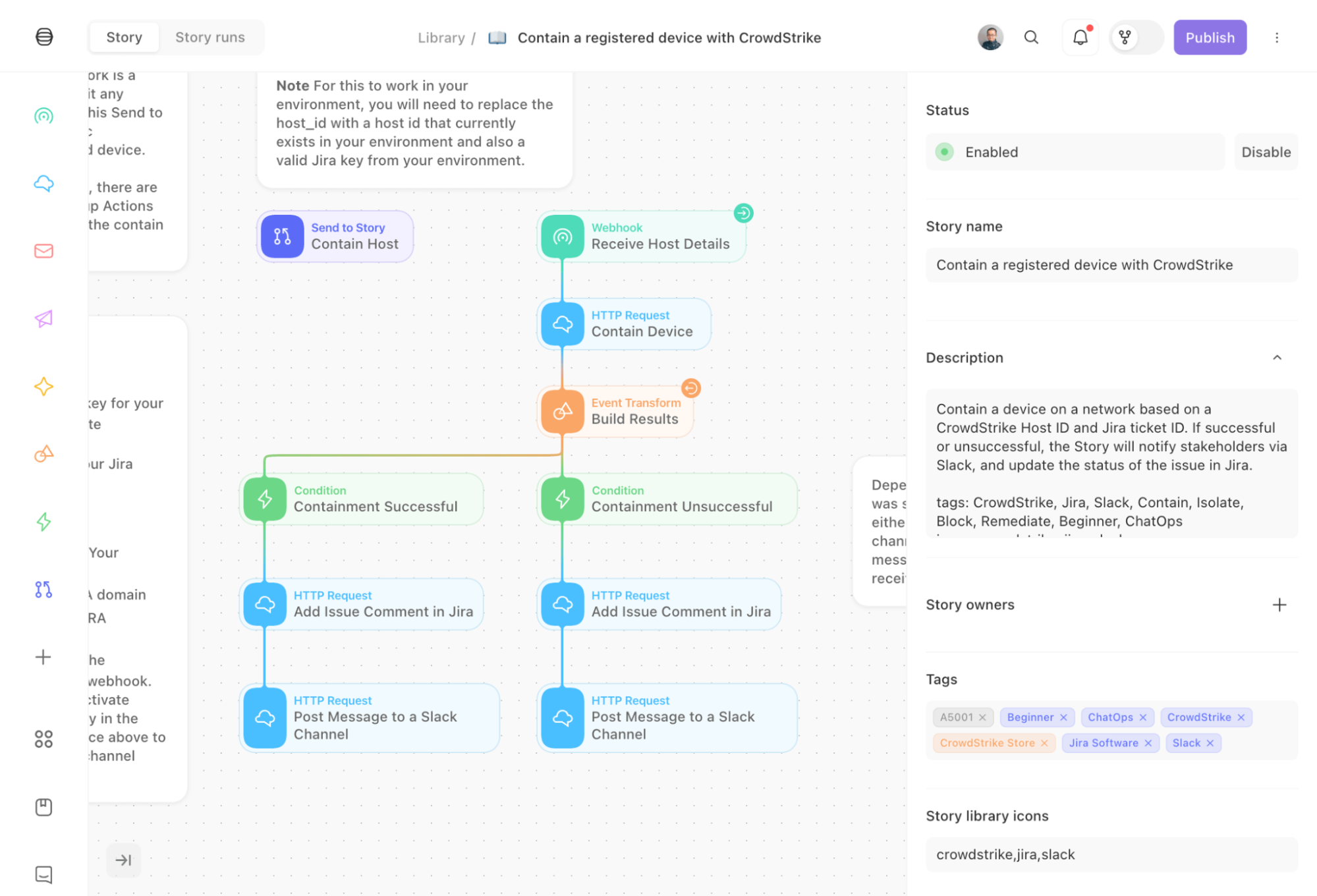
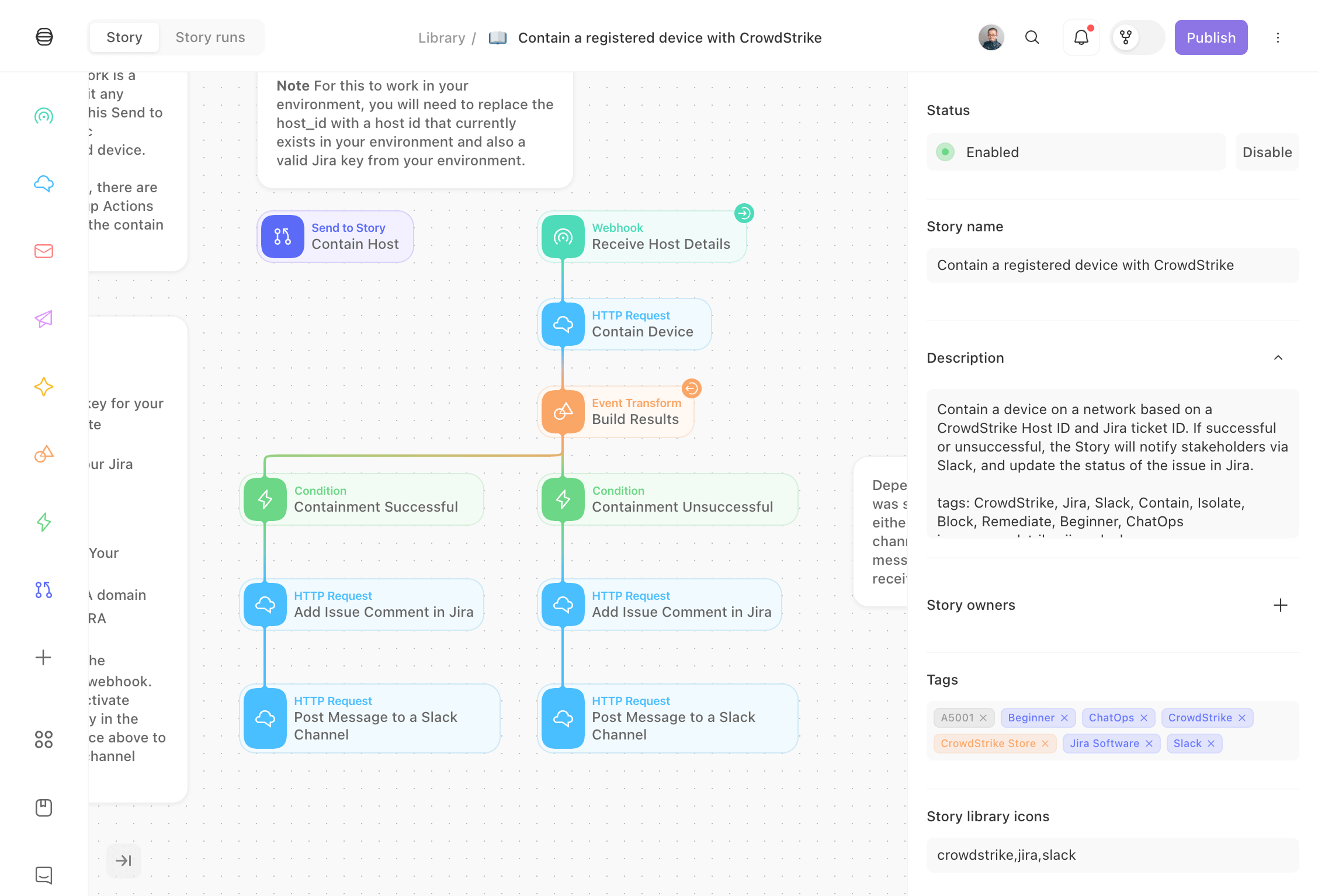
Tines is a workflow orchestration and automation platform for security and IT teams. It connects tools, data, and people so teams can build, run, and monitor workflows that range from fully automated to human-driven, and it can connect to any product that offers an API.
The platform includes a visual workflow builder, case management, an AI copilot, and autonomous agents. It lets teams apply the level of automation that fits each workflow, from deterministic logic to human-in-the-loop steps, within a single environment with governance and monitoring.
Key features include:
- Storyboard builder: Provides a flexible, intuitive workflow builder for designing and connecting automation steps visually.
- Cases: Offers case and incident management so teams can investigate, remediate, and report in a shared workspace.
- Agents: Enables autonomous workflow activity and user interaction for tasks that benefit from AI involvement.
- Workbench AI copilot: Provides a Tines-powered AI chat interface to take action and access data in real time.
- App connectivity: Connects to tools, large language models, and internal apps through APIs, with no plugins or custom code required for integrations.
- Monitoring: Gives visibility into workflow performance, trends, and impact.
Limitations (as reported by users on G2):
- Debugging complexity: As workflows grow, managing and navigating them can feel cluttered and harder to troubleshoot.
- Cost for smaller teams: Some users find pricing expensive for smaller teams or lighter use cases.
- Build-from-scratch effort: Teams often build their own structures and playbooks, which can be demanding without a defined strategy.
- Reporting depth: Reporting focuses on metrics like time saved and offers less depth for tracking cases and outcomes.
- Workflow limits: Users note performance-related workflow time limits they would prefer to remove.
Source: Tines
5. Cortex XSOAR

Best for: SOCs standardizing playbook-driven incident response.
Strengths: Large playbook and integration marketplace with a built-in war room.
Things to consider: Steep learning curve and higher licensing cost.
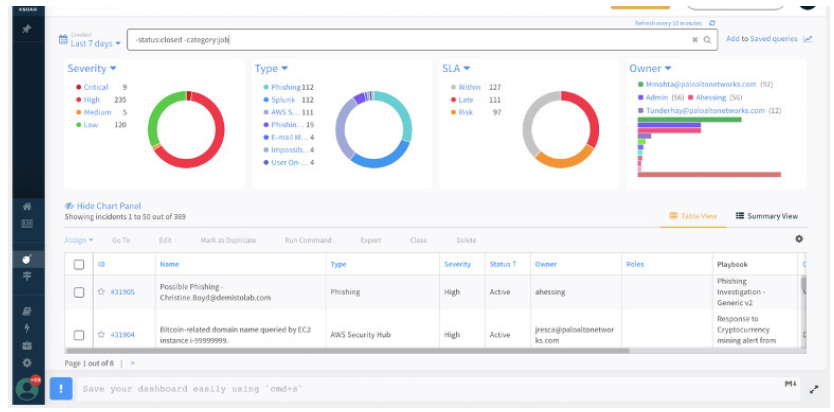
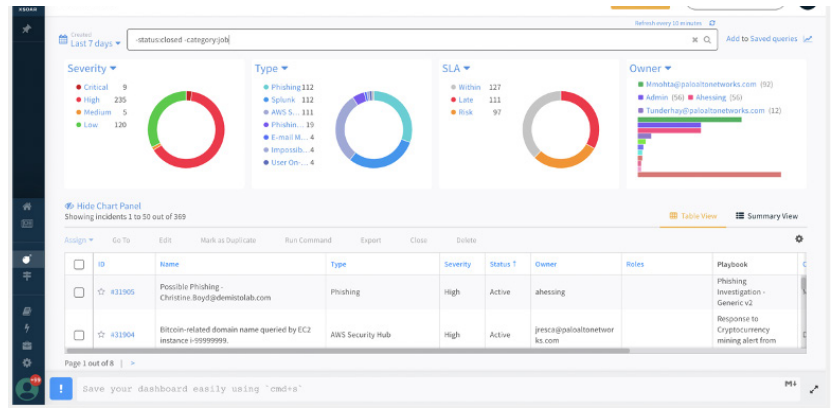
Cortex XSOAR is a security orchestration, automation, and response platform from Palo Alto Networks. It unifies automation, case management, real-time collaboration, and threat intelligence management so security teams can reduce alert noise, standardize response, and handle incidents across the security stack.
The platform centers on playbooks that codify analyst actions into visual, task-based workflows, backed by a marketplace of prebuilt integrations and automation packs. It includes a war room for real-time investigation and collaboration, with auto-documentation for knowledge sharing and audit reporting.
Key features include:
- Playbook automation: Codifies analyst actions into visual, task-based playbooks built with a drag-and-drop editor and a library of executable actions.
- Integration marketplace: Offers hundreds of prebuilt integrations and automation content packs deployable from the marketplace.
- War room: Provides a virtual space for incident investigation and real-time collaboration, with ChatOps and CLI for on-the-fly work.
- Threat intel management: Automates indicator processing and scoring and maps external threats to incidents, with intelligence from Unit 42.
- Auto-documentation: Records actions taken by playbooks and analysts for knowledge sharing and audit reporting.
- Flexible deployment: Available as a SaaS or on-premises solution with a multitenant architecture for MSSPs.
Limitations (as reported by users on G2):
- Learning curve: Users report configuration can be complex and proficiency takes considerable time.
- Reporting customization: Some users want more reporting customization and improvement.
- Cost: The pricing and licensing model is seen as expensive compared to some competitors.
- Ecosystem fit: Integration depth is strongest within the Palo Alto ecosystem, and some users note fewer third-party application connectors.
- Performance under load: Users report the system can slow down during a high influx of alerts.
Source: Palo Alto Networks
6. Splunk SOAR

Best for: Splunk customers automating response workflows.
Strengths: 2,800+ automated actions with a visual playbook editor.
Things to consider: Expensive, and integration outside Splunk can be involved.
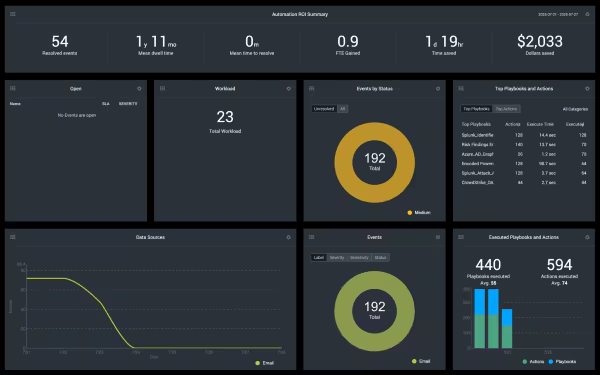
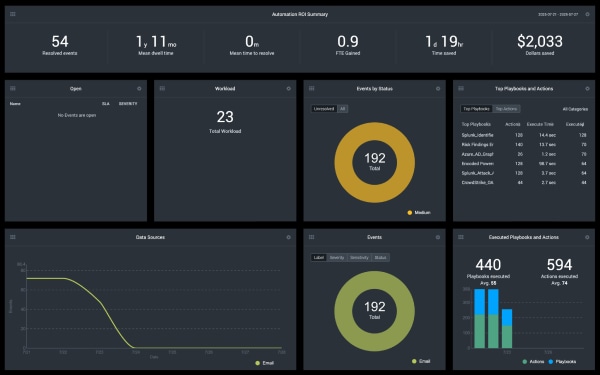
Splunk SOAR is the security orchestration, automation, and response platform from Splunk. It orchestrates the security stack by connecting third-party tools and automating actions, and its capabilities can also run inside Splunk Enterprise Security for a unified workflow.
The platform consolidates alerts and data from tools in the environment, then uses playbooks to automate tasks from small steps to end-to-end use cases. Playbooks draw on the MITRE ATT&CK and D3FEND frameworks and can be built in a visual editor or extended with Python.
Key features include:
- Automated playbooks: Executes actions across security and IT tools in seconds, with prebuilt playbooks aligned to foundational SOC tasks.
- App integrations: Connects across 300+ third-party tools and supports 2,800+ automated actions to coordinate workflows.
- Visual playbook editor: Lets users assemble custom workflows from prebuilt code blocks, with intuitive editing for coders and non-coders.
- Case management: Supports task segmentation, assignment, and documentation for a collaborative investigative process.
- Built-in intelligence: Provides an investigation panel to prioritize threats, with research and insights from the Splunk Threat Research Team.
- Flexible deployment: Deploys via cloud, on-premises, or hybrid, and integrates with Splunk Enterprise Security.
Limitations (as reported by users on G2):
- Cost: Users find the product expensive, which can be challenging for smaller organizations and projects.
- Learning curve: The interface presents a lot of information that can be difficult for beginners to process.
- Documentation: Some users report the available documentation is not comprehensive enough.
- External integrations: Integrating with tools outside the Splunk ecosystem can be more involved.
- Playbook debugging: At scale, log traces are not always intuitive when a playbook step fails.
Source: Splunk
7. Swimlane Turbine

Best for: Enterprises and MSSPs scaling low-code automation.
Strengths: High-throughput low-code automation with Hero AI agents.
Things to consider: Deployment and playbook design need skilled engineers.
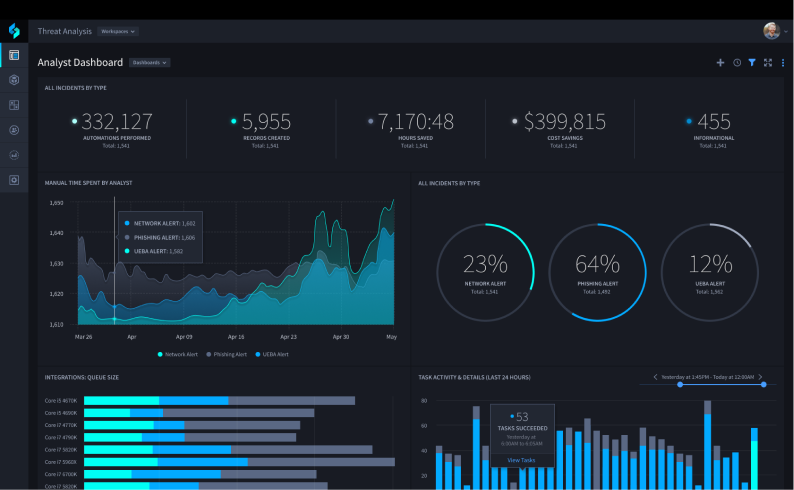
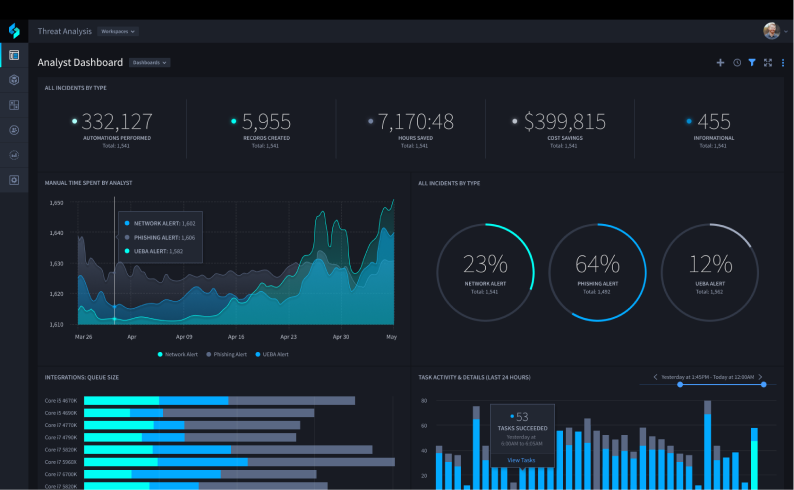
Swimlane Turbine is a low-code security automation and hyperautomation platform. It unifies security teams, tools, and telemetry into a single system of record and covers use cases across the SOC and beyond, including AI SOC, vulnerability response, and compliance readiness.
The platform combines automation, generative AI, and low-code playbooks with case management, dashboards, and reporting. Its Hero AI capabilities let analysts run automated responses through AI prompts, generate playbooks with an agent, and deploy expert AI agents inside deterministic playbooks with guardrails.
Key features include:
- Low-code playbooks: Builds workflows and playbooks through a visual, low-code approach that does not depend on Python development experience.
- Hero AI: Executes automated responses from AI prompts and generates or modifies playbooks with the Playbook Generator Agent.
- Expert AI agents: Deploys AI agents inside playbooks to manage dynamic reasoning with full context and guardrails.
- Case management and dashboards: Provides case management, customizable dashboards, and reporting as a system of record for security teams.
- Broad integrations: Connects across security tools and telemetry to reduce context switching across siloed ecosystems.
- Scale and deployment: Executes high volumes of automated actions and supports enterprise and MSSP operations, with FedRAMP High certification.
Limitations (as reported by users on G2):
- Deployment effort: Initial deployment and playbook design are resource-intensive and call for skilled engineering.
- Upgrade process: The update and upgrade process is more involved than some products, and upgrades can occasionally fail.
- Support responsiveness: Some users report support can be slow to respond.
- Interface design: A few users feel the interface could be modernized for easier navigation.
- Integration gaps: Not all integrations are seamless, and some connectors need manual configuration or a request.
Source: Swimlane
8. FortiSOAR

Best for: Fortinet-aligned SOC, NOC, and OT automation.
Strengths: 700+ connectors and 6,500 playbooks with FortiAI assistance.
Things to consider: Steep learning curve and documentation gaps for some cases.
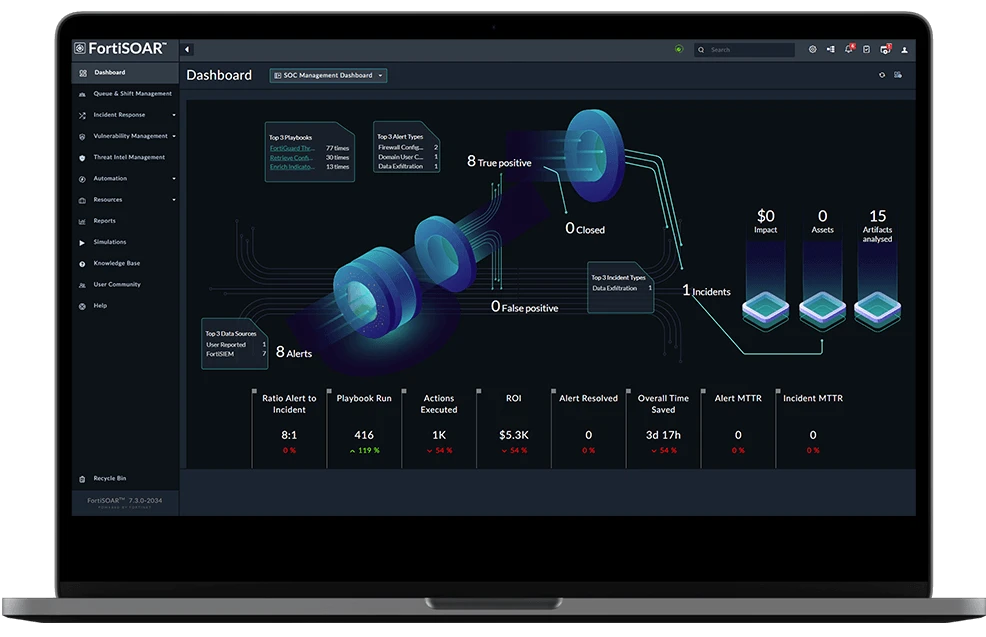
FortiSOAR is Fortinet's security orchestration, automation, and response platform. It centralizes incident management and automates analyst activities so teams can standardize and execute investigation and response workflows from a central operations hub across IT, OT, and enterprise functions.
The platform provides broad integrations, prebuilt workflows, and playbook creation, and adds FortiAI for generative AI assistance and a machine-learning recommendation engine. It supports SOC, NOC, and OT use cases, with deployment options across SaaS, on-premises, public cloud, and MSSP partners.
Key features include:
- Comprehensive automation: Offers 700+ integrations and 6,500 playbooks to support SOC, NOC, and OT efficiency across use cases.
- FortiAI assistance: Uses natural language and generative AI to guide and automate investigation, response, and playbook building.
- Recommendation engine: Applies a machine-learning recommendation engine to help analysts make informed decisions.
- Built-in threat intelligence: Draws on FortiGuard Labs intelligence and public sources to enrich investigations and power actions.
- No/low-code playbook creation: Provides a visual drag-and-drop design experience with rapid development modes.
- Asset and workforce management: Tracks IT and OT assets, prioritizes by risk, and manages task assignment, queues, and SLA reporting.
Limitations (as reported by users on PeerSpot):
- Learning curve: Users report the learning curve is high and playbook creation can be difficult on the engineering side.
- Documentation gaps: Some users note documentation is lacking for certain use cases and connectors.
- Cost: The product is described as expensive, with users wanting a more competitive licensing model.
- Support and expertise: Some users report technical support and vendor product experience could improve.
- Interface for builders: Users note the playbook-building interface can be difficult for newcomers.
Source: Fortinet

SIEM Platforms with Built-In Automation
9. Google Security Operations

Best for: Teams unifying SIEM, SOAR, and threat intelligence.
Strengths: Petabyte-scale search, curated detections, and Gemini AI.
Things to consider: Implementation is complex, and pricing can be hard to model.
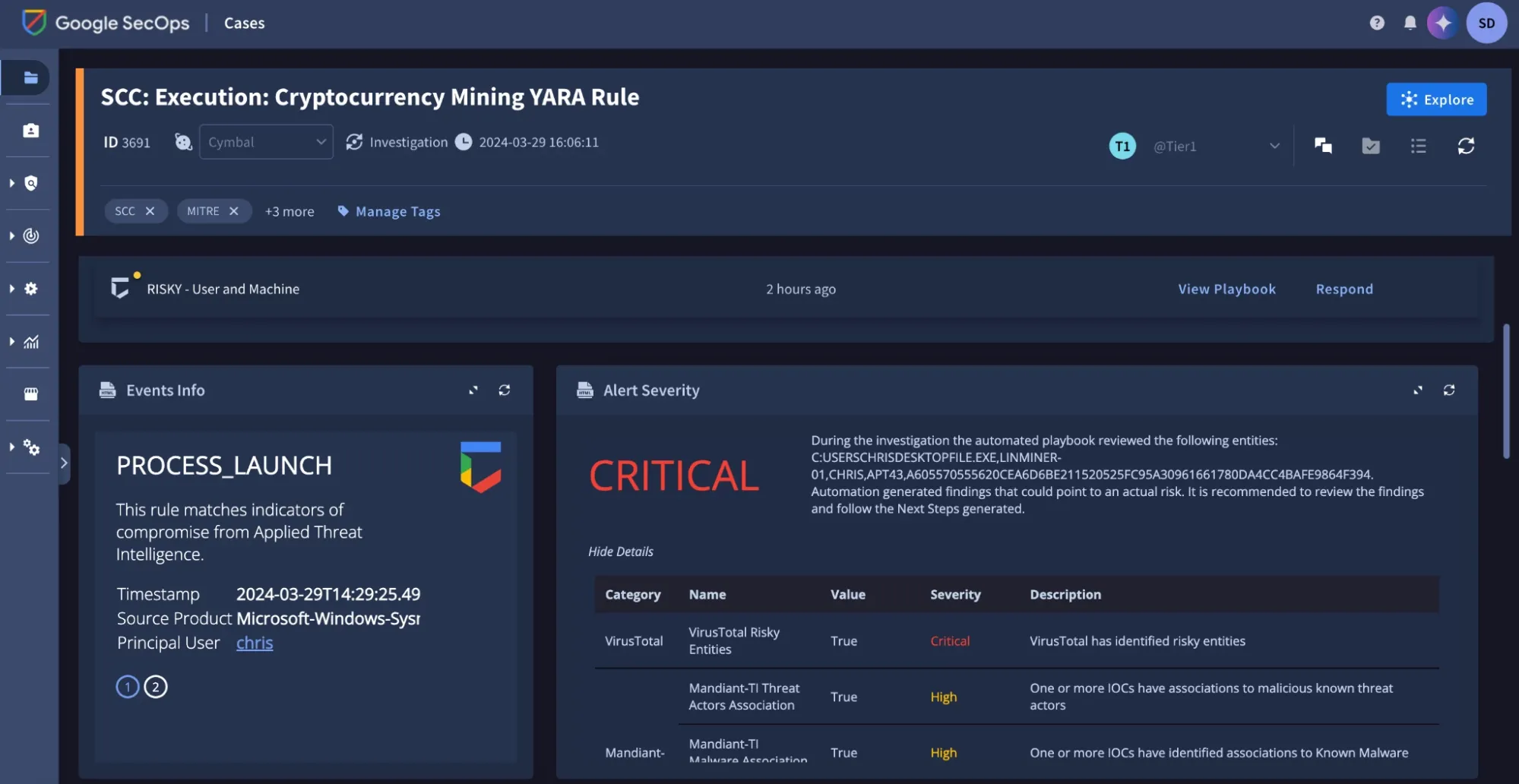
Google Security Operations, formerly Chronicle, is a cloud-native security operations platform that unifies SIEM, SOAR, and threat intelligence. It helps teams detect, investigate, and respond to threats by collecting telemetry, applying threat intelligence, and driving response with playbook automation and case management.
The platform ingests data through forwarders, collectors, APIs, and third-party integrations, normalizing it into a Unified Data Model. It provides curated detections, sub-second search across large data volumes, and Gemini AI for natural-language search, case summaries, and playbook creation.
Key features include:
- Curated detections: Ships a growing set of out-of-the-box detections maintained by Google threat researchers, plus custom authoring with the YARA-L language.
- Search at scale: Correlates large volumes of telemetry with sub-second search and maps detections to MITRE ATT&CK.
- SOAR automation: Builds playbooks that automate response actions and orchestrate 300+ tools, with an auto-documenting case wall.
- Gemini AI: Uses natural language to search data, summarize cases, recommend responses, and generate playbooks and detections.
- Investigation context: Provides threat-centric case management, alert graphing, and automatic stitching of entities for context-rich investigation.
- Data pipeline management: Routes, filters, redacts, and transforms security telemetry, with 12 months of hot data retention.
Limitations (as reported by users on G2):
- Implementation: Users note implementation and onboarding can be complex.
- Pricing understanding: Cost and understanding the pricing model can be a challenge.
- Interface: Some users want the user interface and experience enhanced.
- Playbook complexity: Playbooks can be complicated for new users and carry a learning curve.
- Performance dependency: The platform can become sluggish under weaker network conditions.
Source: Google
10. Microsoft Sentinel

Best for: Microsoft-centric SOCs wanting cloud-native SIEM.
Strengths: Cloud-native SIEM with built-in SOAR, UEBA, and Copilot.
Things to consider: Ingestion-based cost and a KQL learning curve.
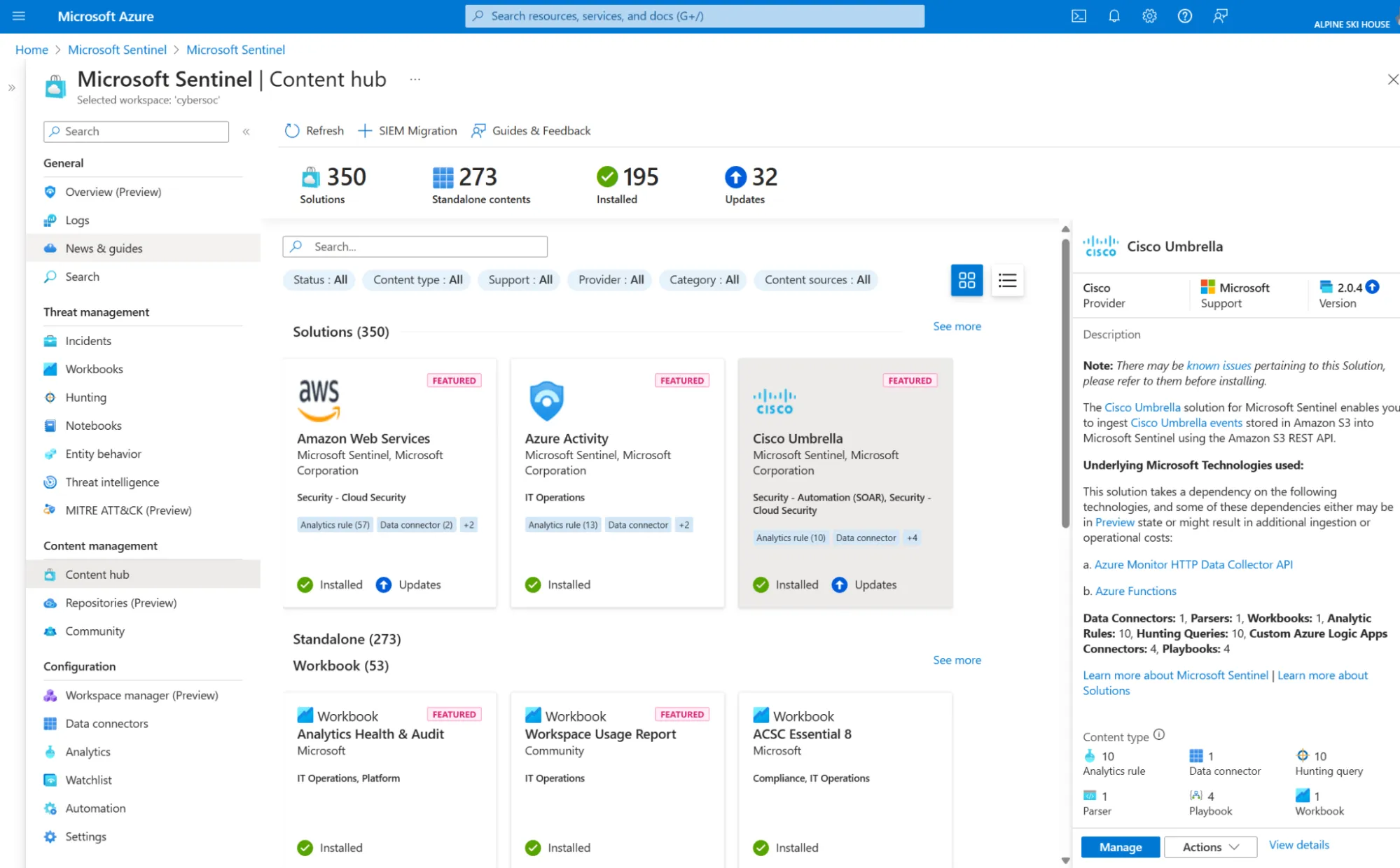
Microsoft Sentinel is a cloud-native security information and event management platform that also provides a unified data lake and graph-powered visibility. It secures multicloud, multiplatform environments and centralizes collection, detection, investigation, and response through the Microsoft Defender experience.
The platform delivers SIEM analytics alongside built-in SOAR, user and entity behavior analytics, and threat intelligence. It connects data through more than 350 native connectors, integrates natively with XDR, and adds generative AI through Security Copilot for investigation and response.
Key features include:
- Cloud-native SIEM: Provides cloud-scale analytics that unify AI, SOAR, UEBA, and threat intelligence in one platform.
- Built-in SOAR: Automates response workflows so teams can respond to and integrate solutions without separate add-ons.
- Native XDR integration: Connects SIEM and XDR for unified visibility and control across detection, investigation, and response.
- Broad connectivity: Offers 350+ native connectors and no-code custom integrations across multicloud and multiplatform environments.
- Security Copilot: Uses generative AI to summarize incidents, generate KQL queries, and recommend next steps.
- Threat intelligence: Unifies Microsoft threat signals with third-party feeds and supports STIX/TAXII with AI-driven insights.
Limitations (as reported by users on G2):
- Cost visibility: The data-ingestion pricing model can be unpredictable and escalate with data volume.
- Query learning curve: It takes time to get comfortable writing KQL queries.
- Setup effort: Initial setup and configuration can be time-consuming, especially for teams new to SIEM.
- Rule tuning: Out-of-the-box rules and connectors need fine-tuning to reduce false positives and noise.
- Third-party integration: Integrating with non-Microsoft or older third-party solutions can be challenging.
Source: Microsoft
11. Exabeam

Best for: Teams prioritizing behavioral analytics and TDIR.
Strengths: UEBA and agent behavior analytics with AI-driven TDIR.
Things to consider: Setup complexity and fewer prebuilt playbooks so far.
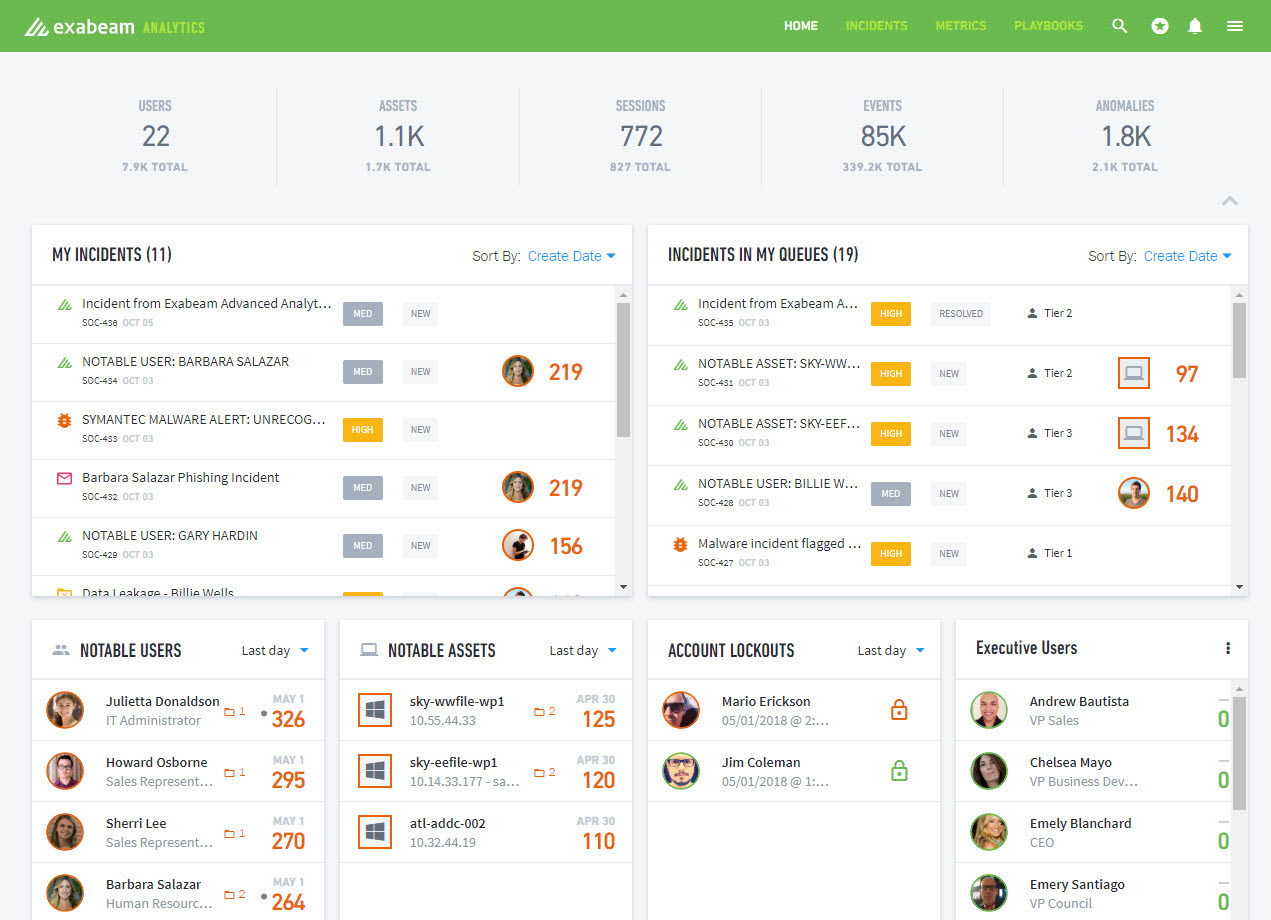
Exabeam is a security operations provider whose New-Scale platform combines SIEM, UEBA, SOAR, and AI to support threat detection, investigation, and response. It applies behavioral analytics to both users and AI agents and uses intelligent agents to accelerate security operations.
The platform baselines normal activity for humans and AI agents to expose anomalies, and uses an integrated team of AI agents to streamline the TDIR workflow from enriching threat data to building evidence-backed timelines. It offers cloud-native and self-hosted options and open data pipeline management.
Key features include:
- AI agent-powered TDIR: Uses an integrated team of AI agents to enrich threat data and build evidence-backed timelines across the TDIR workflow.
- Behavior analytics: Applies user and entity behavior analytics and agent behavior analytics to baseline activity and surface anomalies.
- New-Scale SIEM: Collects, normalizes, and analyzes security data with behavioral insights for threat detection.
- Outcomes-focused reporting: Benchmarks security programs against peers and measurable outcomes, including MITRE ATT&CK TTPs and compliance initiatives.
- Open platform: Provides a unified view without proprietary lock-in and supports data pipeline management to search data in place and use low-cost storage.
- Flexible deployment: Offers cloud-native New-Scale and self-hosted LogRhythm SIEM options.
Limitations (as reported by users on G2):
- Setup complexity: Like many SIEM solutions, it can be challenging to set up and configure and requires expertise.
- Documentation: Some users find product support documentation could be improved.
- Upgrade behavior: Users report log ingestion can stop after console upgrades and that some data field mapping is manual.
- Prebuilt playbooks: A few users note there are not as many prebuilt playbooks as they want, though more are in development.
- AI features: Some users feel the AI features still need improvement.
Source: Exabeam
Conclusion
Torq Security offers a robust approach to modernizing SOC operations by leveraging agentic AI and hyperautomation to streamline complex incident workflows. While users appreciate its powerful integration capabilities and efficiency gains, evaluating it against other market alternatives remains key to ensuring a match for specific organizational needs. Solutions like Intezer offer strong alternatives for modern SOC automation needs.