
Ryan Robinson
Ryan is a security researcher at Intezer, analyzing malware and scripts. Formerly, he was a researcher on Anomali's Threat Research Team.

Nicole Fishbein
Nicole is a senior security researcher and malware analyst at Intezer. Prior to this, she was an embedded researcher in the IDF Intelligence Corps.

Mitchem Boles
Mitchem Boles is the Field Chief Information Security Officer at Intezer, where he advises enterprises across industries on threat trends and modern security strategies. With nearly 20 years of experience, including leadership roles at GuidePoint Security, Critical Start, and Texas Health Resources, he has overseen complex security operations for healthcare systems, utilities, and global SOCs. Mitchem strongly advocates AI-driven security, supporting Intezer’s mission to automate alert triage and investigation so analysts can focus on high-impact threats.

Sarah Breathnach
Sarah Breathnach is a marketing leader in the cybersecurity space. Sarah is an experienced webinar host who’s passionate about helping cyber security professionals tell their stories to new audiences.
What is an AI SOC?
An AI SOC is a security operations model that uses artificial intelligence to automatically triage and investigate every alert. Unlike traditional SOCs that rely on severity scores and human capacity, an AI SOC analyzes alerts based on evidence and behavior. This allows teams to identify real threats faster and reduce risk that would otherwise be ignored.
How is an AI SOC different from a traditional SOC?
A traditional SOC investigates only a fraction of alerts due to alert volume and staffing limits. An AI SOC evaluates 100% of alerts, including low-severity ones, using automated forensic analysis. This shifts security operations from prioritization by guesswork to prioritization by proof.
Why are low-severity alerts still a serious security risk?
AI tools for phishing analyze email language, intent, metadata, and behavioral patterns—not just attachments and links. As phishing increasingly relies on social engineering and text-based deception, AI-driven analysis is more effective than signature-based email security. This approach improves detection of modern phishing campaigns.
Why do phishing detections generate so many false positives?
Many phishing alerts come from user-reported emails that are actually spam or benign messages. Without context, these reports overwhelm SOC teams. AI reduces false positives by correlating multiple signals—such as sender behavior, linguistic patterns, and infrastructure reputation—before escalating an alert.
How should security teams use insights from the 2026 AI SOC Report for CISOs?
The 2026 AI SOC Report shows how threats behave across real environments at scale. Security teams should use it to identify blind spots, understand where alerts are commonly ignored, and adjust their SOC workflows accordingly. The report also helps leaders communicate measurable risk reduction to executives and boards.
How does an AI SOC handle identity alerts like impossible travel?
Identity alerts such as impossible travel often trigger false positives due to VPNs, mobile devices, and cloud services. An AI SOC learns normal user and organizational behavior to separate expected activity from real compromise. This reduces noise while preserving strong identity threat detection.
What metrics best show risk reduction in an AI-driven SOC?
The most meaningful metrics focus on time to containment, triage coverage, and escalation accuracy. These measurements show how quickly real threats are confirmed and stopped. Compared to traditional SOC metrics, they better reflect actual security outcomes and business risk reduction.
Speakers
Ryan Robinson
Security Researcher

Nicole Fishbein
Senior Security Researcher
Mitchem Boles
Field CISO

Sarah Breathnach
Host of AI SOC Live
More webinars

webinar
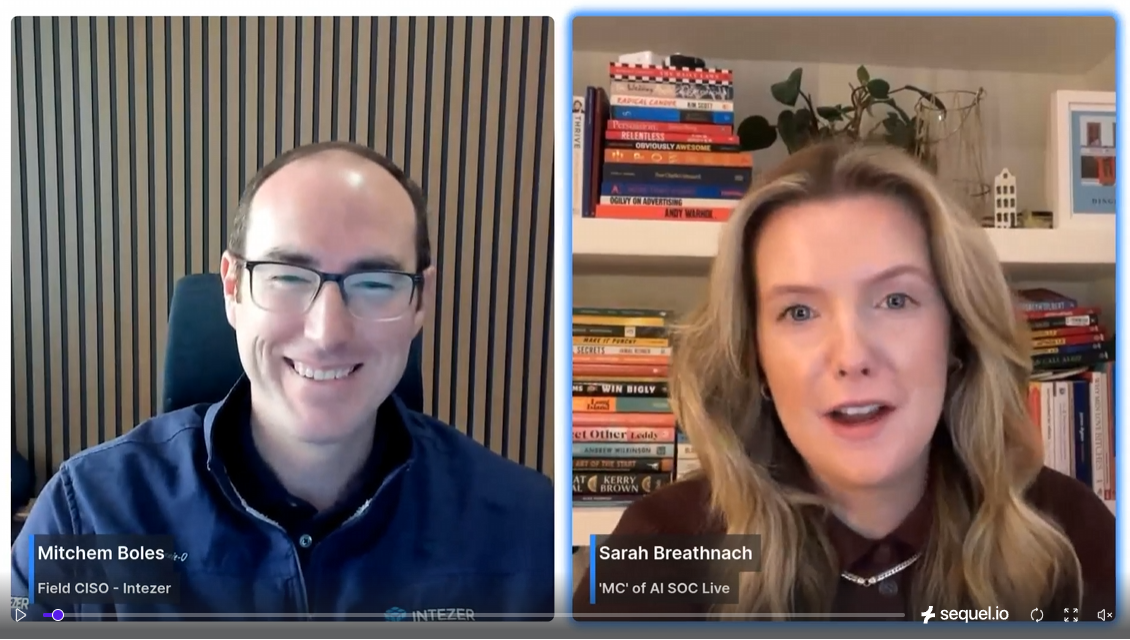
AI SOC Live Episode 3: 2026 AI SOC Report for CISOs
Episode 3 — Key findings from the 2026 AI SOC Report for CISOs and what they mean for security operations.
webinar
AI SOC Live Episode 1: Introducing Forensic AI
Watch AI SOC Live: Introducing Forensic AI — why AI SOC is top of mind for CISOs and what Forensic AI changes.
webinar
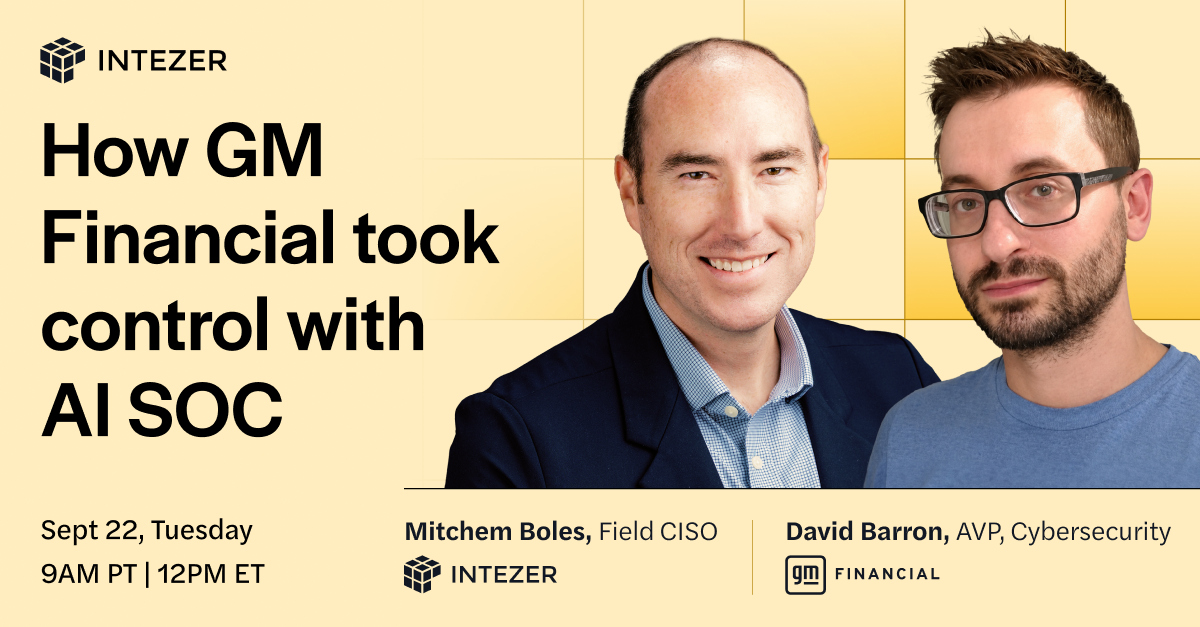
AI SOC Live Episode 8: How GM Financial took control with AI SOC
Watch on-demand as Intezer Field CISO Mitchem Boles chats with David Barron, AVP of Cybersecurity at GM Financial, for a candid look at what it takes to bring AI SOC into a financial services environment.

See Intezer in Action
Discover how AI-powered endpoint triage can eliminate alert fatigue and supercharge your SOC's efficiency.