
Cecil Pineda
Cecil Pineda is a 4-time CISO with 25 years of experience building and leading cybersecurity and data protection programs across healthcare, retail, technology, and critical infrastructure, with expertise in PCI, HIPAA, NERC-CIP and more.

Mitchem Boles
Mitchem Boles is the Field Chief Information Security Officer at Intezer, where he advises enterprises across industries on threat trends and modern security strategies. With nearly 20 years of experience, including leadership roles at GuidePoint Security, Critical Start, and Texas Health Resources, he has overseen complex security operations for healthcare systems, utilities, and global SOCs. Mitchem strongly advocates AI-driven security, supporting Intezer’s mission to automate alert triage and investigation so analysts can focus on high-impact threats.

Sarah Breathnach
Sarah Breathnach is a marketing leader in the cybersecurity space. Sarah is an experienced webinar host who’s passionate about helping cyber security professionals tell their stories to new audiences.
What is the difference between MDR and AI SOC?
MDR is a managed service where an outside provider monitors alerts, investigates incidents, and helps respond on your behalf. An AI SOC uses AI to perform alert triage and investigation inside your own security operation before an analyst gets involved. The core difference is that MDR outsources the work, while AI SOC automates the work so your internal team can keep control.
MDR vs AI SOC: which model gives security teams more control?
AI SOC gives security teams more control because investigations, workflows, and escalation logic stay inside the organization. With MDR, response quality and speed can depend on an outside provider’s processes, staffing, and prioritization. AI SOC helps teams build their own operating model instead of relying on a third party to run it.
Why are companies comparing MDR and AI SOC now?
Companies are comparing MDR and AI SOC because SOC teams want better coverage without adding more headcount or giving up operational control. MDR has historically been the default answer for overloaded teams, but AI now makes it possible to automate triage and investigation internally. That changes the economics and the operating model of the SOC.
How does AI SOC reduce dependence on MDR providers?
AI SOC reduces dependence on MDR providers by automating the repetitive work that usually forces companies to outsource: triage, evidence gathering, enrichment, and alert investigation. Instead of sending alert volume to an external team, organizations can let AI handle the first layer of analysis and have internal analysts focus on real escalations. This makes bringing the SOC back in-house much more realistic.
How does AI SOC compare to MDR on cost?
AI SOC can reduce costs by helping organizations investigate alerts internally without scaling analyst headcount or paying for as much outsourced service capacity. MDR can be valuable, but it often means an ongoing external operating cost tied to alert volume and provider involvement. AI SOC shifts more of that work into automation, which can improve efficiency and reduce the need for expensive manual triage.
Why might a CISO choose AI SOC over MDR?
A CISO may choose AI SOC over MDR when the priority is long-term operational maturity, internal control, and better leverage of an existing team. AI SOC helps teams build internal capability while still solving the alert volume problem. MDR is often a coverage solution; AI SOC is more often an operating model solution.
The biggest limitation of MDR is that it can reduce direct control over triage quality, investigation depth, and response workflow. Even when MDR works well, the organization is still dependent on an outside team to absorb operational complexity. AI SOC is designed to remove that complexity through automation while keeping decision-making closer to the internal security team
Speakers
Cecil Pineda
CISO & Co-Founder of CISO XC

Mitchem Boles
Field CISO

Sarah Breathnach
Host of AI SOC Live
More webinars

webinar
AI SOC Live Episode 3: 2026 AI SOC Report for CISOs
Episode 3 — Key findings from the 2026 AI SOC Report for CISOs and what they mean for security operations.
webinar
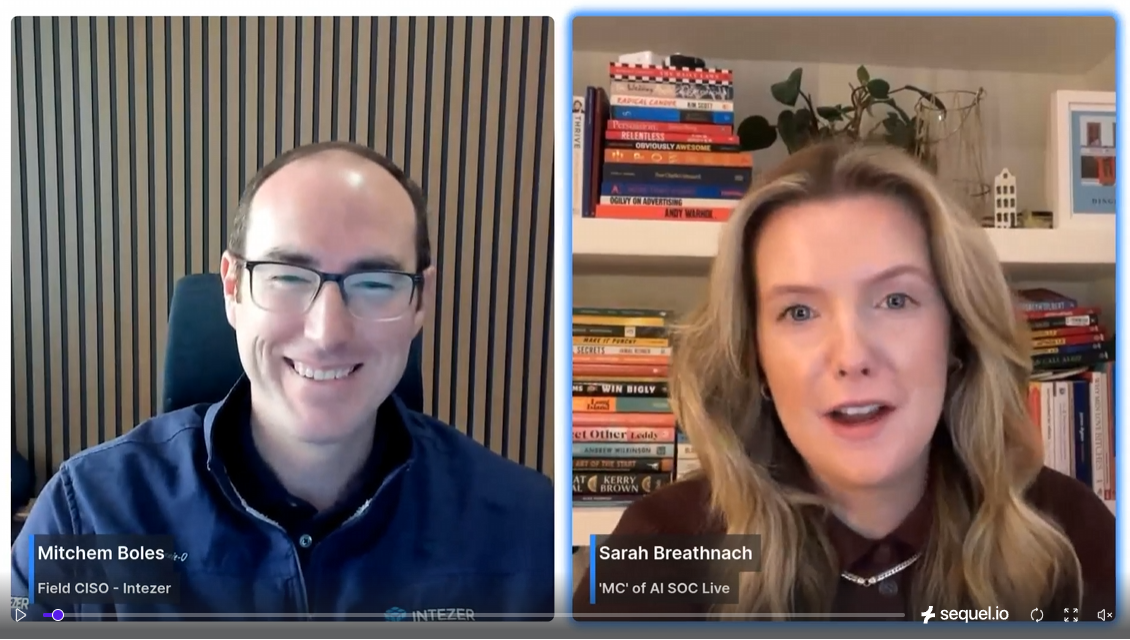
AI SOC Live Episode 1: Introducing Forensic AI
Watch AI SOC Live: Introducing Forensic AI — why AI SOC is top of mind for CISOs and what Forensic AI changes.
webinar
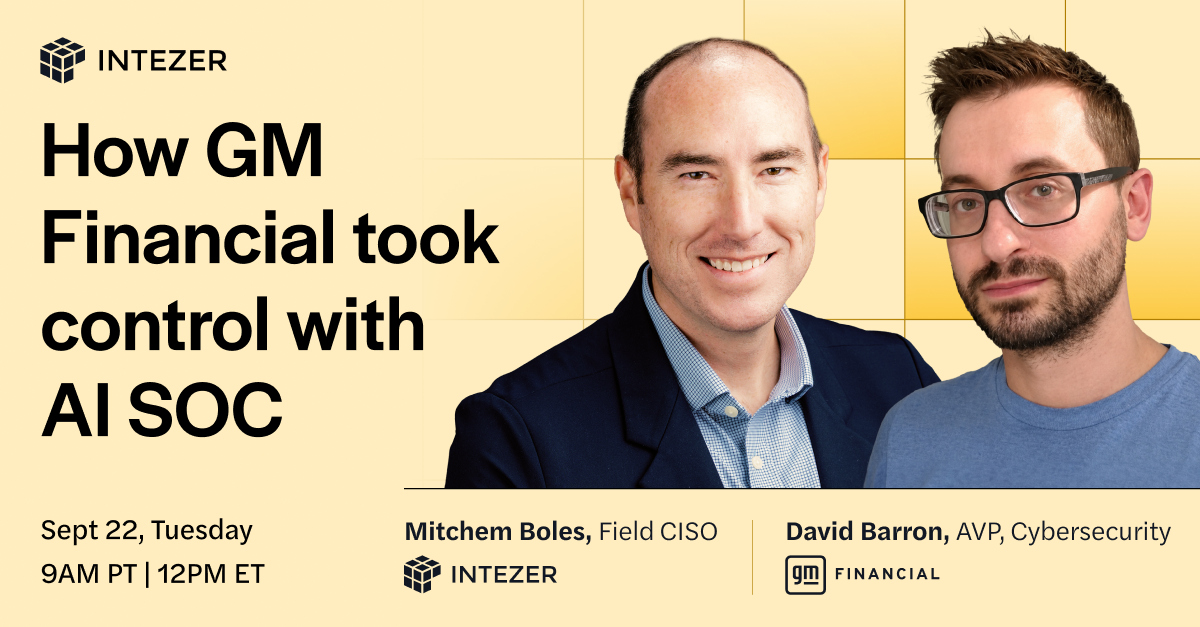
AI SOC Live Episode 8: How GM Financial took control with AI SOC
Watch on-demand as Intezer Field CISO Mitchem Boles chats with David Barron, AVP of Cybersecurity at GM Financial, for a candid look at what it takes to bring AI SOC into a financial services environment.

See Intezer in Action
Discover how AI-powered endpoint triage can eliminate alert fatigue and supercharge your SOC's efficiency.