
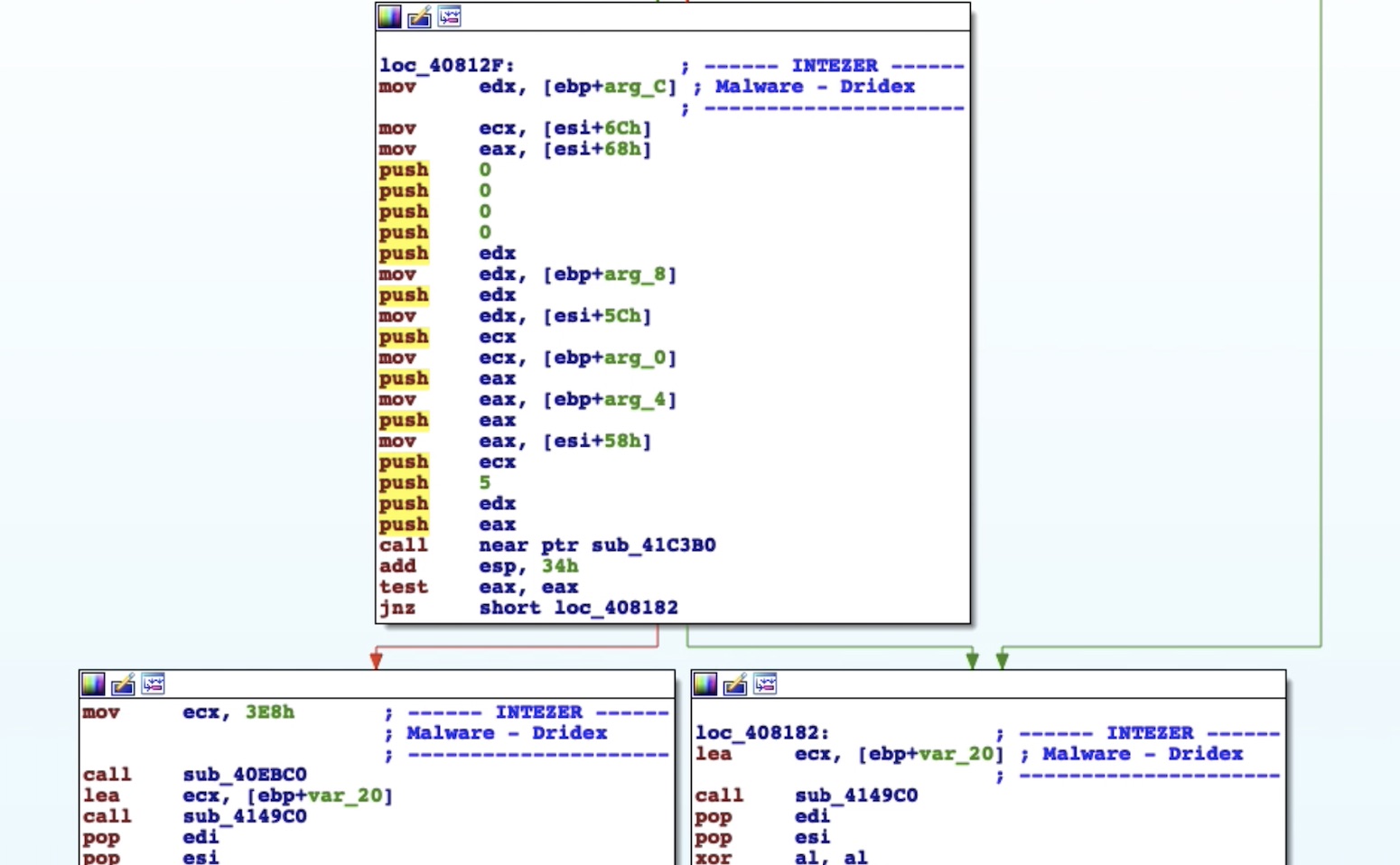
IDA Pro is the most common reverse engineering platform for disassembling computer software. The Intezer Analyze IDA Pro plugin accelerates reverse engineering by enriching every function of disassembled machine code with information about where the code was seen previously. With this information reverse engineers can:
- Save investigation time by filtering out common code and libraries, allowing the reverser to focus only on the file’s malicious and unique code.
- Detect a similar function or part of a function to malware.
With the plugin, a reverse engineer can immediately focus on the relevant parts of the binary, reducing the analysis time from hours—and sometimes even days—to minutes.
See the Plugin in Action
EvilGnome
Dridex
HiddenWasp
The IDA Pro plugin is deprecated.

Intezer
Count on Intezer AI SOC to triage, investigate and respond to every alert at unmatched speed and accuracy.
In this article
Share article
Related Articles

AI SOC
Threat Hunting
4 min
Agentic attacks run on a new operating model. Most SOCs don’t (yet).
If ARTEX hit your network tomorrow, your analysts would recognize every step of the attack. They just wouldn't get to any of it in time.

AI SOC
Incident Response
4 min
Google says AI attackers just crossed a threshold. We say the SOC has to cross it too.
Attackers now run intrusions with no human in the loop. The answer to autonomous offense is more than faster patching or another layer of AI detection. It is a SOC that investigates every signal those agents leave behind, at the depth needed to prove what happened.

AI SOC
100 CISOs ranked their 2027 priorities for a16z: AI SOC takes #1
Andreessen Horowitz (a16z), one of the world's biggest venture capital firm, recently published their survey of 100 CISOs at companies with more than 1,000 employees. The findings reflect what we are seeing with our customers and provide a realistic outlook for our era of agentic attacks.