

Explore our blog
.svg)
AI SOC
The end of the SOC pyramid
AI is retiring the SOC pyramid. Learn how a tierless AI SOC investigates 100% of alerts with forensic evidence while your analysts supervise outcomes.

Zev Schonberg
.svg)
Research
5 min
NinjaMare and the enterprise security epidemic hiding behind a harmless label
The PUA label, aka "potentially unwanted application" means nuisance. Adware, toolbars, and other things that change your settings without asking. Our research team's findings say this label is far more serious than a mere nuisance.

Intezer
View Topics

Malware Analysis
17 minutes
When Viruses Mutate: Did SunCrypt Ransomware Evolve from QNAPCrypt?
Using dark web research and malware analysis to investigate the connection between the affiliate ransomware service SunCrypt and the QNAPCrypt ransomware.

Cloud Security
3 minutes
Kaiji Goes Through Update but Code Reuse Detects It
Intezer is leading the charge detecting the latest Linux cloud threats.

Research
3 minutes
Year of the Gopher: 2020 Go Malware Round-Up
2020 was a lot like playing Whac-A-Mole. Just when you whacked one cross-platform malware written in Golang, another came rearing its ugly head.

Cloud Security
3 minutes
2020 Set a Record for New Linux Malware Families
Threat actors are targeting Linux, the open-source code that supports business-critical cloud infrastructure and data storage.

Malware Analysis
21 minutes
ELF Malware Analysis 101: Part 3 - Advanced Analysis
Attackers have targeted the Linux OS aggressively in recent years. Practice dynamic ELF malware analysis hands-on.

Malware Analysis
3 minutes
Get More Context for Your Analysis with TTPs
You know a file is malicious but what does it do? TTPs in Intezer Analyze are a fast way to understand how malware behaves.
Cloud Security
9 minutes
Do You Really Need Kubernetes?
Kubernetes is one of the top open-source container orchestration projects. See how it compares to Docker Swarm, OpenShift and AWS Lambda.

Cloud Security
2 minutes
Fix your Misconfigured Docker API Ports
Misconfiguration of Docker API ports is one of the most common mistakes companies are making. Fix them in 4 simple steps.

Research
9 minutes
How We Escaped Docker in Azure Functions
New vulnerability could allow an attacker to escalate privileges and escape the Azure Functions Docker container to the Docker host.

Cloud Security
10 minutes
Transitioning Traditional Apps into the Cloud
Traditional apps running on physical servers or VMs can be a pain converting to the cloud. Make the transition without overhauling your entire application stack.

Research
7 minutes
A Rare Look Inside a Cryptojacking Campaign and its Profit
It’s not everyday that we see how profitable a cryptojacking campaign is for an attacker, with access to crypto wallets and their earnings.
Threat Hunting
6 minutes
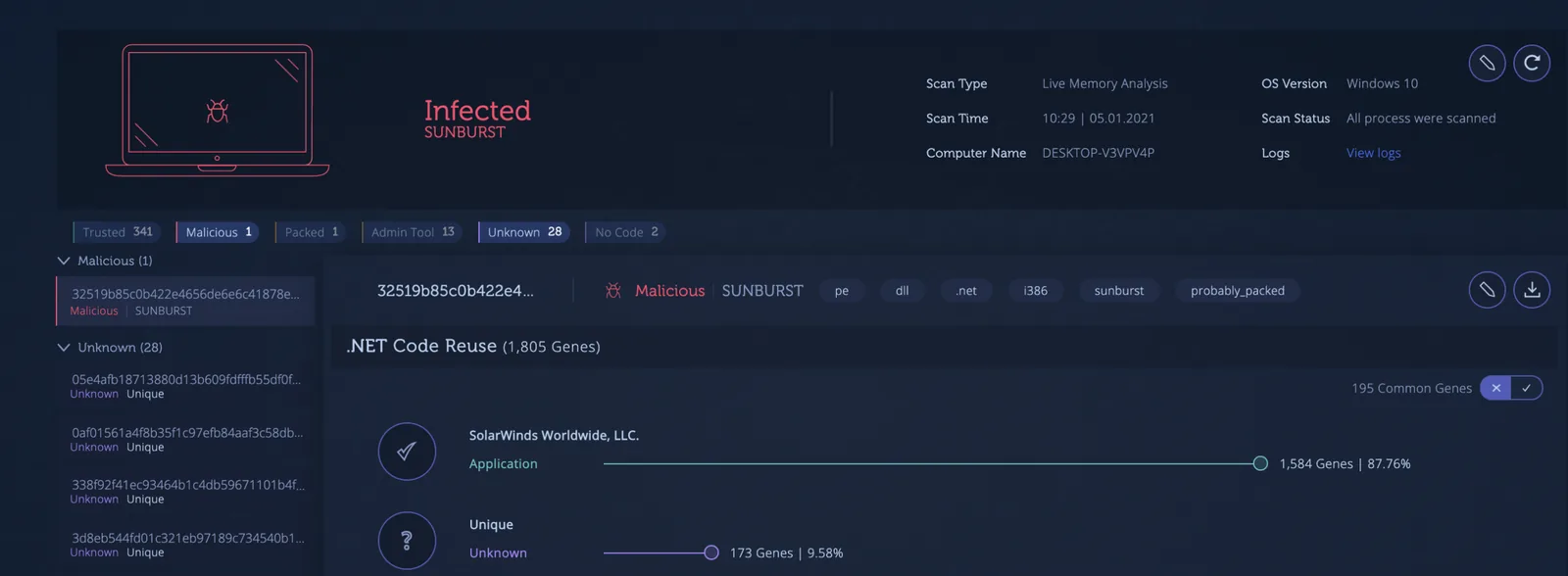
Proactive Threat Hunting with Intezer
Advanced attacks like the SolarWinds backdoor are on the rise. Assume breach and scan your endpoints in-memory for malicious code.

Research
6 minutes
Operation ElectroRAT: Attacker Creates Fake Companies to Drain Your Crypto Wallets
Extensive campaign already with thousands of victims promotes trojanized applications on cryptocurrency forums and social media.

Research
7 minutes
Early Bird Catches the Worm: New Golang Worm Drops XMRig Miner on Servers
New Golang worm drops XMRig Miner on Windows and Linux servers. Targets public facing services: MySQL, Tomcat, Jenkins and WebLogic.

Cloud Security
3 minutes
Top Linux Cloud Threats of 2020
Year of the Linux threat continued in 2020 with a number of Windows threats launching ELF malware for the first time.