

Explore our blog
.svg)
AI SOC
The end of the SOC pyramid
AI is retiring the SOC pyramid. Learn how a tierless AI SOC investigates 100% of alerts with forensic evidence while your analysts supervise outcomes.

Zev Schonberg
.svg)
Research
5 min
NinjaMare and the enterprise security epidemic hiding behind a harmless label
The PUA label, aka "potentially unwanted application" means nuisance. Adware, toolbars, and other things that change your settings without asking. Our research team's findings say this label is far more serious than a mere nuisance.

Intezer
View Topics
Malware Analysis
4 minutes
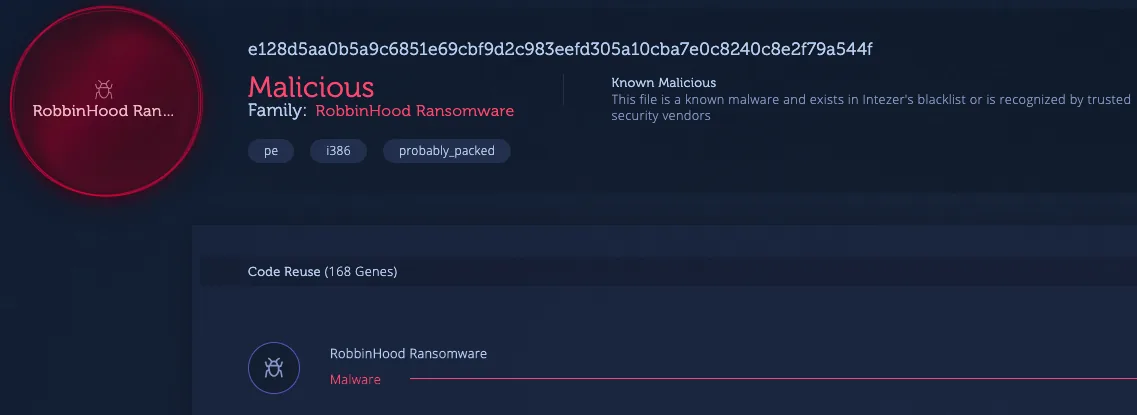
Intezer Analyze Community: BlackSquid, RobbinHood Ransomware and More
Intezer Analyze community detections from June included BlackSquid, RobinHood ransomware, Pacifier APT and Linux threats HiddenWasp and GreedyAntd.

Incident Response
3 minutes
Intezer and IBM Resilient Integrate to Enrich Threat Investigations with Genetic Malware Analysis
The integration between Intezer Analyze™ and IBM Resilient enables users of both platforms to enrich their incident response with Genetic Malware Analysis.

Malware Analysis
3 minutes
HiddenWasp and the Emergence of Linux-based Threats
Malware with strong evasion techniques do exist within the Linux platform. There is a high ratio of publicly available open-source malware that utilize strong evasion techniques and can be easily adapted by adversaries.

Research
8 minutes
Executable and Linkable Format 101 Part 4: Dynamic Linking
In part four of our ELF 101 blog series, we explain the dynamic linking process, including its purpose, how it works and the different linking modes.
Malware Analysis
4 minutes
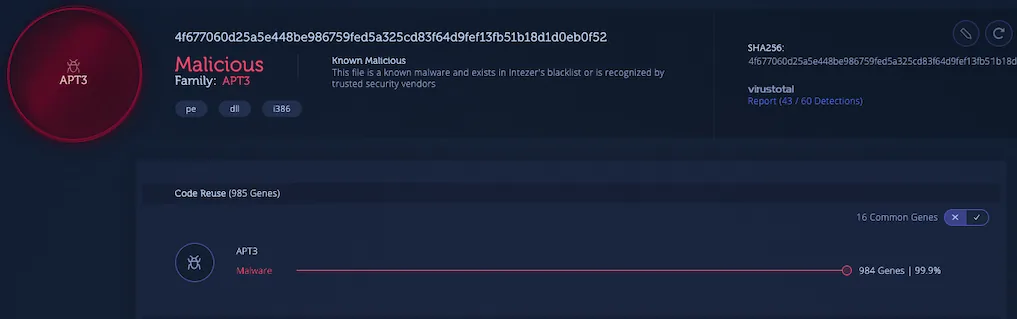
Chinese APTs Rising: Key Takeaways from the Intezer Analyze Community in May
Intezer Analyze community detections in May include malware from Chinese threat actor groups APT3, ChinaZ and APT10, and an endpoint infected with Nanocore.

Research
13 minutes
HiddenWasp Malware Stings Targeted Linux Systems
Intezer has discovered a new, sophisticated malware named HiddenWasp, targeting Linux systems. Unlike common Linux malware, HiddenWasp is not focused on crypto-mining or DDoS activity, but rather it is a trojan purely used for targeted remote control.

Research
6 minutes
Technical Analysis: Pacha Group Competing against Rocke Group for Cryptocurrency Mining Foothold on the Cloud
The Pacha Group is disabling previously installed cryptominers from other threat groups on the cloud, most notably Rocke Group, in order to obtain the largest foothold of computing power on the cloud for conducting malicious crypto-mining activities.
Research
3 minutes
War on the Cloud: Cybercriminals Competing for Cryptocurrency Mining Foothold
The Pacha Group is disabling previously installed cryptominers from other threat groups on the cloud, most notably the Rocke Group, in order to obtain the largest foothold of computing power on the cloud for conducting malicious crypto-mining activities.

Malware Analysis
7 minutes
Meet the Team: Shaul Holtzman
Get to know Intezer Analyze community manager Shaul Holtzman. Shaul is a former cybersecurity analyst helping organizations detect and classify advanced cyber threats.

Incident Response
6 minutes
Fileless Malware: Scanning Endpoint Memory with Genetic Analysis
Memory forensics are crucial for detecting fileless malware. The new Intezer endpoint analysis solution analyzes code in memory to detect advanced threats.

Research
9 minutes
Technical Analysis: Pacha Group Deploying Undetected Cryptojacking Campaigns on Linux Servers
A technical analysis of Linux.Greedy.Antd, a cryptominer employed by Pacha Group to compromise third party Linux servers. The malware was undetected by all leading engines, demonstrating the sophistication of this threat.

Alert Triage
4 minutes
New! API for the Intezer Analyze Community
Announcing the release of an API for the Intezer Analyze community edition. Members of the free community can now create automation scripts to analyze files without manual intervention. Highlighted in this blog are some of the ways in which community users can utilize the API.

Malware Analysis
4 minutes
What is Genetic Malware Analysis?
Software is evolutionary. Intezer has introduced a new innovative approach to automate malware analysis and provide clear insights into any suspicious file. The company's Genetic Malware Analysis technology empowers security teams to improve and accelerate all stages of their incident response, from the initial alert to the final step of remediation.

Research
14 minutes
ChinaZ Revelations: Revealing ChinaZ Relationships with other Chinese Threat Actor Groups
Distributed denial-of-service (DDoS) attacks were on the rise in 2018. Chinese threat actors in particular have predominantly deployed DDoS attacks in their cyber campaigns, and China has emerged has having one of the highest rates of DDoS attacks. This blog provides a technical analysis highlighting connections between ChinaZ and other notable Chinese threat actor groups in the current DDoS landscape.

Research
8 minutes
Muhstik Botnet Reloaded: New Variants Targeting phpMyAdmin Servers
The Muhstik botnet was first exposed by Netlab360 researchers in May 2018. This botnet targeted mainly GPON routers. At Intezer we found that Muhstik is extending its spectrum of compromised devices by targeting web servers hosting phpMyAdmin.