

Explore our blog
AI SOC
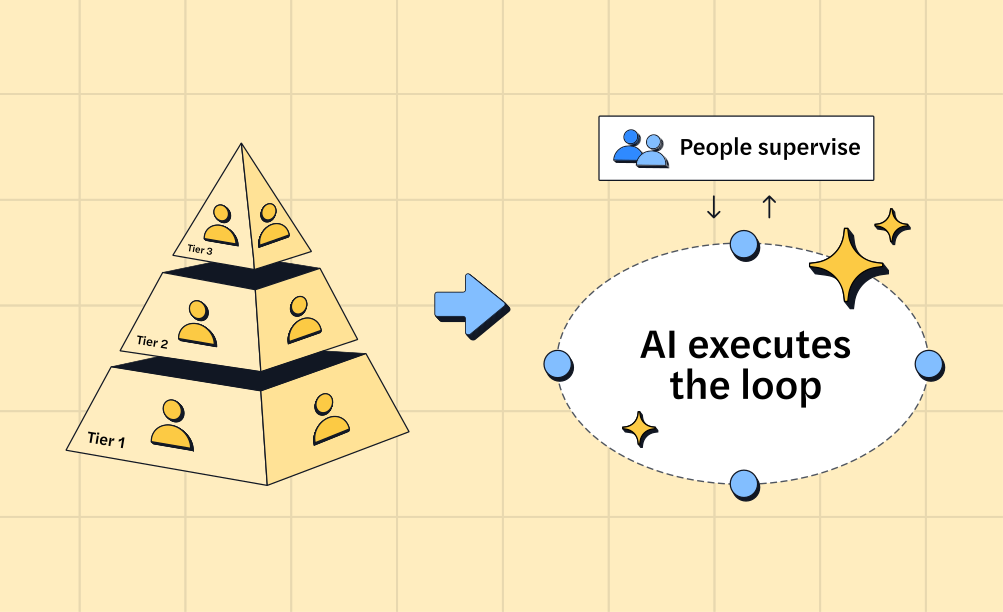
The end of the SOC pyramid
AI is retiring the SOC pyramid. Learn how a tierless AI SOC investigates 100% of alerts with forensic evidence while your analysts supervise outcomes.

Zev Schonberg
Research
5 min
NinjaMare and the enterprise security epidemic hiding behind a harmless label
The PUA label, aka "potentially unwanted application" means nuisance. Adware, toolbars, and other things that change your settings without asking. Our research team's findings say this label is far more serious than a mere nuisance.

Intezer
View Topics

Research
3 minutes
Paleontology: The Unknown Origins of Lazarus Malware
As seen by security researchers across the world and proven in a joint research by McAfee and Intezer, Lazarus, one of the groups operating from North Korea, has consistently reused code in their malware toolset.

Research
2 minutes
APT37: Final1stspy Reaping the FreeMilk
Researchers at Palo Alto Networks recently published a report regarding the NOKKI malware, which has shared code with KONNI and, although not in the report by Palo Alto, KimJongRAT (discovered by Paul Rascagnères of Cisco Talos in 2013), and another report on how there is evidence of the NOKKI malware connecting...
Research
2 minutes
Intezer Analyze™ ELF Support Release: Hakai Variant Case Study
We would like to proudly announce that Intezer Analyze™ now supports genetic malware analysis for ELF binaries! You may now upload ELF files to our system and find code reuse. We have already indexed the genes of millions of different files into our ELF genome database, classified into both malicious, trusted, and...

Research
5 minutes
Prince of Persia: The Sands of Foudre
Foudre is a remote access tool and has the ability to remotely execute commands, steal information about the infected target (such as keystrokes, process information, etc), and auto-update itself. Most of the code and functionality from the previous versions of Foudre and Infy was reused and can be read about in the reports by Palo Alto linked above, so we are only going to focus on the new, unique, interesting features and the linkage of code reuse from previous versions.

Malware Analysis
4 minutes
Code, Strings and what’s in between
Our technology is based on genetic analysis of files. So far, we’ve focused mainly on detection of code reuse, as part of the genetic malware analysis process.

Research
12 minutes
Examining Code Reuse Reveals Undiscovered Links Among North Korea’s Malware Families
Attacks from the online groups Lazarus, Silent Chollima, Group 123, Hidden Cobra, DarkSeoul, Blockbuster, Operation Troy, and 10 Days of Rain are believed to have come from North Korea. But how can we know with certainty? And what connection does a DDoS and disk-wiping attack from July 4, 2009, have with WannaCry?

Research
6 minutes
Mitigating Emotet, The Most Common Banking Trojan
The popular banking trojan Emotet is constantly evolving to evade detection. Stripped down to its genetic core, malware analysis reveals Emotet's code remains largely the same from generation to generation.
Malware Analysis
5 minutes
Product Updates for June 2018
We’ve recently added to our product, support for Dynamic Execution and Static Extraction and we wanted our user interface to reflect these additions.
Research
3 minutes
Digital Certificates- When the Chain of Trust is Broken
As stated in a previous blog entry, it is common for malware authors to sign malicious files with “legitimate” digital certificates in order to bypass security products.
Malware Analysis
8 minutes
Executable and Linkable Format 101 Part 3: Relocations
This post is part of Intezers blog series about executable and linkable formats. In this post, we will introduce the concept of ELF relocations and their relationship with symbols. Later we will explain more advanced concepts, such as dynamic linking.
Malware Analysis
3 minutes
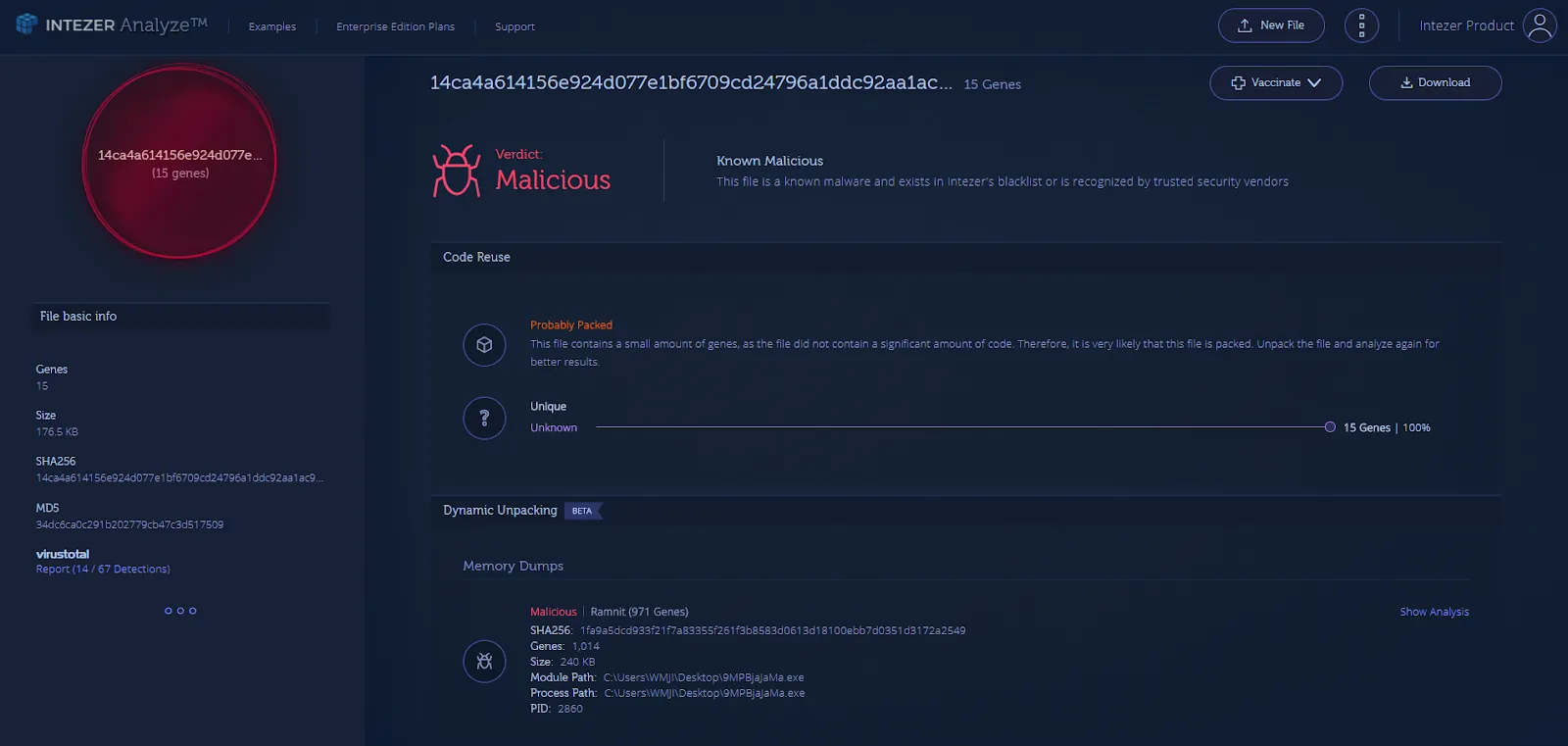
Unpacking reveals a file’s true DNA
After launching Intezer community edition in November 2017, we noticed that many of our users uploaded packed samples. Yet packed files don’t reveal the true ‘DNA’ of the files.

Incident Response
2 minutes
Building Your Bullet Proof Incident Response Plan

Research
2 minutes
Yet Another Distraction? A New Version of North Korean Ransomware Hermes Has Emerged
Malware Analysis
8 minutes
Executable and Linkable Format 101. Part 2: Symbols
In our previous post, we focused on understanding the relationship between sections and segments, which serve as the foundation for understanding the ELF file format.
Research
6 minutes
Executable and Linkable Format 101 - Part 1 Sections and Segments
Let's dive into Executable and Linkable Format files. Learn about ELF relocation and segments, and how cyber attacks can use this file format.