
Best MDR with Automated Response: Top 12 Solutions in 2026
In this article

TL;DR: MDR automated response combines AI-driven detection with expert human oversight to contain and remediate threats 24/7. Top solutions include Intezer for AI-native SOC automation, CrowdStrike Falcon Complete for agentic enterprise MDR, Sophos MDR for the broadest customer base, and Huntress for SMB-focused deployments.
What Is MDR Automated Response?
Managed Detection and Response (MDR) automated response combines advanced technology, such as AI and machine learning, with expert human analysis to detect, investigate, and actively remediate cyber threats 24/7. It focuses on rapid containment, often within minutes, by isolating infected endpoints, blocking malicious traffic, and removing threats, reducing the burden on internal teams.
Key components of MDR automated response:
- 24/7 monitoring and automated analysis: Continuous surveillance of networks, clouds, and endpoints using AI to identify malicious activity and reduce alert fatigue.
- Rapid containment and remediation: Automated playbooks are triggered to isolate compromised systems, terminate malicious processes, and reset credentials.
- Human-led threat hunting: Experts review automated findings to hunt for stealthy threats that bypass automated defenses.
- Actionable intelligence and reporting: Detailed reporting on security posture and incident insights.
This is part of a series of articles about MDR security
MDR Automated Response Solutions at a Glance
The table below summarizes the key differences between the MDR automated response solutions covered in this guide. We explore each in more detail in the sections below.
| Solution | Category | Best For | Key Strengths | Things to Consider |
|---|---|---|---|---|
| Intezer Forensic AI SOC | AI-Native MDR Automation | Organizations replacing or augmenting MDR with AI-driven triage | 98% alert verdict accuracy; <2% escalation rate; forensic-depth analysis of every alert | Interface navigation can be complex; file upload limitations in certain EDR integrations |
| CrowdStrike Falcon Complete Next-Gen MDR | AI-Native MDR Automation | Enterprises needing agentic MDR across endpoints, cloud, and identity | 1-minute median containment; 2.7M detections remediated monthly; AI agents + human oversight | High cost; full value requires broad CrowdStrike platform adoption |
| SentinelOne Wayfinder MDR | AI-Native MDR Automation | Organizations on the SentinelOne platform wanting native MDR | Google Threat Intelligence integration; Purple AI agentic workflows; $1M warranty | Platform-native only; false positive tuning is a known challenge |
| Sophos MDR | AI-Native MDR Automation | Organizations of any size wanting the most widely adopted MDR | AI resolves 52% of cases in 89 seconds; 39,000+ customers; #1 rated on G2 | Reporting customization limited; endpoint agent can be resource-intensive |
| Arctic Wolf MDR | Full-Service MDR Providers | Mid-market organizations wanting a named security team | Concierge Security Team model; $3M security operations warranty; Aurora Agentic SOC | High false positive rate (71% of raw alerts per vendor data); limited raw data access for customers |
| Rapid7 Managed Threat Complete | Full-Service MDR Providers | Organizations needing MDR plus integrated vulnerability management | XDR + VM + DFIR in one subscription; agentic AI workflows; multi-vector telemetry | Pricing complexity; some users note slower response outside elite tiers |
| Red Canary MDR | Full-Service MDR Providers | Enterprises with existing EDR investments wanting strong endpoint MDR | 99%+ true positive rate; acquired by Zscaler; Forrester Wave Leader Q1 2025 | Higher price point; alert delays reported in some reviews |
| Expel MDR | Full-Service MDR Providers | Organizations wanting maximum transparency into SOC operations | Workbench platform provides full analyst visibility; 22-minute MTTR; 160+ integrations | Threat hunting and IR are add-ons, not included in base service |
| eSentire MDR | Full-Service MDR Providers | Organizations requiring contractual response SLAs | 15-minute contractual Mean Time to Contain; 300+ integrations; multi-signal XDR | Premium pricing; limited APAC SOC coverage; Atlas portal lacks self-service query depth |
| Huntress Managed EDR | SMB-Focused MDR Solutions | SMBs and MSPs needing accessible, affordable managed EDR | <1% false positive rate; active remediation; purpose-built for MSP workflows | Less advanced than enterprise platforms; macOS support requires extra steps |
| LevelBlue MDR (powered by Cybereason XDR) | SMB-Focused MDR Solutions | Enterprises needing MDR with deep XDR and DFIR forensics | MalOp engine; 100% detection in MITRE 2024; FedRAMP authorized; SpiderLabs threat intelligence | Five acquisitions create integration complexity; multiple product lines still converging |
| Bitdefender MDR | SMB-Focused MDR Solutions | Organizations wanting MDR built on a single owned security platform | #1 in 2024 MITRE MDR ATT&CK Evals; 285+ SOC analysts; GravityZone platform ownership | Limited third-party integrations; documentation gaps reported; resource-intensive scanning |
Human-Led vs. Fully Automated Response
Human-led response in MDR relies on analysts to review alerts, investigate incidents, and determine the appropriate action. This approach benefits from human judgment, contextual understanding, and the ability to adapt to novel or ambiguous threats. However, it is limited by staff availability, fatigue, and the time required to make decisions, especially when teams face a high volume of alerts.
Fully automated response uses predefined rules, machine learning, and orchestration tools to identify threats and take action without manual intervention. This allows immediate containment and remediation, reducing dwell time and attack impact. While automation can handle many threats quickly and consistently, it may struggle with complex scenarios that require nuanced judgment or involve new attack techniques.
Most MDR solutions combine both approaches, using automation for speed and scale while reserving human expertise for complex or ambiguous incidents.
Learn more in our detailed guide to MDR services that includes automated response
Benefits of MDR Automated Response
MDR automated response delivers practical gains by reducing the time and effort required to handle security incidents. It shifts routine actions to systems that can act instantly and consistently, while keeping humans focused on higher-value work:
- Reduced dwell time: Automated actions trigger as soon as a threat is detected. This limits how long attackers can stay in the environment and reduces potential damage.
- Expertise on demand: Playbooks encode proven response steps from experienced analysts. Organizations benefit from consistent, expert-level actions without needing large in-house teams.
- Improved compliance: Automated workflows enforce standard procedures and maintain detailed logs. This supports audit requirements and ensures responses follow defined policies.
- Faster incident containment: Systems can isolate endpoints, disable accounts, or block traffic within seconds. This prevents lateral movement and stops threats from spreading.
- Consistency in response: Automation removes variability in how incidents are handled. Every similar threat is treated with the same rigor and sequence of actions.
- Scalability: Automated systems handle large volumes of alerts without degradation. This is critical as alert volume grows beyond what human teams can manage.
- Reduced analyst fatigue: Repetitive tasks are offloaded to automation. Analysts spend less time on triage and more time on investigation and threat hunting.
- Lower operational costs: Fewer manual interventions reduce the need for large, always-on teams. Resources can be allocated more efficiently.
- Continuous operation: Automated response runs 24/7 without gaps. This ensures coverage outside business hours and during peak attack periods.
- Improved Mean Time to Respond (MTTR): Immediate action shortens the full response cycle, from detection to remediation, improving overall security posture.
Key Components of MDR Automated Response
24/7 Monitoring and Automated Analysis
Continuous monitoring is foundational to MDR automated response. Security platforms collect and analyze data from endpoints, networks, cloud environments, and other sources without interruption. Automated analysis uses machine learning and behavioral analytics to identify suspicious patterns and anomalies in real time.
This approach ensures threats are identified and escalated regardless of time of day or analyst availability. Automated analysis filters false positives and prioritizes genuine threats, enabling faster response and reducing the burden on security teams. As threats grow more sophisticated, the ability to detect and analyze them without delay remains a key advantage of MDR automated response.
Rapid Containment and Remediation
Once a threat is detected, MDR automated response systems can take containment actions such as isolating compromised endpoints, blocking malicious IP addresses, or disabling user accounts. These actions are executed according to predefined playbooks, ensuring containment occurs as soon as a threat is verified, without waiting for manual approval.
Automated remediation steps may include removing malware, reverting unauthorized changes, or restoring affected systems from backups. By addressing threats quickly and methodically, MDR automated response reduces the risk of lateral movement and data loss. Rapid containment and remediation also allow security personnel to focus on tasks that require human judgment.
Human-Led Threat Hunting
Despite advances in automation, human-led threat hunting remains a core component of MDR. Analysts search for signs of compromise that automated systems might miss, such as subtle indicators of advanced persistent threats or new attack techniques. Human hunters use experience and threat intelligence to uncover threats that evade standard rules or machine learning models.
Threat hunting also validates automated alerts and provides context for incidents. Analysts trace the origin and intent of attacks, assess the effectiveness of automated measures, and identify improvements for detection and response playbooks. By combining automation with expert investigation, MDR services address both known and emerging threats.
Actionable Intelligence and Reporting
MDR automated response generates data about threats, incidents, and response actions. Converting this data into actionable intelligence supports security improvement and decision-making. Automated systems aggregate and correlate data from multiple sources, providing reports that highlight trends, vulnerabilities, and gaps.
Reporting helps organizations understand threats, evaluate security measures, and demonstrate compliance with regulatory requirements. Actionable intelligence also supports ongoing risk management by identifying defense gaps and informing future investments in technology or training. Detailed reporting extends the value of MDR beyond immediate incident response.
Automated Remediation in MDR
Automated remediation in MDR refers to correcting or reversing malicious activity after detection and containment. While containment stops the spread of an incident, remediation returns affected systems, accounts, and configurations to a safe state. This may include removing malware, deleting malicious files, terminating suspicious processes, rolling back unauthorized changes, restoring clean system states, or resetting compromised credentials.
In MDR environments, automated remediation is driven by predefined response playbooks. These playbooks define which actions occur for specified threat types, severity levels, affected assets, and business contexts. For example, if ransomware behavior is detected on an endpoint, the system may isolate the device, terminate the malicious process, remove related files, and initiate recovery steps.
Automated remediation improves consistency. Instead of relying on different analysts to perform the same steps manually, MDR platforms apply standardized actions each time a similar incident occurs. This reduces missed steps, delays, or inconsistent handling. It also creates a record of actions taken, when they occurred, and which assets were affected.
Not every action should be fully automatic in every environment. Some remediation steps, such as disabling a critical server or blocking a business-essential account, may cause operational disruption if executed without context. For this reason, mature MDR programs use tiered automation. Low-risk actions may be performed automatically, while higher-impact actions may require analyst approval before execution.
Notable MDR Automated Response Solutions
How we selected these solutions: We shortlisted MDR automated response platforms based on automated containment capabilities, AI-driven triage, integration breadth, analyst-led threat hunting, and response time benchmarks.
AI-Native MDR Automation
1. Intezer Forensic AI SOC

Best for: Organizations replacing or augmenting traditional MDR with AI-driven triage at scale
Strengths: 98% verdict accuracy across 100% of alerts with sub-minute triage and <2% escalation rate
Things to consider: Interface navigation described as complex by some users; occasional limitations in evidence collection from certain EDR integrations
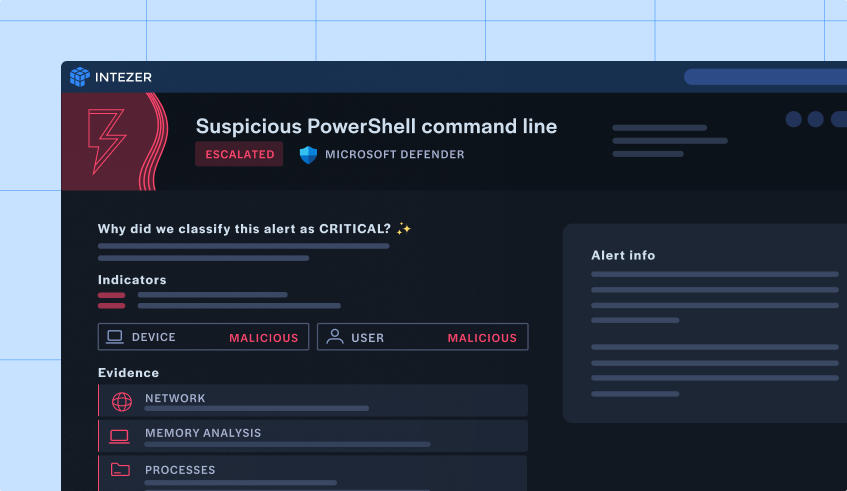
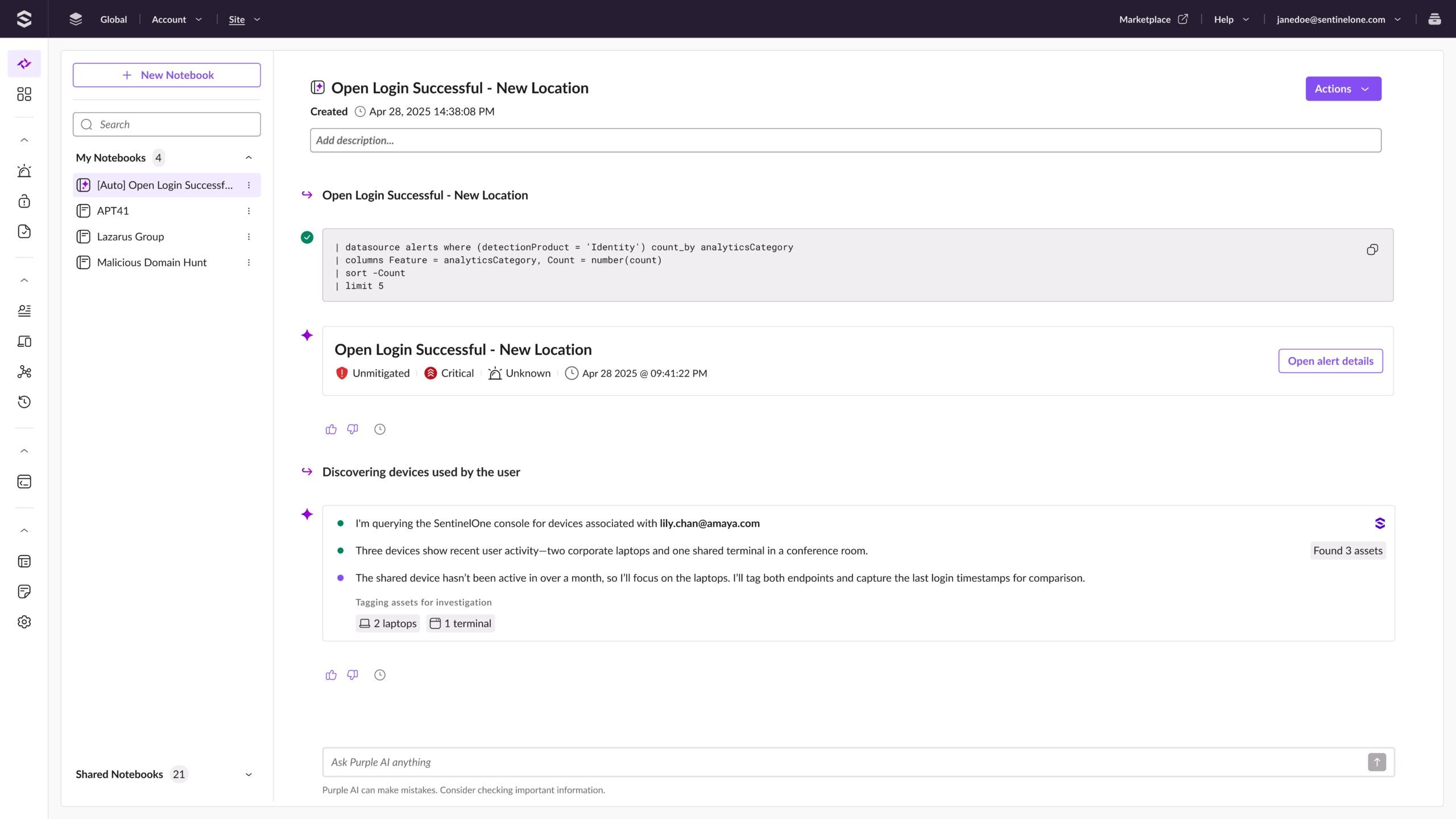
Intezer Forensic AI SOC is positioned as an alternative to traditional MDR services, addressing the core limitation of human-labor-based MDR: as alert volumes grow, lower-severity signals are typically deprioritized or ignored. Intezer resolves this by applying forensic-depth AI analysis to every incoming alert regardless of severity — covering endpoint, phishing, identity, SIEM, cloud, and network sources — without requiring a human analyst to review each one. The platform uses a combination of proprietary AI models and deterministic forensic methods, including endpoint forensics, reverse engineering, memory scanning, sandboxing, network artifact analysis, and static analysis.
Key features include:
- Forensic-depth evidence collection: Intezer automatically gathers files, process trees, command lines, memory images, and network artifacts for each incoming alert, conducting a structured investigation that mirrors what a skilled analyst would do manually and enabling reliable verdicts without manual input.
- Multi-model AI triage engine: The platform combines multiple proprietary and commercial AI models with deterministic forensic methods — including reverse engineering, sandboxing, and static analysis — to analyze each piece of evidence, reaching high-confidence verdicts on whether an alert represents a real threat.
- Cross-signal alert coverage: Intezer ingests alerts from endpoint security products, SIEMs, phishing pipelines, identity providers, SOAR tools, and cloud platforms, providing a unified triage layer across the entire security stack without requiring replacement of existing tools.
- Automated and human-controlled response: Following triage, Intezer proposes response actions — such as isolating endpoints, disabling accounts, or closing tickets — that can be executed automatically or held for analyst approval depending on risk tolerance and configured policies, including pre-approved playbook actions for common scenarios.
- Detection engineering feedback loop: Investigation outcomes from every resolved alert feed back into detection tuning, allowing teams to refine SIEM rules, close MITRE ATT&CK coverage gaps, and reduce recurring false positive patterns based on actual environment behavior rather than static benchmarks.
- Enterprise integrations and API access: Native integrations cover major EDRs, SIEMs, SOARs, identity platforms, case management tools like ServiceNow, and ticketing systems like Jira, with a RESTful API and Python SDK available for custom automation workflows and pipeline integration.
Limitations (as reported by users on G2):
- Interface readability: Some users find the interface layout difficult to navigate, with small text and a learning curve for teams new to the platform.
- Intermittent evidence collection gaps: In certain EDR configurations, the platform may be unable to automatically retrieve file artifacts, requiring manual upload as a fallback.
- Cost considerations at scale: Larger organizations note that the endpoint-based pricing model warrants careful evaluation against the alert volume and use cases being automated.
Source: Intezer
2. CrowdStrike Falcon Complete Next-Gen MDR

Best for: Enterprises seeking fully managed agentic MDR with cross-domain coverage across endpoints, cloud, and identities
Strengths: 1-minute median time to contain; 2.7 million detections remediated monthly; deterministic automation combined with AI agents and human expertise
Things to consider: Premium pricing places it above budget alternatives; full effectiveness requires broad adoption of the CrowdStrike Falcon platform ecosystem
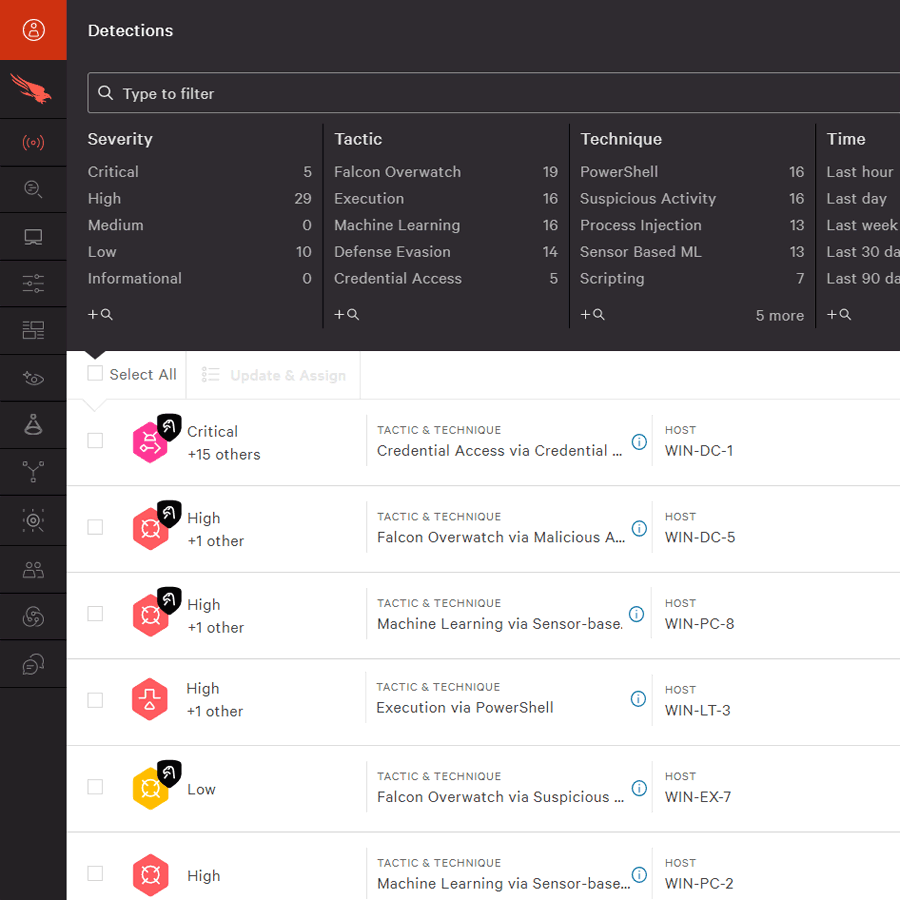
CrowdStrike Falcon Complete Next-Gen MDR combines 24/7 expert-led security operations with the AI-native Falcon platform, incorporating a three-tier model of deterministic automation, adaptive AI agents, and human analysts who validate every outcome. The automation layer executes proven response playbooks instantly at scale, AI agents perform structured investigation and correlation, and human analysts own final decisions and remediation validation.
Key features include:
- Deterministic automation at machine speed: Falcon Complete uses predefined, proven response playbooks that execute containment actions — such as endpoint isolation, blocking malicious processes, or revoking credentials — instantly and safely at scale without requiring analyst review for each individual action.
- Adaptive AI agents: The platform deploys AI agents that analyze unified telemetry, correlate cross-domain attack activity, and initiate real-time containment, continuously learning from global threat data to refine investigative and response decisions.
- Cross-domain threat coverage: Coverage extends across endpoints, cloud workloads, identity systems, and third-party data sources, allowing analysts to detect and respond to multi-vector attacks that move laterally across different parts of the environment in a single coordinated workflow.
- Elite threat hunting: CrowdStrike analysts apply real-world adversary tradecraft — drawn from the company's global threat intelligence operations — to proactively search for hidden threats, anticipate attacker behavior, and identify indicators of compromise before they escalate.
- Falcon Complete Hub transparency dashboard: Customers receive a unified view of their MDR program, including incident timelines, containment actions taken, open threats, and operational metrics, giving security leadership direct visibility into service performance without requiring access to raw telemetry.
- Breach warranty: Falcon Complete includes a breach warranty that provides financial coverage for incident response costs in qualifying events, offering additional assurance beyond the managed service itself.
Limitations (as reported by users on G2):
- High cost barrier: Multiple reviewers note that CrowdStrike's pricing may not suit organizations with limited budgets, positioning it primarily as an enterprise-tier solution.
- Cloud dependency: Users in certain regulated or air-gapped environments note that full reliance on cloud infrastructure can create compatibility and access challenges.
- Advanced feature complexity for new users: Some users describe a steep onboarding curve when configuring advanced features, particularly for teams without prior CrowdStrike experience.
Source: CrowdStrike
3. SentinelOne Wayfinder MDR

Best for: Organizations running on the SentinelOne Singularity platform wanting native AI-powered MDR with full DFIR coverage
Strengths: Google Threat Intelligence integration; Purple AI with Singularity Hyperautomation for agentic detection and response; up to $1M breach warranty
Things to consider: Requires the SentinelOne Singularity platform; false positive tuning described by reviewers as the most challenging operational aspect
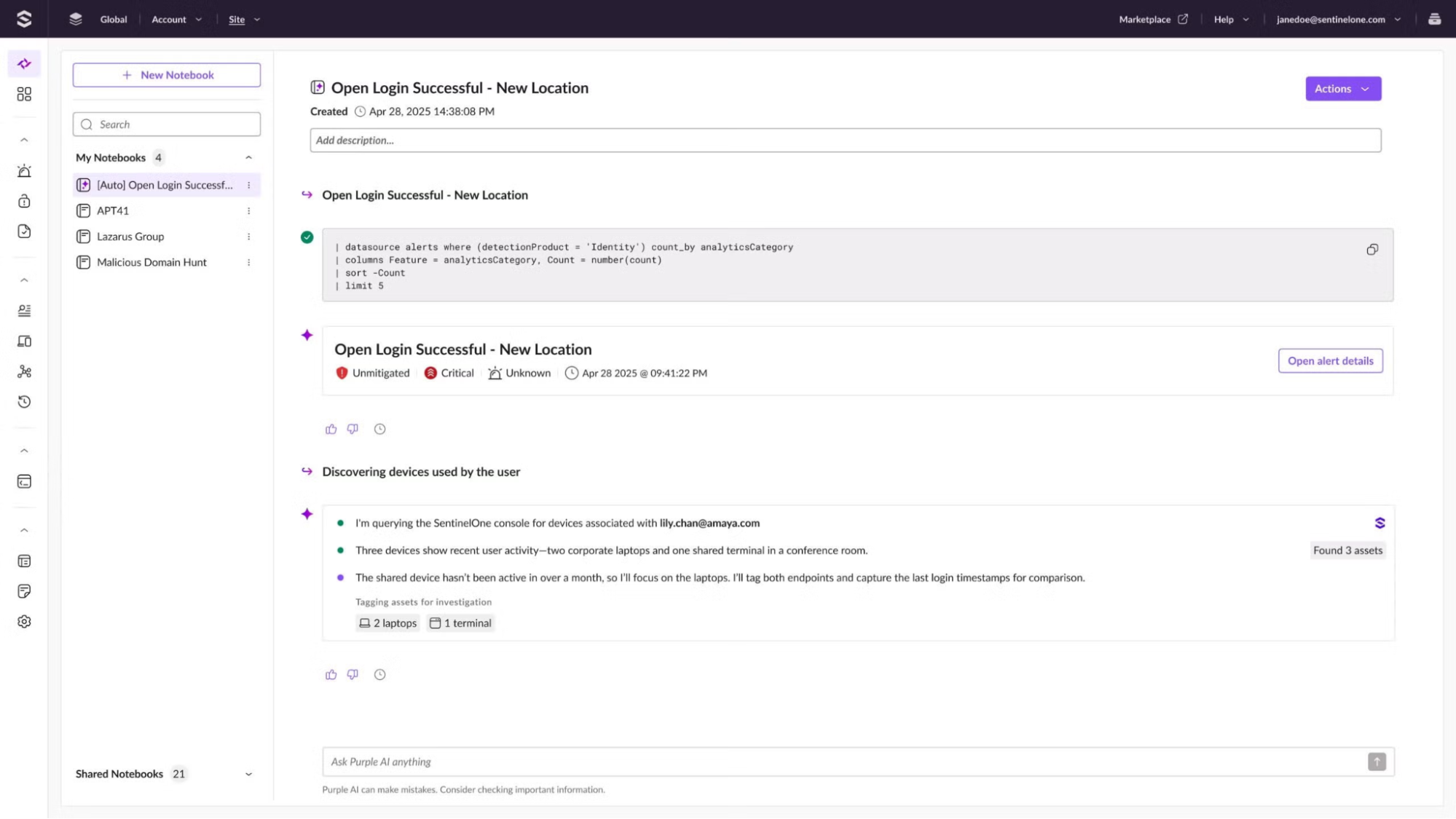
SentinelOne Wayfinder MDR — formerly Vigilance MDR, rebranded at OneCon 2025 with general availability in November 2025 — provides 24/7/365 detection, investigation, and response built natively on the Singularity platform. The service differentiates itself through deep integration of Google Threat Intelligence, combined with Purple AI's agentic workflows that automate triage, investigation, and containment decisions. SentinelOne employs an all in-house, non-outsourced analyst team.
Key features include:
- Google Threat Intelligence integration: Wayfinder operationalizes Google's curated threat intelligence directly within detection and response workflows, combining machine-speed signal correlation with expert-derived adversary context to improve detection accuracy and reduce time to containment.
- Purple AI agentic workflows: Purple AI acts as an embedded AI layer within the Singularity platform, automating investigative steps, triage decisions, and response actions, allowing analysts to handle higher case volumes without proportional increases in headcount.
- Windows Rollback: A patented capability that can restore compromised endpoints to a clean state prior to an attack, enabling faster recovery from ransomware and destructive incidents without full reimaging.
- Certified incident responders for Elite tier: Wayfinder MDR Elite provides access to on-demand DFIR experts and IR retainer services, ensuring that high-pressure incidents can be escalated immediately to dedicated forensic analysts without a separate contract or ramp-up period.
- Non-outsourced analyst team: All Wayfinder MDR analysts are direct SentinelOne employees, maintaining consistent service quality, institutional knowledge, and accountability compared to MDR providers that use third-party SOC contractors.
- Singularity Hyperautomation for cross-platform orchestration: Response actions can be automated across endpoints, cloud workloads, and identity platforms from a unified automation layer, enabling coordinated containment that spans the full attack surface through a single workflow engine.
Limitations (as reported by users on Gartner Peer Insights):
- Platform lock-in: The service is exclusively available to organizations running the SentinelOne Singularity platform, making it inaccessible to organizations with other primary EDR investments.
- False positive tuning complexity: Multiple reviewers describe tuning the platform's AI behavioral analytics as the most demanding operational task, noting that out-of-the-box sensitivity can generate false positives until policies are calibrated to the environment.
- Limited reporting customization: Some users note that compliance and intelligence reporting lacks the depth of customization available in enterprise-grade SIEM tools, limiting self-service reporting options.
Source: SentinelOne
4. Sophos MDR

Best for: Organizations of any size wanting a widely deployed, AI-augmented MDR with no caps on incident response
Strengths: AI resolves 52% of cases end-to-end in an average of 89 seconds; 39,000+ customers
Things to consider: Reporting and dashboard capabilities described as less customizable than enterprise SIEM tools; endpoint agent can be resource-intensive in some environments
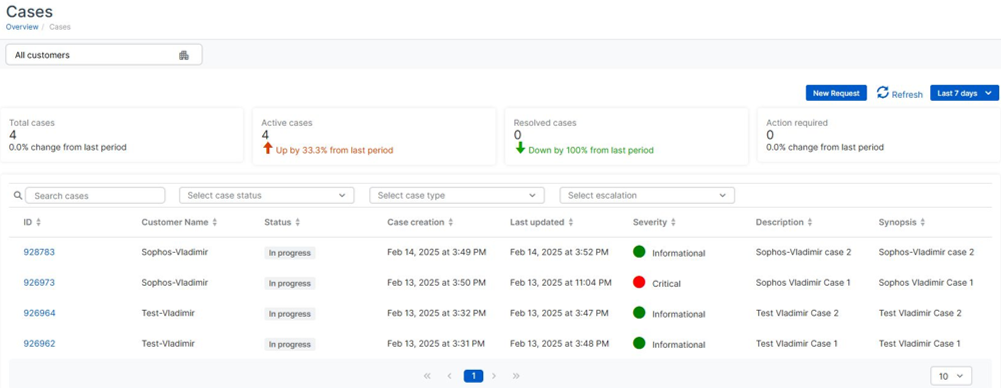
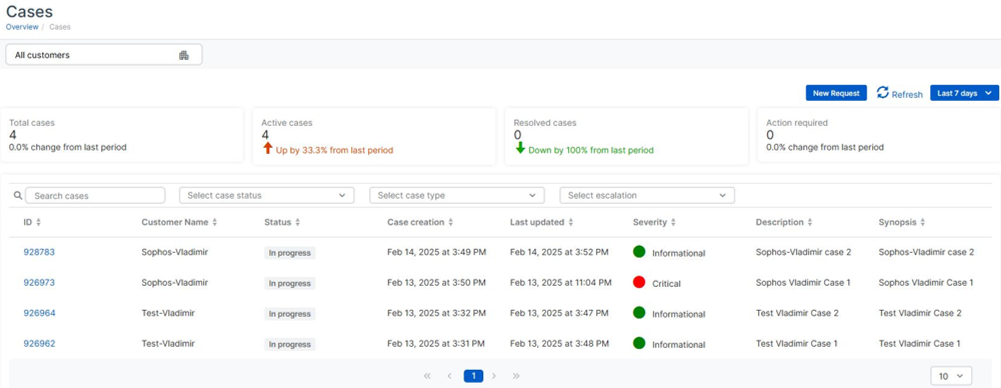
Sophos MDR is the world's largest Agentic SOC by customer count, combining AI-resolved cases with human analyst oversight at scale. In Sophos' model, AI analyzes and prioritizes incoming threat signals, automatically resolving cases without human intervention; Sophos analysts supervise the AI, govern its decision-making, and own all outcomes that require human judgment.
Key features include:
- Agentic AI with analyst governance: Sophos' agentic AI layer handles intake, triage, and case resolution autonomously for the majority of incidents, while human analysts focus exclusively on cases requiring contextual judgment, compliance decisions, or high-severity response, reducing mean time to respond while preserving human accountability.
- Open-platform integration: Sophos MDR ingests telemetry from 350+ security products without requiring customers to replace their existing stack, supporting endpoint, SIEM, firewall, cloud, identity, and productivity application sources including deep Microsoft ecosystem integration.
- Full-scale incident response with no caps: The MDR Complete tier provides unlimited incident response including root cause analysis, digital forensics, and active threat neutralization without per-incident billing, reducing cost unpredictability for organizations experiencing frequent attacks.
- MITRE ATT&CK-aligned proactive threat hunting: Sophos analysts conduct structured threat hunts mapped to the MITRE ATT&CK framework, surfacing adversary behaviors that automated detection may miss and providing customers with detailed MITRE tactic coverage reports.
- Breach protection warranty: Qualified customers receive financial warranty coverage for incident response costs in the event of a major breach, providing risk transfer in addition to the managed security service itself.
- Scale across 39,000+ customers: The breadth of Sophos MDR's deployment base provides cross-customer threat intelligence at scale, enabling detection of emerging attack patterns and campaign activity earlier than vendors with smaller data sets.
Limitations (as reported by users on G2):
- Reporting customization: Multiple reviewers note that the dashboard-level reporting lacks the ability to query raw telemetry or create custom report templates, limiting teams that want self-service forensic access.
- Technical support responsiveness: Recurring feedback cites delays in technical support ticket resolution for non-critical issues, particularly in off-hours for some regions.
- Endpoint agent resource consumption: Some users report that the Sophos endpoint agent can consume significant system resources, particularly during scanning operations, which may affect performance on older hardware.
Source: Sophos
Full-Service MDR Providers
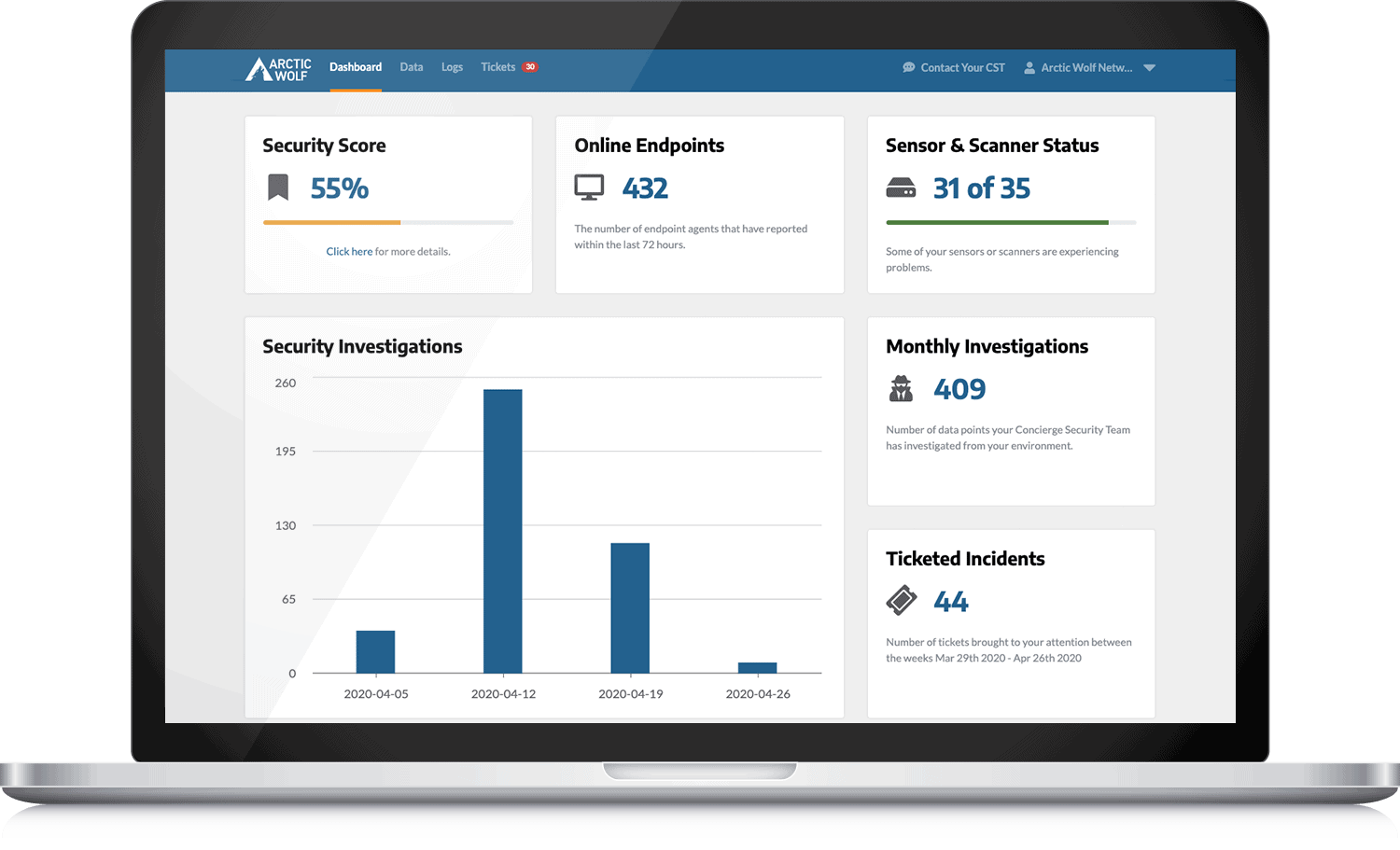
5. Arctic Wolf MDR

Best for: Mid-market organizations without a dedicated SOC that want a named security team rather than an anonymous monitoring service
Strengths: Concierge Security Team model assigns a named team to each customer; $3M Security Operations Warranty; Aurora Agentic SOC with AI-driven outcomes
Things to consider: 71% of raw alerts are false alarms per vendor's own 2025 data; customers cannot query raw telemetry directly; response model is guided rather than hands-on remediation
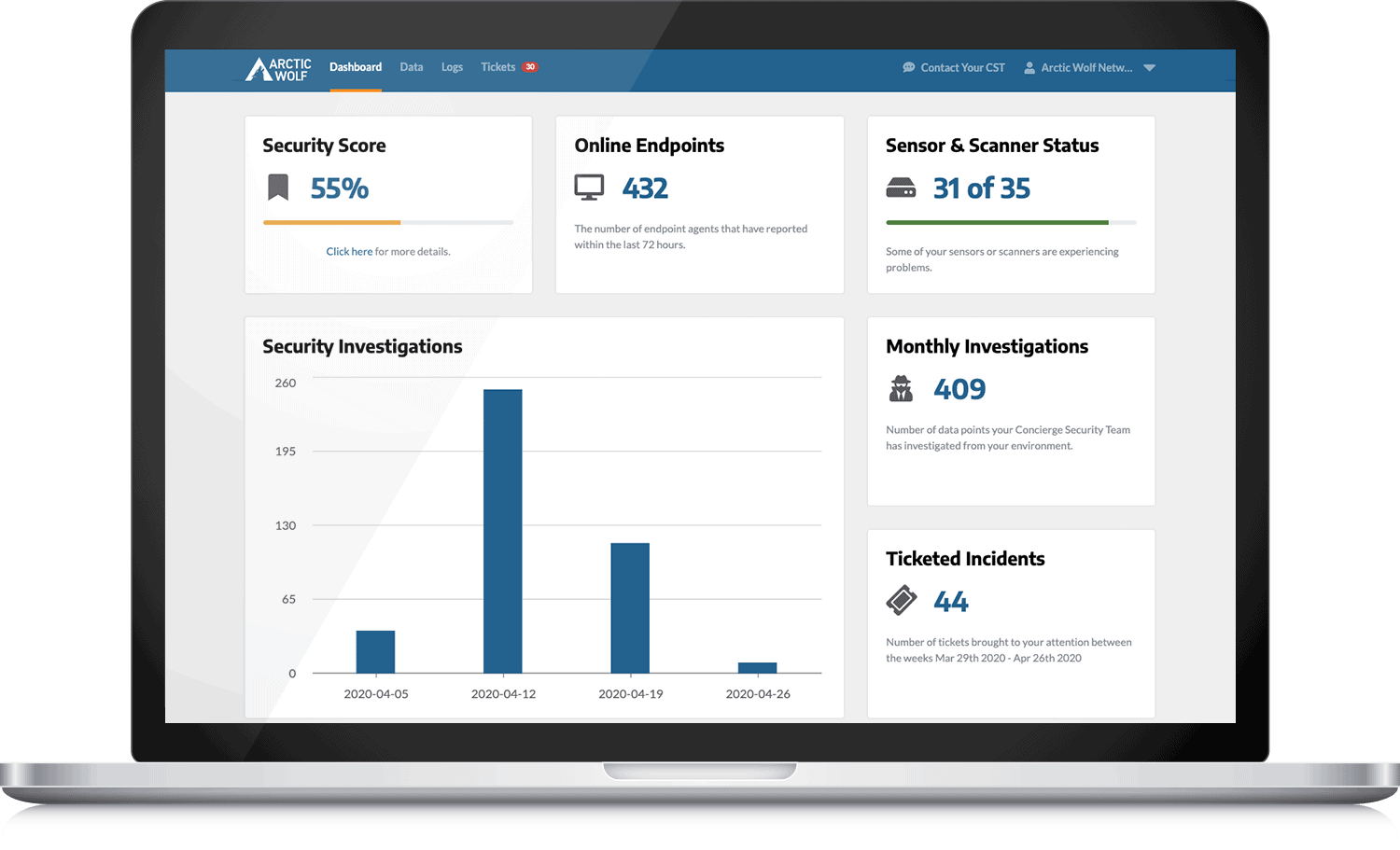
Arctic Wolf MDR provides 24/7 monitoring of networks, endpoints, cloud environments, and identity systems, delivered through its Concierge Security Team (CST) model. Each customer is assigned a dedicated named CST that learns their environment, configures Arctic Wolf Sensors and Agents, and serves as a single point of contact for investigations, reporting, compliance support, and security guidance. This model emphasizes ongoing operational partnership rather than purely reactive incident handling.
Key features include:
- Concierge Security Team delivery model: Each customer is paired with a dedicated named security team that onboards alongside their staff, learns the environment's topology and business context, and provides ongoing security guidance beyond reactive incident response — including standard and customized alerting, compliance support, and quarterly security reviews.
- Aurora Agentic SOC: Arctic Wolf's underlying platform uses AI to automate investigation steps, reduce alert noise through behavioral analytics, and surface prioritized findings for the CST, enabling analysts to handle a broader customer base without sacrificing response quality.
- Active Response for endpoint and network containment: The platform supports automated and analyst-triggered response actions including endpoint isolation through compatible EDR integrations, network containment, and account suspension, allowing containment to begin within minutes of detection.
- $3M Security Operations Warranty: Arctic Wolf provides financial warranty coverage of up to $3 million for qualifying cybersecurity incidents, one of the largest financial assurance commitments in the MDR market, included at no additional cost with the service.
- Compliance and audit support: The service includes structured reporting aligned to common regulatory frameworks, with CST analysts providing documentation and guidance for audit requirements — particularly valued by mid-market organizations with compliance obligations but limited internal security staff.
- Data Explorer and Security Assistant: Customers have access to a purpose-built search interface for querying security event data and an AI-powered assistant for investigation support, providing more self-service capability than traditional MSSP models.
Limitations (as reported by users on G2):
- High false positive rate at the raw alert level: Arctic Wolf's own 2025 Security Operations Report noted that 71% of raw alerts across the platform were false alarms, and multiple user reviews describe higher-than-expected noise reaching customers despite SOC filtering.
- Limited raw telemetry access: Customers cannot directly query the underlying telemetry or threat feeds, which frustrates security teams that want forensic independence or the ability to run custom detection logic.
- Guided response rather than active remediation: Arctic Wolf's response model provides guidance and recommended actions to customer IT teams rather than directly executing remediation on their behalf, which may require internal staff availability to complete containment steps.
Source: Arctic Wolf
6. Rapid7 Managed Threat Complete

Best for: Organizations wanting MDR that includes integrated vulnerability management and unlimited incident response in a single subscription
Strengths: MDR + XDR + vulnerability management + DFIR in one service; agentic AI investigation workflows; multi-vector telemetry across endpoint, cloud, identity, and network
Things to consider: Some users note longer response times outside elite service tiers; standard MDR tiers offer fewer customization options than the enterprise offering
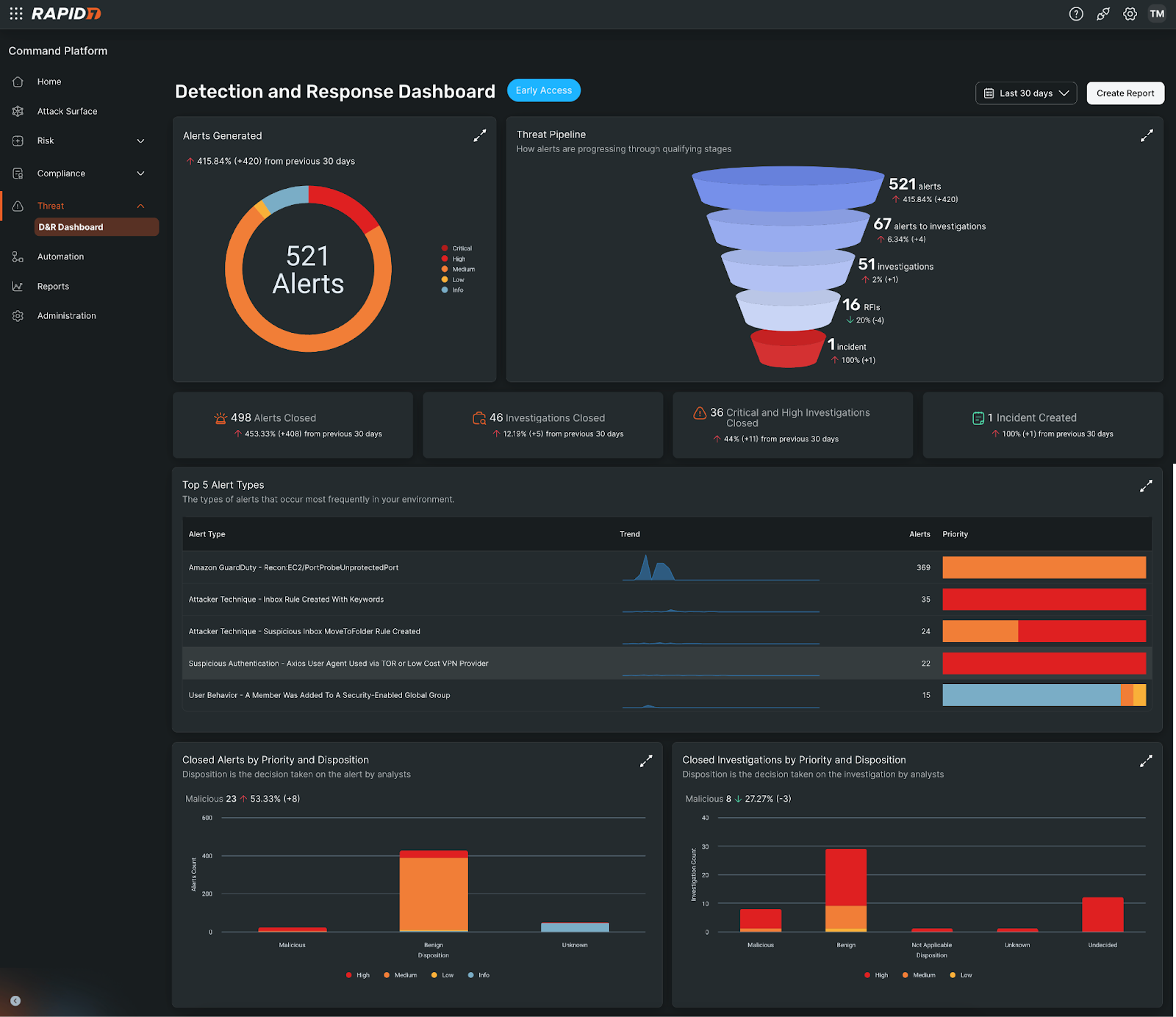
Rapid7 Managed Threat Complete (MTC) is Rapid7's bundled MDR offering that combines managed detection and response with exposure management in a single subscription, priced per endpoint rather than by data volume. The service covers the full attack surface through InsightIDR, Rapid7's next-generation SIEM and XDR platform, with the MDR SOC working directly within the same environment as the customer's security team.
Key features include:
- Unified MDR and vulnerability management: Managed Threat Complete includes Rapid7's InsightVM vulnerability management alongside MDR, with risk context from vulnerability and asset data flowing directly into investigations to prioritize response on threats most likely to cause business impact.
- Agentic AI investigation workflows: Rapid7's AI Engine automates structured investigation processes — data gathering, evidence analysis, and case documentation — allowing analysts to focus on judgment-intensive decisions while AI handles routine investigative steps at scale.
- Active Response for real-time containment: The MDR SOC can isolate endpoints and suspend user accounts in real-time during confirmed incidents, with customers notified immediately through preferred communication channels, reducing dwell time without requiring customer team availability.
- Multi-vector telemetry coverage: The service ingests telemetry from endpoints, cloud environments, networks, identities, and email, with seamless integration of third-party security tools alongside Rapid7's native detection capabilities for complete attack surface visibility.
- MDR for Enterprise with custom detections: The enterprise tier supports integration of proprietary event sources, customer-specific detection engineering, and collaborative SOC engagement models designed for large organizations with complex or non-standard environments.
- Dedicated Cybersecurity Advisors: Advanced and Ultimate tier customers receive dedicated advisors who provide ongoing security program guidance, threat briefings, and proactive recommendations for improving detection coverage and reducing exposure.
Limitations (as reported by users on PeerSpot):
- Response time variability by tier: Some users note that response times for non-critical incidents can be slower outside the Elite and Ultimate service tiers, particularly for lower-priority alerts.
- Customization limited on standard tiers: The standard Managed Threat Complete tiers offer less flexibility for detection tuning and custom integrations compared to the MDR for Enterprise offering, which may constrain larger or more complex organizations.
- Pricing complexity: Rapid7 offers multiple add-on modules alongside the core MTC subscription, and users note that evaluating the total cost of the full service package requires careful scoping.
Source: Rapid7
7. Red Canary MDR

Best for: Enterprises with existing EDR platforms that need endpoint-focused MDR with deep detection engineering and agentic AI investigation
Strengths: 99%+ true positive detection rate; Forrester Wave Leader Q1 2025 with highest scores in 10 categories including detection engineering and threat hunting; acquired by Zscaler in May 2025
Things to consider: Higher price point compared to platform-bundled alternatives; some users report occasional alert delays; customer base is concentrated in the enterprise segment
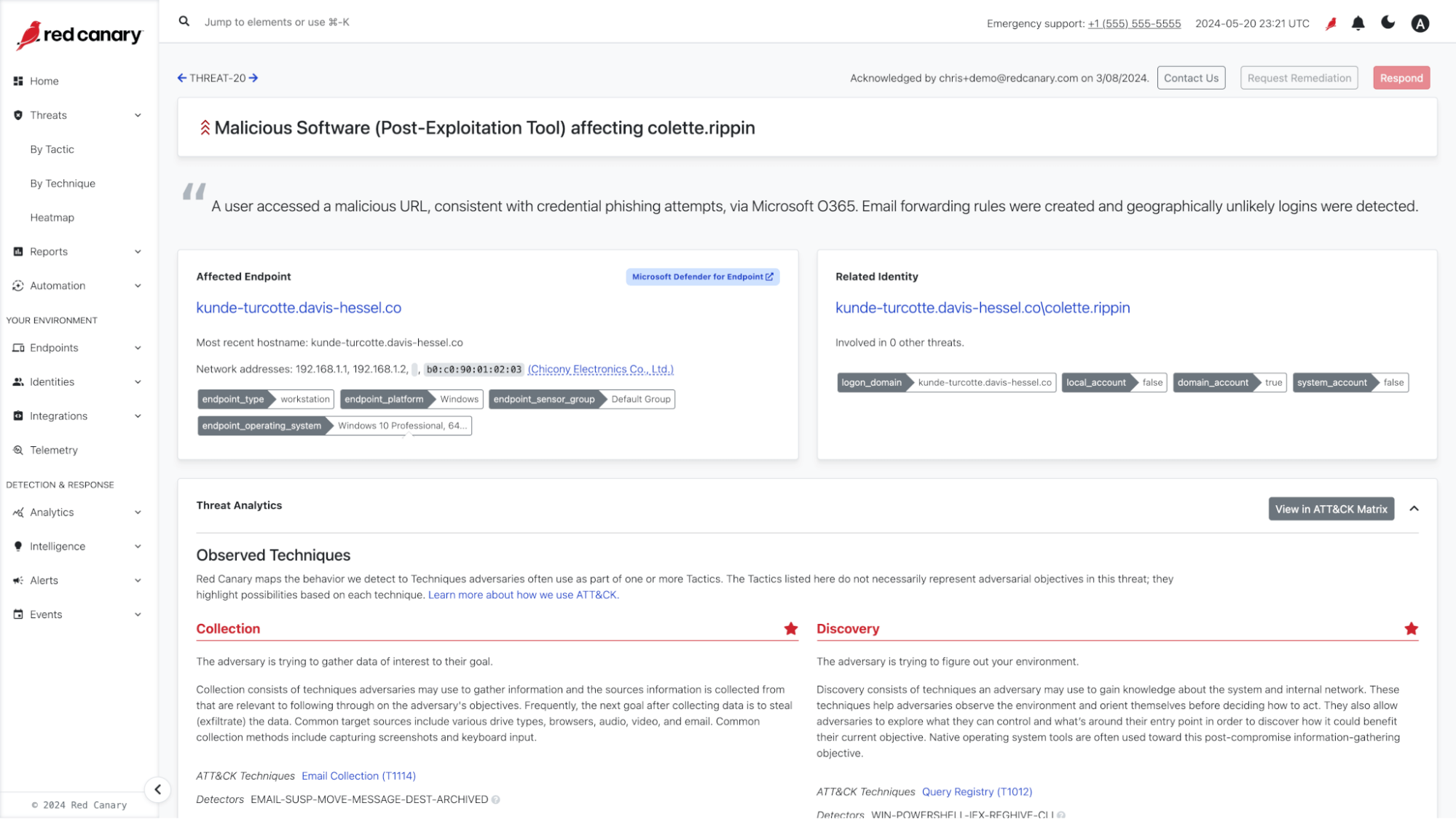
Red Canary MDR operates as a vendor-agnostic MDR service that integrates with existing EDR platforms — including CrowdStrike, Microsoft Defender, Carbon Black, and others — rather than requiring customers to adopt a proprietary endpoint agent. Founded in detection engineering, Red Canary applies its Detection-as-Code methodology to build and continuously update detection rules that go beyond what generic threat feeds provide.
Key features include:
- Detection-as-Code detection engineering: Red Canary's SOC team continuously builds and validates detection rules from first principles rather than relying on static signature databases, producing a 99%+ true positive detection rate that reduces false positive noise for security teams.
- Agentic AI investigation with 99.6% accuracy: Red Canary's embedded AI automates the investigation and triage workflow, providing confirmed detections with full context — adversary techniques, affected assets, and recommended response steps — delivered to analysts within approximately 2 minutes of detection.
- Automated response playbooks: Red Canary's automation layer supports configurable SOAR playbooks that can trigger endpoint isolation, account suspension, network segmentation, or team notifications via webhooks, integrating with major EDR platforms and identity providers for coordinated automated containment.
- Multi-platform EDR integration: The service works natively with CrowdStrike Falcon, Microsoft Defender for Endpoint, VMware Carbon Black, and other leading EDRs, monitoring endpoints, identities, cloud infrastructure across AWS, Azure, and GCP, and SaaS applications from a single MDR layer.
- Threat intelligence and adversary research: Red Canary publishes an annual Threat Detection Report analyzing over 110,000 real-world threats, with findings incorporated directly into detection rule updates and SOC analyst training, providing customers access to threat intelligence derived from active investigations.
- 24/7 expert response team: Red Canary's analysts provide guided, automated, and human-led response capabilities 24/7, with the service acting as an extension of the customer's security team and offering direct analyst collaboration through the platform for incident investigation and response planning.
Limitations (as reported by users on G2):
- Higher price point: Multiple users describe Red Canary as more expensive than platform-bundled MDR alternatives, which may be a barrier for smaller organizations or those with limited security budgets.
- Alert delay in some cases: A subset of reviewers note that there can be a lag between when a system alert is generated and when Red Canary notifies the customer, which can affect time-sensitive incident workflows.
- Limited depth outside core EDR sources: While coverage has expanded, some users note that detection depth outside the core EDR integrations is less mature than endpoint-focused coverage.
Source: Red Canary
8. Expel MDR

Best for: Organizations that want full operational transparency into every SOC analyst action and a collaborative MDR partnership model
Strengths: Full transparency via Expel Workbench; 22-minute average MTTR on critical incidents; 160+ API-first integrations covering cloud, SaaS, identity, and on-premises environments
Things to consider: Threat hunting and incident response are add-ons not included in the base service; customer base skews toward mid-market and enterprise, with limited SMB fit
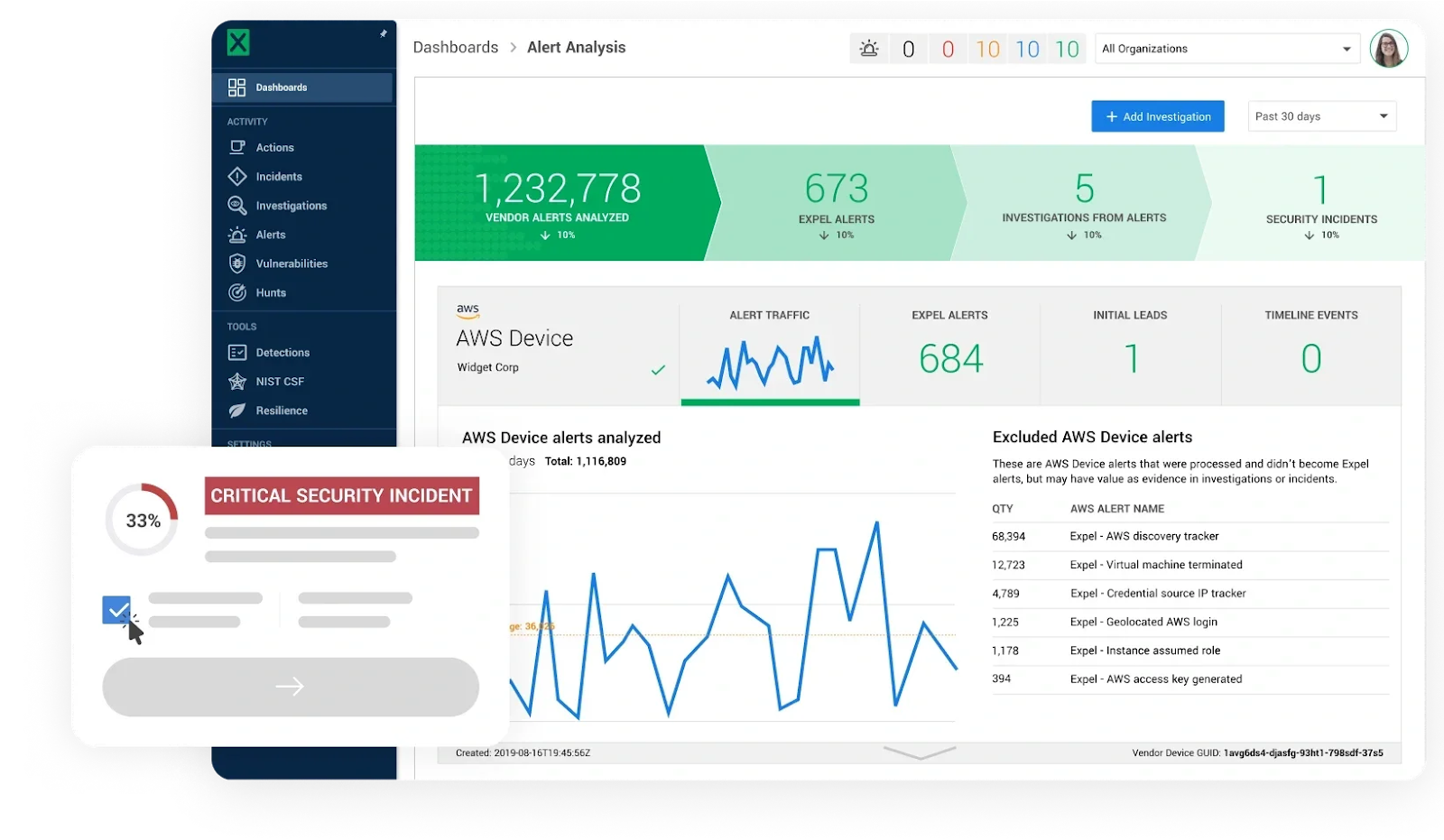
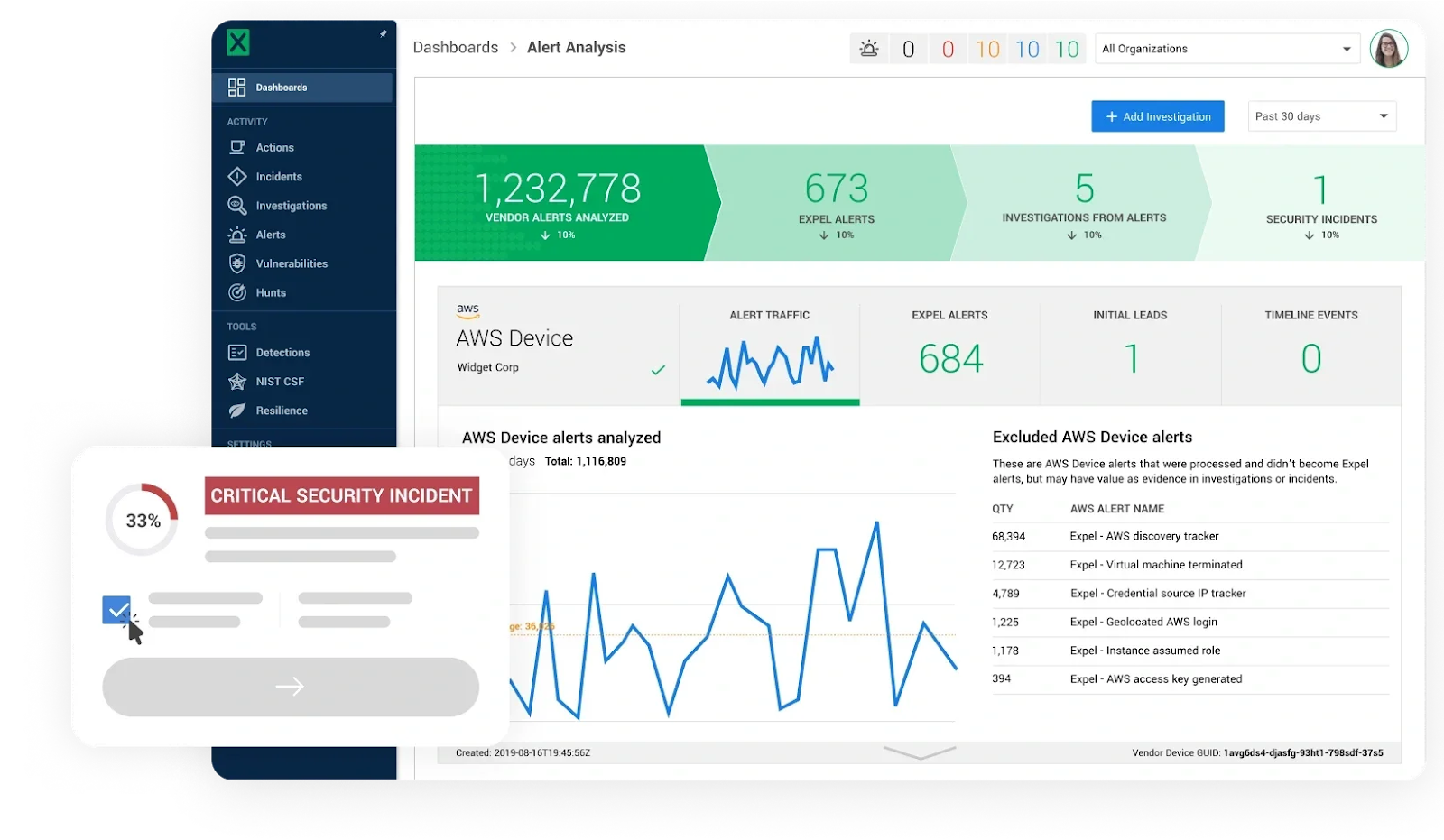
Expel MDR is built on the premise of "transparent MDR" — every action taken by Expel's analysts is visible to the customer in real time through the Expel Workbench platform. Workbench serves as a shared operational layer where customers see investigation steps, escalation decisions, response actions, and analyst reasoning as they happen, providing a level of operational insight that distinguishes Expel from black-box MDR services. Expel was founded by former Mandiant and FireEye executives and operates a tierless SOC model.
Key features include:
- Expel Workbench full-transparency platform: Every SOC analyst action — investigation steps, escalation decisions, response actions, and notes — is visible to customers in real time through Workbench, enabling security teams to follow investigations as they unfold and collaborate directly with Expel analysts during incidents.
- API-first integrations with 160+ tools: Expel connects to existing security tools without deploying proprietary agents, covering EDRs, cloud platforms, identity providers, SaaS applications, firewalls, and SIEM tools through a structured API integration framework that enables rapid onboarding in hours rather than weeks.
- Configurable automated remediation: Customers can configure specific auto-remediation actions — such as account lockout, endpoint isolation, or alert dismissal — with full control over which actions require approval and which execute automatically, using a toggle interface within Workbench.
- Tierless SOC with experienced analysts from day one: Expel's SOC operates without L1/L2/L3 tiers, ensuring that every alert is handled by an experienced analyst rather than being triaged by junior staff before escalation, reducing the risk of missed detections and providing consistent response quality.
- Proactive email threat defense: Through integrations with Proofpoint, Abnormal AI, and Sublime Security, Expel detects and blocks email threats before they reach user inboxes, extending MDR coverage to one of the most common attack vectors for identity-based incidents.
- Metrics and performance reporting: Expel publishes quantitative service metrics — including MTTR by priority, automation effectiveness, and coverage breadth — providing customers with objective data to evaluate service performance and demonstrate program value to leadership.
Limitations (as reported by users on G2):
- Threat hunting and incident response are add-ons: Expel's base MDR service does not include proactive threat hunting or full incident response handling; these capabilities are available as separate add-ons, which can increase total cost for organizations that need comprehensive coverage.
- Limited pre-built automated playbook depth: Some users note that automated remediation workflows, while configurable, could be expanded with more pre-built playbook options for specialized or complex response scenarios.
- Coverage depth outside cloud-native environments: A number of reviewers note that coverage depth in certain specialized on-premises or legacy environments is less mature than in cloud-native configurations.
Source: Expel
9. eSentire MDR

Best for: Organizations requiring contractual response SLA guarantees with active hands-on remediation executed directly by SOC analysts
Strengths: Contractual 15-minute Mean Time to Contain with 99.3% first-host threat isolation; 300+ technology integrations; multi-signal XDR covering endpoint, network, cloud, identity, and log sources
Things to consider: Premium pricing that may be a barrier for SMBs; Atlas portal offers limited self-service query capabilities; APAC SOC coverage relies on regional partners rather than a dedicated facility
eSentire MDR provides what the company describes as "complete response" rather than guided response — eSentire analysts take direct action on customer environments, including endpoint isolation, account lockdown, and network containment, without requiring the customer's internal team to execute steps. The service is built on eSentire's XDR Cloud Platform, which applies machine learning to eliminate noise, enables real-time detection, and automatically blocks known threats, while the Elite Threat Hunters conduct manual investigation and containment for complex incidents.
Key features include:
- Contractual 15-minute Mean Time to Contain: eSentire publishes and contractually commits to a 15-minute MTTC with 99.3% first-host isolation accuracy, providing customers with a measurable and legally enforceable response SLA rather than an aspirational target.
- True active remediation: eSentire analysts execute direct response actions within customer environments — isolating endpoints, suspending accounts, blocking network connections — without relying on customer staff availability, enabling containment to proceed even when internal teams are unavailable.
- Multi-signal XDR coverage: The platform ingests data from six attack surface areas — endpoint, network, log, cloud, identity, and vulnerability — correlating signals across all sources to identify attack patterns that single-vector MDR solutions would miss.
- 300+ technology integrations with BYOL flexibility: eSentire supports four EDR platforms through a bring-your-own-license model and integrates with 300+ security and IT tools, allowing organizations to retain their existing investments while adding eSentire's managed detection layer on top.
- Elite Threat Hunters and unlimited incident handling: The service includes continuous proactive threat hunting by eSentire's specialist analysts and unlimited incident response handling with no per-incident billing cap, ensuring that organizations with frequent attack activity are not penalized by usage-based pricing.
- Cyber Resilience Score and reporting: Customers receive a quantified Cyber Resilience Score benchmarked against industry and segment peers, alongside detailed threat intelligence reports and real-time event visibility through the Atlas customer portal.
Limitations (as reported by users on G2):
- Premium pricing for SMBs: Multiple users describe eSentire as a significant cost investment that may be difficult to justify for smaller organizations, positioning it more clearly as a mid-market to enterprise solution.
- Limited self-service query depth in Atlas portal: Some reviewers note that the Atlas customer portal does not provide granular raw data access or advanced forensic query capabilities, limiting investigation independence for teams with in-house analyst capacity.
- Response delay for non-critical tickets: A subset of users describe slower responsiveness for lower-priority support requests and non-emergency configuration queries compared to the speed observed during active incidents.
SMB-Focused MDR Solutions
10. Huntress Managed EDR

Best for: Small and mid-sized businesses and the MSPs that serve them, needing affordable managed endpoint detection with hands-on SOC support
Strengths: Less than 1% false positive rate; Active Remediation executes threat removal with zero manual review; purpose-built for MSP workflow integration with major RMM and PSA tools
Things to consider: Less feature-rich than enterprise platforms like CrowdStrike or SentinelOne; macOS support requires additional configuration steps; reporting customization is limited
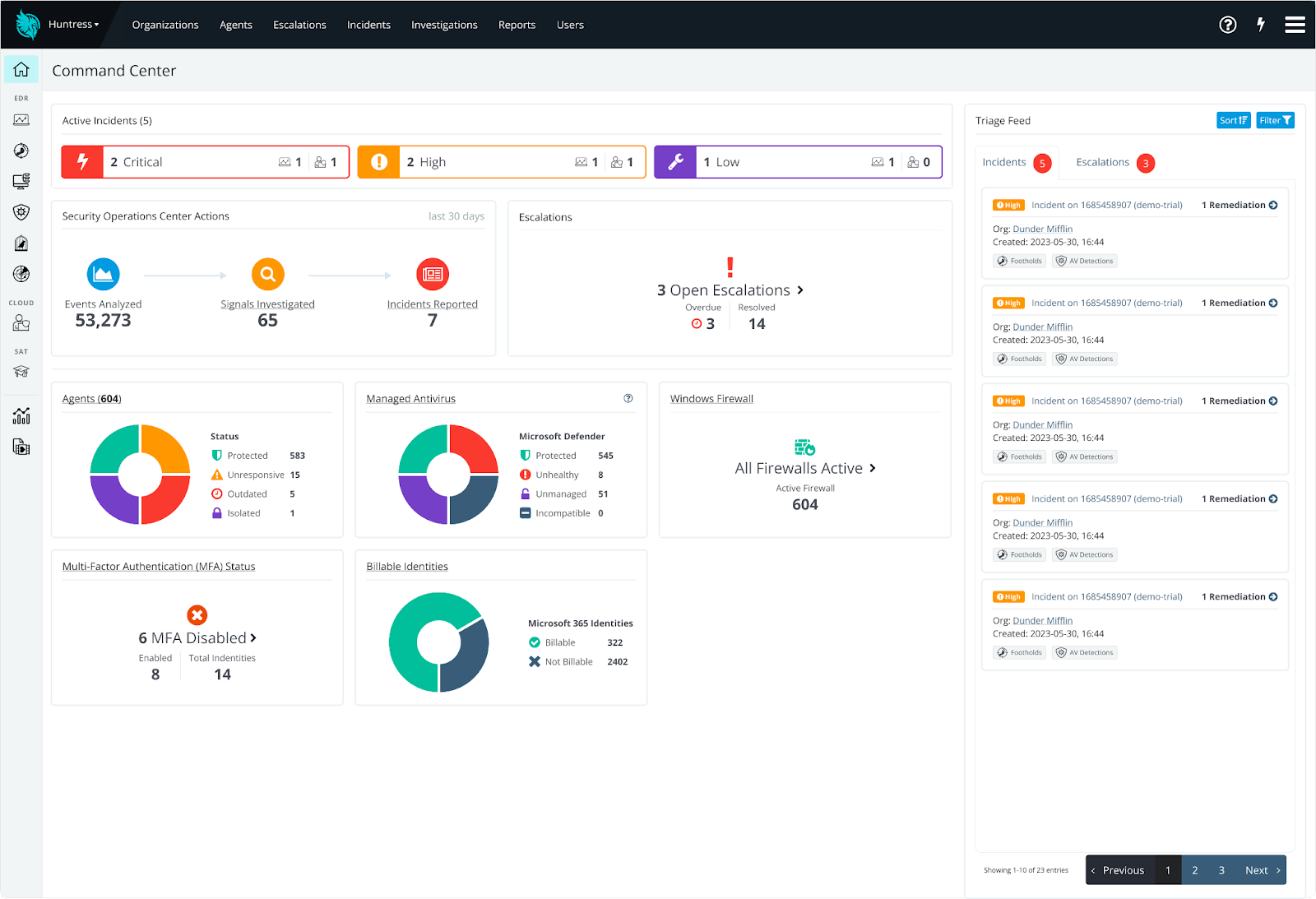
Huntress Managed EDR is a purpose-built endpoint detection and response service designed for the SMB market and the managed service providers that support it. Unlike traditional MDR, which monitors customer-managed tools, Huntress builds, owns, and manages its own EDR technology, enabling faster feature development and tighter integration between the detection engine and the 24/7 human-led SOC.
Key features include:
- 24/7 human-led SOC with sub-1% false positive rate: Huntress's in-house SOC analysts review and classify all detections before they reach customer dashboards, filtering out noise so that every alert a customer receives has been validated by a human expert and represents a confirmed or high-confidence threat.
- Active Remediation with zero manual intervention: With customer pre-authorization, Huntress will automatically isolate affected endpoints, terminate malicious processes, and remove persistent footholds the moment a threat is confirmed, without requiring the customer to take any action — reducing the window between detection and containment.
- Persistent foothold detection: Huntress's detection logic focuses specifically on the persistence mechanisms attackers rely on after initial access — including registry run keys, scheduled tasks, Windows services, and process injection — catching threats that remain invisible to signature-based tools.
- Forensic acquisition capabilities: The Huntress agent can perform targeted forensic tasks during active investigations — initiated by SOC analysts or automated playbooks — collecting detailed endpoint artifacts to support root cause analysis and to help customers understand the full scope of a compromise.
- MSP-optimized management and integrations: Huntress provides a multi-tenant management console that allows MSPs to monitor all client environments from a single interface, with integrations for major RMM and PSA tools including ConnectWise, Kaseya, NinjaOne, and Datto for workflow automation.
- Step-by-step remediation guidance: When Huntress detects a threat, it provides clear written remediation instructions alongside any automated response actions, enabling IT teams without deep security expertise to resolve incidents confidently and to learn from each event.
Limitations (as reported by users on G2):
- Limited macOS compatibility: Several reviewers note that deploying Huntress on macOS endpoints requires additional configuration steps and that Mac coverage is less mature than Windows protection.
- Reporting and alerting customization: Users note that the platform's alerting and reporting options are not highly customizable, limiting the ability to tailor notification thresholds or report formats for specific organizational requirements.
- Less advanced than enterprise platforms: Huntress is positioned as an accessible SMB solution, and reviewers note that it lacks some of the advanced forensics and policy customization features available in enterprise-tier platforms like SentinelOne or CrowdStrike.
Source: Huntress
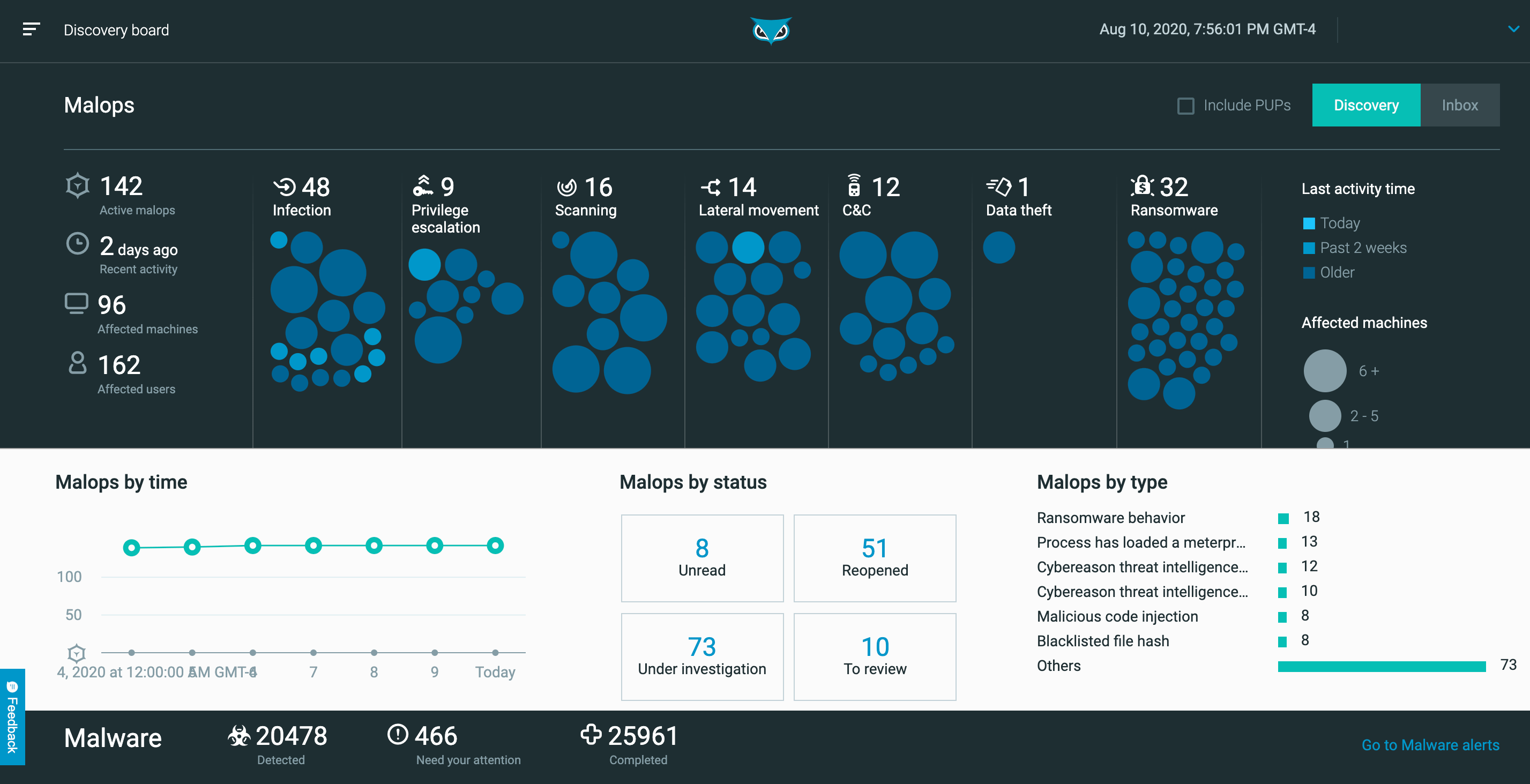
11. LevelBlue MDR (powered by Cybereason XDR)

Best for: Enterprises needing MDR backed by deep XDR forensics, FedRAMP authorization, and integrated DFIR capabilities
Strengths: Cybereason's MalOp engine for operation-centric detection; 100% detection in 2024 MITRE ATT&CK Evaluation; SpiderLabs threat intelligence; FedRAMP/StateRAMP authorization
Things to consider: Five acquisitions in two years create product integration complexity; multiple platform lines remain unconsolidated as of mid-2026; support responsiveness variability reported during platform transition
LevelBlue MDR is the result of significant consolidation: AT&T Cybersecurity was spun off as LevelBlue in May 2024, then absorbed Stroz Friedberg, Trustwave (MDR and SpiderLabs), Cybereason (XDR platform, acquired November 2025), and Alert Logic within approximately two years. Trustwave MDR remains the primary enterprise service offering today, with the consolidated LevelBlue platform expected to fully integrate Cybereason's XDR capabilities through 2026.
Key features include:
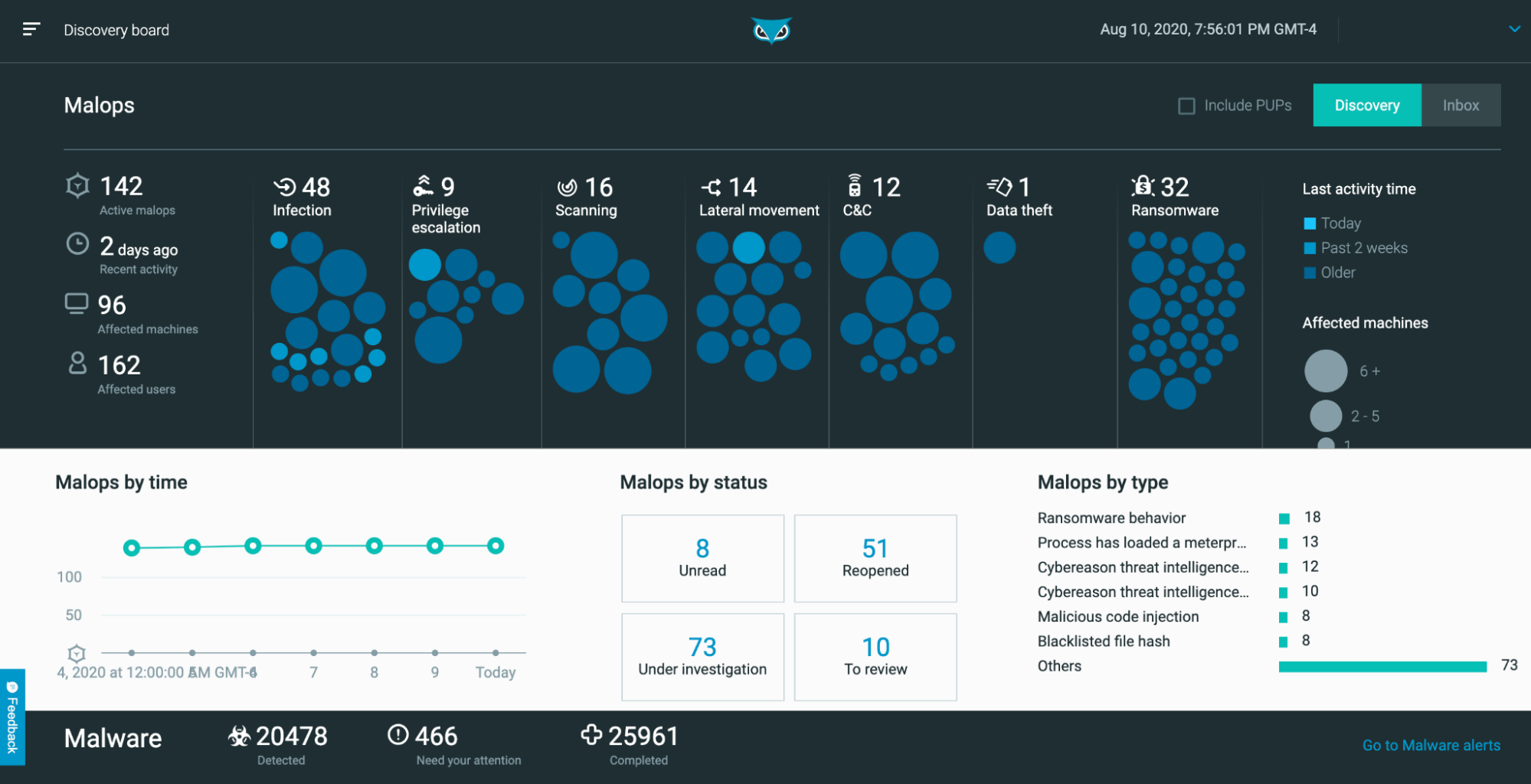
- MalOp operation-centric detection: Rather than generating individual alerts, Cybereason's MalOp Engine correlates all endpoint telemetry into single operation timelines that show the full attack story — from initial access through lateral movement to impacted assets — reducing investigation time and enabling response at the operation level rather than per-alert.
- 100% event data collection with no sampling: The platform ingests 100% of endpoint event data in real time without filtering or sampling at the collection layer, ensuring that low-frequency adversary behaviors that would be missed by sampled telemetry are available for correlation and detection.
- Automated and one-click remediation: LevelBlue MDR supports both fully automated response — where predefined conditions trigger immediate remediation across all endpoints simultaneously — and analyst-guided single-click remediation, enabling rapid response without requiring manual intervention for each affected host.
- DFIR integration through Stroz Friedberg and Cybereason Nocturnus: LevelBlue's combined capabilities include digital forensics and incident response expertise from Stroz Friedberg alongside Cybereason's Nocturnus threat research team, providing organizations with expert-led DFIR services in high-severity incidents without engaging a separate vendor.
- FedRAMP and StateRAMP authorization: LevelBlue holds FedRAMP and StateRAMP authorizations, making it one of the few MDR providers authorized for US federal and state government deployment, addressing compliance requirements that exclude non-authorized vendors.
- SpiderLabs threat intelligence: Trustwave's SpiderLabs division — comprising over 1,000 offensive security specialists conducting more than 2,100 penetration tests annually — provides proprietary adversary intelligence that informs detection rules, threat briefings, and proactive hunting activities across the LevelBlue MDR service.
Limitations (as reported by users on Gartner Peer Insights):
- Product integration complexity post-acquisitions: Multiple acquisitions in under two years have resulted in several product lines (Trustwave MDR, Cybereason XDR, Alert Logic MDR) that remain partially separate, creating potential confusion for customers onboarding to the consolidated platform.
- Historical platform stability issues: Some reviewers cite bugs and stability problems with the underlying Cybereason platform accumulated prior to the acquisition, particularly relating to agent updates in complex Windows environments.
- Support responsiveness during transition: A subset of users describe delays in support ticket resolution attributed to organizational restructuring following the acquisitions, with some noting that routing support requests to the right team has become less direct.
Source: LevelBlue
12. Bitdefender MDR

Best for: Organizations seeking MDR backed by a security vendor that owns and builds the underlying platform, with strong MITRE ATT&CK performance
Strengths: #1 ranked in 2024 MITRE Engenuity ATT&CK Evaluations for Managed Services; 285+ SOC analysts; breach warranty up to $1M (MDR PLUS); GravityZone XDR platform owned entirely by Bitdefender
Things to consider: Third-party integrations are more limited than multi-vendor MDR providers; documentation for self-service configuration can be incomplete; endpoint agent resource usage during scans noted by users
Bitdefender MDR is delivered through Bitdefender's GravityZone XDR platform, which the company both builds and owns — a distinction from MDR providers that license third-party detection technology. The SOC team of over 285 analysts, sourced from backgrounds including the U.S. Air Force, Navy, NSA, and British intelligence services, operates across global SOCs 24/7.
Key features include:
- GravityZone XDR platform with single technology stack: Bitdefender owns and builds the underlying detection platform, enabling tighter integration between the detection engine, response capabilities, and SOC operations than MDR providers that rely on third-party technology, with a single vendor accountable for the entire stack.
- Pre-Approved Actions for immediate response: Bitdefender analysts can execute a defined set of containment and response actions — such as endpoint isolation, process termination, or blocking network connections — without waiting for per-incident customer approval, reducing response latency during fast-moving attacks.
- Alert lifecycle management: Rather than forwarding aggregated alerts to customers, Bitdefender analysts manage the entire alert lifecycle — analyzing thousands of raw events down to a handful of prioritized responses and recommendations — ensuring that customers receive actionable outputs rather than raw event volumes.
- 285+ elite SOC analysts with intelligence agency backgrounds: Bitdefender's SOC workforce includes analysts with backgrounds from major government intelligence and defense organizations, bringing adversary tradecraft expertise to threat hunting and investigation workflows beyond what typical commercial security operations teams provide.
- Post-containment 72-hour enhanced monitoring: Following any containment action, Bitdefender initiates 72 hours of heightened surveillance for the affected environment to detect follow-on activity, persistence re-establishment, or secondary compromise attempts that often accompany sophisticated attacks.
- Breach warranty coverage: Bitdefender MDR includes a breach warranty providing financial coverage for incident response expenses in qualifying ransomware events, with the MDR PLUS tier offering up to $1 million in coverage, providing risk transfer alongside the managed security service.
Limitations (as reported by users on PeerSpot):
- Limited third-party tool integrations: Users note that Bitdefender MDR's integration ecosystem is narrower than multi-vendor platforms, particularly for organizations with established security stacks built around non-Bitdefender endpoint technology.
- Resource consumption during scanning: Several reviewers report that the GravityZone endpoint agent can consume significant CPU and memory resources during active scanning, which may affect productivity on older or resource-constrained hardware.
- Documentation gaps for self-service configuration: Some users describe incomplete or unclear support documentation, particularly for advanced configuration tasks, requiring support tickets for steps that more comprehensive documentation would address.
Source: Bitdefender
MDR Selection Criteria for Automated Response
Organizations should look out for the following automated response considerations when evaluating MDR services.
Response Authority
Response authority refers to the level of control an MDR provider has to act on behalf of the client. Some organizations allow providers to execute containment and remediation automatically, while others require approval for each step. Clear agreements on response authority help avoid delays and ensure appropriate actions without exceeding organizational boundaries.
Organizations should evaluate risk tolerance and regulatory requirements when defining response authority. Granting broader authority enables faster responses but may increase the risk of unintended disruptions. Establish detailed policies and escalation paths to balance speed with oversight and align MDR actions with business priorities and compliance obligations.
Fit with Business Size and Maturity
The effectiveness of MDR automated response depends on how well it matches an organization’s size and cybersecurity maturity. Smaller businesses may benefit from highly automated solutions that require minimal in-house expertise, while larger enterprises often need more customization and integration with existing processes. The level of automation should match the organization’s resources, risk profile, and regulatory landscape.
Mature organizations with established security teams may want MDR services that complement existing capabilities, offering automation for routine tasks while reserving complex investigations for in-house experts. Less mature organizations may need providers to deliver end-to-end response, including guidance and hands-on remediation.
Supported Containment Actions
MDR solutions vary in the scope of automated containment actions they perform. Some providers can isolate endpoints, block network traffic, and disable compromised accounts, while others offer more limited capabilities. Understanding which containment actions are supported, and how they integrate with the IT environment, is critical for incident response.
Organizations should assess whether the MDR provider’s supported actions align with security requirements and infrastructure. For example, in cloud-heavy environments, automated response should extend to cloud workloads and SaaS applications. The scope of supported containment actions directly affects the provider’s ability to stop threats and prevent further damage.
Customization and Playbook Control
Customization is a factor in MDR automated response. Organizations need the ability to tailor response playbooks to their environment, risk tolerance, and business processes. Some MDR providers offer flexible playbook development, while others deliver more rigid, out-of-the-box solutions with limited customization.
Control over playbooks allows organizations to define how and when automated actions are executed, ensuring alignment with internal policies and compliance requirements. This flexibility is particularly important for businesses with specific workflows, regulatory constraints, or complex environments.
Integration Coverage
Integration coverage refers to how well the MDR solution connects with existing security and IT systems. MDR automated response requires integration with endpoints, networks, cloud platforms, identity providers, and other assets. Broader integration supports coordinated response.
Organizations should assess the MDR provider’s ability to support a range of technologies and environments, including legacy systems and modern cloud infrastructure. Gaps in integration can create blind spots and limit automated response. Broad integration coverage ensures the MDR solution can detect, contain, and remediate threats across the attack surface.