
Best MDR with Threat Containment: Top 12 in 2026
In this article

TL;DR: MDR threat containment stops active attacks through 24/7 monitoring, automated isolation, and expert-led response. For AI-powered forensic triage, Intezer AI SOC leads; for enterprise platform coverage, CrowdStrike Falcon Complete, SentinelOne Wayfinder, and eSentire MDR are key options to evaluate.
What Is MDR Threat Containment?
MDR (Managed Detection and Response) threat containment is a 24/7, expert-driven service that rapidly isolates, stops, and neutralizes cyber threats. It uses human intelligence, AI, and advanced tools to instantly block malicious activity, like disconnecting compromised devices or blocking IP addresses, minimizing damages from breaches.
Key aspects of MDR threat containment:
- Rapid isolation: MDR providers instantly contain threats by restricting network access, isolating infected hosts/endpoints, and locking down compromised user accounts.
- Automated and human-led action: While AI and machine learning handle initial detection and routine containment, human analysts validate threats and execute complex remediation steps to ensure accuracy.
- Proactive defense: Rather than waiting for an alert, services like Rapid7 MDR and Sophos MDR actively hunt for threats in the environment, identifying and isolating them early in the attack chain to prevent data exfiltration.
- Comprehensive response: Services like Cato Networks MDR and Palo Alto Networks MDR focus on blocking command-and-control (C&C) communication and removing malicious files.
This is part of a series of articles about MDR security
MDR Threat Containment Solutions At a Glance
The table below summarizes the key differences between the MDR threat containment solutions covered in this section. Each solution is explored in greater detail in the sections that follow.
| Solution | Category | Best For | Key Strengths | Things to Consider |
|---|---|---|---|---|
| Intezer AI SOC | AI-Augmented MDR Platforms | Teams replacing manual Tier 1 triage with AI-forensic investigation | Forensic-depth triage of every alert at sub-minute speed; endpoint-based pricing | Interface complexity; evidence collection gaps in some EDR integrations |
| CrowdStrike Falcon Complete Next-Gen MDR | AI-Augmented MDR Platforms | Enterprises needing AI-driven containment with full-lifecycle remediation | Agentic MDR with 1-min median MTTC; cross-domain coverage via Falcon platform | High cost; alert noise in complex environments |
| SentinelOne Wayfinder MDR | AI-Augmented MDR Platforms | Organizations on Singularity platform wanting Google TI-powered MDR | Google Threat Intelligence integration; Storyline attack visualization; $1M warranty | Singularity EDR platform required; behavioral analytics false positives |
| Microsoft Defender Experts for XDR | AI-Augmented MDR Platforms | Microsoft-centric environments wanting managed response across the Defender suite | Native Defender XDR integration; flexible managed or guided response model | Microsoft-only coverage; E5 licensing required for full response capability |
| Sophos MDR | Expert-Led MDR Services | Organizations seeking a tech-agnostic MDR with broad third-party integrations | Agentic SOC resolves 52% of cases autonomously; 350+ integrations; uncapped IR | Initial setup complexity; reporting can be overwhelming |
| Rapid7 MDR | Expert-Led MDR Services | Teams wanting exposure-aware detection that prioritizes by vulnerability risk | Risk-informed detection using InsightVM data; unlimited DFIR included | Higher false positive rate; support responsiveness gaps |
| Arctic Wolf MDR | Expert-Led MDR Services | Mid-market organizations wanting a dedicated team and proactive posture reviews | Named Concierge Security Team; Aurora Agentic SOC; $3M breach warranty | Limited raw data query access; higher cost for SMBs |
| eSentire MDR | Expert-Led MDR Services | Organizations requiring a contractual response SLA with multi-surface coverage | Contractual 15-min MTTC; 99.3% first-host isolation; 300+ integrations | Premium pricing; Atlas portal self-service query limitations |
| Red Canary MDR | Expert-Led MDR Services | Organizations with existing EDR investments wanting detection layered on top | 4,000+ behavioral analytics rules; stack-agnostic deployment; 99.6% AI accuracy | Elevated post-Zscaler acquisition churn; no published response SLAs |
| Palo Alto Networks Unit 42 MDR | Platform-Native and Enterprise MDR | Cortex XDR customers wanting threat intelligence-driven managed response | Unit 42 intelligence from 30M+ malware samples; 10x fewer alert emails; full remediation | Requires Cortex XDR; high cost; limited local data center options |
| Bitdefender MDR | Platform-Native and Enterprise MDR | Organizations seeking MDR bundled with GravityZone endpoint platform | MITRE ATT&CK 2024 top-ranked actionability; Pre-Approved Actions; follow-the-sun SOCs | Threat hunting search limitations; higher false positive rates in some environments |
| Secureworks Taegis ManagedXDR | Platform-Native and Enterprise MDR | Teams wanting full XDR platform access alongside managed detection | Customer access to full Taegis XDR platform; 90-second live chat access; CTU intelligence | Initial learning curve; integration gaps with some cloud environments post-acquisition |
Benefits of MDR Containment
MDR containment focuses on stopping threats early and limiting their impact. By combining fast detection with coordinated response actions, it reduces the time attackers have to operate and simplifies incident handling for internal teams:
- Reduced dwell time: Threats are identified and contained quickly, limiting how long attackers remain active in the environment.
- Reduced operational load: Security teams spend less time on manual triage and response, as MDR providers handle detection, validation, and containment actions.
- Improved security posture: Continuous monitoring and rapid containment reduce overall exposure and strengthen defenses against future attacks.
- Limited blast radius: Isolating compromised systems prevents lateral movement and stops threats from spreading across the network.
- Faster incident response: Predefined playbooks and automation enable immediate action once a threat is confirmed.
- 24/7 coverage: MDR services operate around the clock, ensuring threats are addressed even outside business hours.
- Consistency in response: Standardized processes reduce variability and ensure incidents are handled in a predictable, effective way.
- Better visibility: Centralized monitoring provides a clear view of threats, affected assets, and response actions.
- Lower recovery costs: Early containment reduces damage, minimizing downtime, data loss, and remediation expenses.
- Support for compliance: Documented detection and response processes help meet regulatory and audit requirements.
Related content: Read our guide to how to choose MDR services
Key Aspects of MDR Threat Containment
Rapid Isolation
When a threat is detected, compromised devices or user accounts must be separated from the rest of the environment to prevent lateral movement. This often involves network segmentation, device quarantine, or disabling credentials. Speed is critical, as delays can allow attackers to escalate privileges, deploy additional malware, or exfiltrate data.
Effective rapid isolation relies on technology and predefined playbooks. Automated tools enforce isolation instantly, while human analysts validate alerts and ensure containment actions do not disrupt legitimate business processes. This combination reduces operational impact.
Automated and Human-Led Action
MDR threat containment uses automated and human-led responses. Automation handles repetitive tasks, such as triggering endpoint isolation or blocking malicious IP addresses, enabling immediate reaction to common threats. This shortens response times and allows analysts to focus on complex investigations or novel attack techniques.
Human-led action is important for sophisticated threats or ambiguous alerts. Analysts interpret context, validate detections, and make decisions that automated systems might miss. This layered approach improves containment accuracy and reduces false positives that could disrupt operations.
Proactive Defense
Proactive defense in MDR containment means stopping threats before they cause harm. MDR providers use threat intelligence, behavioral analytics, and continuous monitoring to identify early signs of compromise. By detecting suspicious activity in its initial stages, they can initiate containment before attacks fully develop, limiting the attacker’s window of opportunity.
This approach also includes updating detection rules and response playbooks based on emerging threats. MDR teams analyze trends and adapt their strategies to address evolving tactics. Proactive defense shifts security from reactive to preventive, reducing overall risk.
Comprehensive Response
Comprehensive response in MDR threat containment covers the full incident lifecycle. It begins with immediate containment actions and extends through investigation, eradication, and recovery. This ensures that threats are stopped and root causes are addressed to prevent recurrence. MDR providers coordinate with internal teams for handoff and guidance on remediation steps.
A comprehensive response also includes documentation and post-incident analysis. Lessons learned from each incident feed back into detection and response processes, improving future performance. This approach makes containment part of a continuous cycle of security improvement.
What Determines MDR Response Speed?
Several factors influence how quickly an MDR provider moves from detection to containment:
- Detection latency: The faster telemetry is collected, processed, and correlated, the sooner a threat is identified. High-quality data from endpoints, networks, and identity systems improves signal accuracy and reduces time spent validating alerts.
- Tooling and integration: Direct integrations with endpoint detection and response (EDR), identity providers, and network controls allow immediate action without manual handoffs. Well-defined playbooks and automation reduce delays by executing common containment steps instantly, such as isolating hosts or blocking indicators.
- Analyst workflow and coverage: 24/7 staffing, clear escalation paths, and low analyst-to-alert ratios support rapid triage. Access and permissions are critical. Pre-approved actions and delegated control enable analysts to act without waiting for customer authorization during active incidents.
- Environment complexity: This can slow response if assets are poorly inventoried or segmented. Clear asset visibility and consistent configurations make it easier to target containment precisely. Communication paths and service-level agreements (SLAs) also matter. Fast, reliable channels between the MDR provider and the customer reduce friction when coordination or approvals are required.
MDR Threat Containment Workflow
Step 1: Alert Triage
Alert triage is the first step in the MDR threat containment workflow. When a security alert is generated, it must be reviewed to determine its legitimacy and severity. This involves filtering out false positives, correlating multiple alerts, and prioritizing those that indicate real threats. Automated systems flag high-risk events, while analysts make final assessments.
Proper triage avoids wasting resources on benign events or missing early signs of compromise. Analysts use threat intelligence, historical data, and contextual information to make informed decisions. Efficient triage ensures that only genuine threats move to the next phase.
Step 2: Investigation and Validation
Once an alert is triaged, it moves to investigation and validation. Analysts gather evidence from logs, network traffic, and endpoint telemetry. The goal is to confirm whether a threat exists, understand its scope, and determine how far it has spread. This step may involve threat hunting and forensic analysis to reconstruct attacker actions.
Validation prevents unnecessary containment actions that could disrupt operations. By investigating each incident thoroughly, MDR teams ensure the response is justified and proportionate. This reduces false positives and protects business continuity.
Step 3: Containment Decision
After validation, analysts decide whether containment is required and what level of action to take. The decision is based on the nature of the threat, the assets involved, and the potential for further compromise. Containment can range from isolating a single endpoint to blocking network segments or disabling user accounts.
The decision process follows predefined playbooks and organizational policies, supported by analyst expertise. Rapid decision-making stops threats before they escalate while limiting disruption.
Step 4: Execute Containment
Once a containment decision is made, the MDR team executes the required actions. This may involve quarantining devices, blocking malicious traffic, or disabling compromised credentials. Speed and accuracy are critical, as attackers often move quickly to evade detection or escalate their attacks. Automated responses support immediate containment, while analysts oversee the process to prevent errors.
Execution requires documentation and communication with the client’s IT team so stakeholders understand what actions were taken and why. Coordinated execution helps maintain business continuity during incidents.
Step 5: Escalate and Document
If the incident exceeds the MDR provider’s containment authority or requires deeper investigation, it is escalated to the client’s internal team or higher-level responders. Escalation protocols ensure the right stakeholders are informed and decisions are made promptly. This step includes providing incident summaries, evidence, and recommendations for further action.
Documentation supports compliance, post-incident review, and process improvement. Records of actions taken, decisions made, and communications help organizations refine response strategies and meet regulatory requirements.
Step 6: Eradication and Recovery Handoff
After containment, the focus shifts to eradication and recovery. The MDR team hands off the incident to the client’s internal IT or incident response team, providing information for root cause analysis and removal of remaining malicious artifacts. This ensures the threat is fully eliminated and systems are restored to a secure state.
Recovery may involve patching vulnerabilities, resetting credentials, and strengthening security controls to prevent recurrence. MDR providers offer guidance and lessons learned from the incident. A structured handoff helps organizations return to normal operations with confidence that the threat has been addressed.
Notable MDR Threat Containment Solutions
This section highlights notable solutions for MDR threat containment. These services range from AI-driven autonomous platforms to expert-led services and enterprise-grade platform-native offerings. The list is organized into three categories based on their primary architectural approach.
AI-Augmented MDR Platforms
1. Intezer AI SOC

Intezer AI SOC is an autonomous alternative to traditional MDR services, built around AI-driven triage and forensic investigation of every security alert. Where conventional MDR relies on human analysts as the primary investigation layer, Intezer uses agentic AI that collects evidence, executes forensic analysis (including endpoint memory scanning, file reverse engineering, network artifact analysis, and sandboxing) and produces a verdict with full transparency before escalating to human analysts.
Key features include:
- Forensic-depth alert investigation: The platform applies full forensic analysis to every alert (including file analysis, memory scanning, command-line inspection, URL evaluation, and log correlation) delivering detailed verdicts with supporting evidence for each case rather than summaries or confidence scores alone.
- Agentic AI triage at scale: AI agents reason through multi-signal investigations autonomously, handling the investigation workflow from evidence collection to verdict without waiting for analyst availability, enabling consistent sub-minute triage regardless of alert volume.
- Human-controlled or automated response: When a threat is confirmed, the platform proposes and can execute response actions (such as isolating compromised endpoints or disabling identity accounts) either automatically based on configured policies or after analyst approval, giving security teams control over response authority.
- Identity triage integration: The platform queries identity provider data from Entra ID and Okta, reviews findings against threat intelligence, contacts users for verification when appropriate, and proposes containment steps for identity-based threats, addressing a signal type often left to manual investigation.
- Detection engineering feedback loop: Triage outcomes feed back into detection rule tuning at the source, with ongoing tracking against the MITRE ATT&CK framework, so each investigation contributes to improved future detection coverage rather than being a standalone event.
- Endpoint-based pricing model: The pricing structure is based on the number of endpoints rather than alert volume, so organizations are not penalized for high alert rates or broad telemetry ingestion, allowing the service to scale without increased cost from growing signal volumes.
Limitations:
- Requires mature telemetry to work. Investigation quality depends on the customer’s existing EDR/SIEM health. Organizations with immature tooling won’t get full value out of the box.
- MITRE ATT&CK coverage has a realistic ceiling with Intezer benchmarking 60–70% as “top-tier” and flags anything higher as likely inflated. Some technique categories remain outside reliable coverage for any vendor.
- Focused on enterprise-size customers with a minimum of 1,000 employees.
See more about Intezer on Gartner Peer Reviews.

Source: Intezer
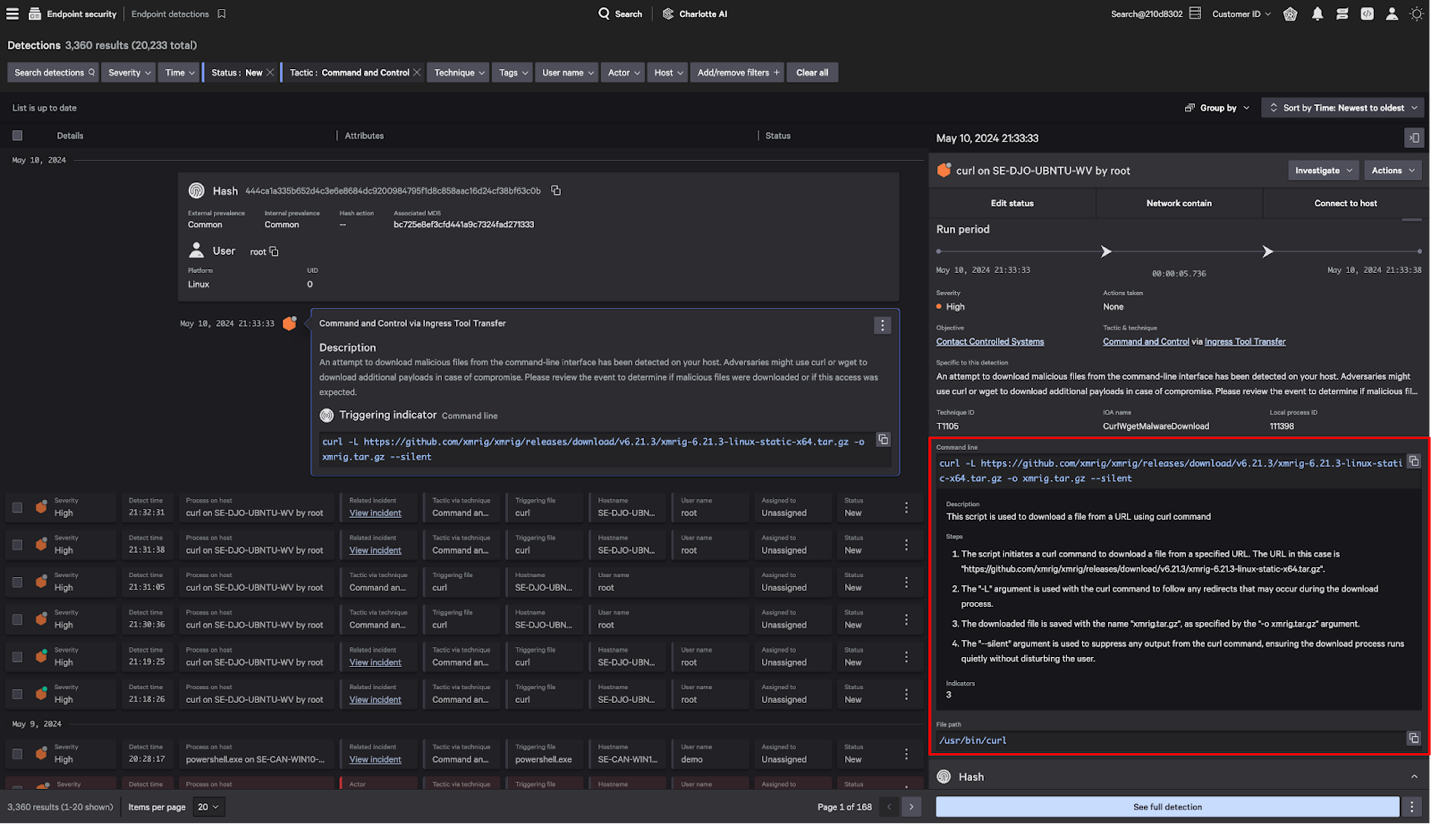
2. CrowdStrike Falcon Complete Next-Gen MDR

CrowdStrike Falcon Complete Next-Gen MDR is a managed detection and response service built on the CrowdStrike Falcon platform, combining AI-driven automation, agentic workflows, and 24/7 human analyst oversight. The service is designed to cover the full attack surface, ingesting native telemetry from endpoints, identity, cloud workloads, and third-party data through Falcon Next-Gen SIEM. AI agents handle deterministic response actions at machine speed while human analysts validate decisions and own remediation outcomes.
Key features include:
- Agentic MDR architecture: The service combines deterministic automation for proven response actions (such as endpoint isolation and blocking known indicators) with adaptive AI agents that drive investigation and response workflows, reducing mean time to respond while maintaining human oversight at the decision layer.
- Cross-domain threat coverage: By ingesting data across endpoints, identities, cloud workloads, and third-party sources via Falcon Next-Gen SIEM, the service can detect and respond to attacks that span multiple domains, which CrowdStrike notes accounts for the majority of modern adversary activity.
- Full-cycle remediation: CrowdStrike analysts do not limit their involvement to triage and escalation. They execute hands-on surgical remediation to stop breaches at their inception, removing the burden from internal security teams to complete containment after handoff.
- Adversary intelligence-driven threat hunting: Threat hunters apply frontline intelligence from CrowdStrike's global adversary tracking to proactively identify hidden activity and anticipate attacker behavior, informing detection, containment, and remediation before incidents escalate.
- Unified single-agent architecture: A single lightweight agent collects telemetry across endpoints and cloud workloads, reducing deployment complexity and ensuring consistent data quality across the monitoring surface without requiring additional agents per data source.
- Breach warranty: The service includes a financial warranty, providing organizations with additional assurance that CrowdStrike stands behind its breach prevention outcomes.
Limitations (as reported by users on PeerSpot):
- Alert noise and false positives: Some users report data overload, high volumes of alerts, and false positive rates that contribute to alert fatigue, particularly in environments with unique business applications or processes that require ongoing tuning.
- Performance impact on endpoints: A subset of users notes elevated CPU and RAM consumption on Windows 11 systems after deployment, which can affect performance on endpoints running resource-intensive applications.
- High cost: Users consistently describe the service as expensive, which can limit accessibility for smaller organizations or those with constrained security budgets, and the modular pricing structure means additional capabilities require separate licenses.
Source: CrowdStrike
3. SentinelOne Wayfinder MDR

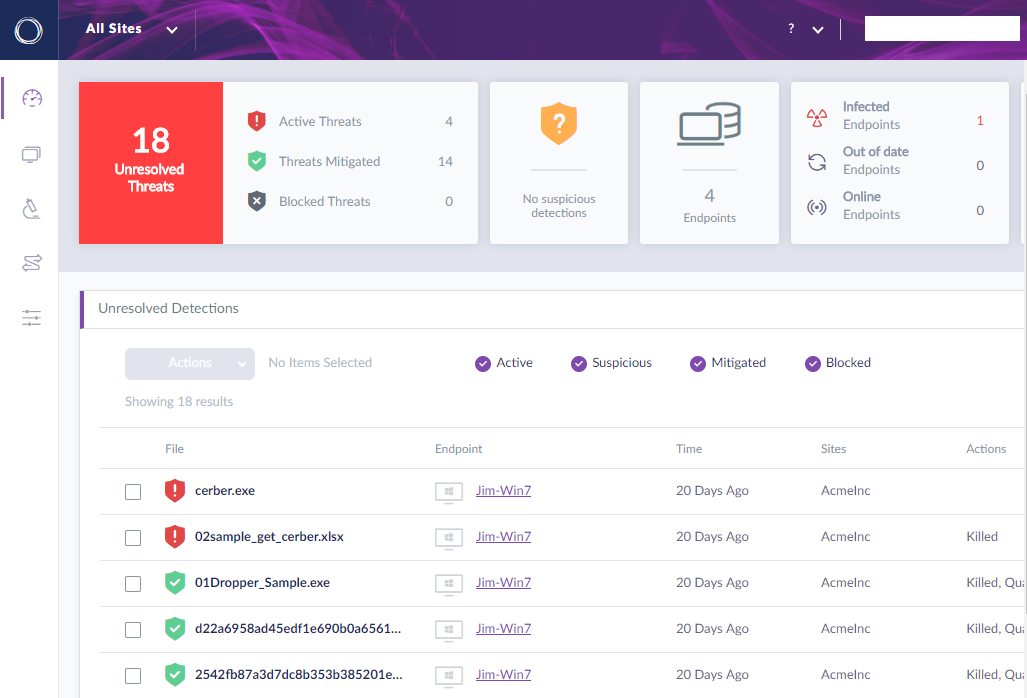
SentinelOne Wayfinder MDR (formerly Singularity MDR, rebranded at OneCon 2025) is a platform-native managed detection and response service built on the Singularity platform. It offers 24/7/365 detection, investigation, and response across endpoints, identities, cloud workloads, and network devices. The service integrates Google Threat Intelligence through SentinelOne's partnership with Google Cloud, combining curated threat data with Purple AI and Singularity Hyperautomation to drive agentic investigation and response workflows.
Key features include:
- Google Threat Intelligence integration: The service incorporates curated intelligence from Google Threat Intelligence, fusing machine-speed automated detection with certified incident responders to ensure threats are identified and decisively contained with context from one of the broadest global threat intelligence sources available.
- Purple AI and Singularity Hyperautomation: Analysts and AI agents use natural language threat hunting and automated investigation workflows through Purple AI, while Hyperautomation handles repetitive response tasks, accelerating the time from detection to containment across the environment.
- Storyline attack visualization: SentinelOne's Storyline technology automatically stitches related events into a visual attack narrative, allowing analysts to see the full scope of an attack chain without manual correlation, which reduces investigation time and improves containment precision.
- Full-scale threat hunting: Wayfinder MDR includes continuous threat hunting powered by SentinelOne's Singularity Data Lake, which provides SQL-like query capabilities across the full telemetry history, enabling analysts to proactively identify hidden threats using deep behavioral searches.
- Windows Rollback capability: For ransomware incidents on Windows endpoints, the service supports a rollback feature that restores endpoints to their pre-attack state, enabling rapid recovery without full reimaging in supported scenarios.
- Platform-native response breadth: Because the service is built directly on the Singularity platform, analysts can execute a broad set of response actions (including endpoint isolation, process termination, file quarantine, and account disable) without requiring third-party integrations or additional agent deployments.
Limitations (as reported by users on PeerSpot):
- Platform lock-in: Wayfinder MDR is exclusive to organizations running SentinelOne's Singularity EDR; it cannot be used with third-party endpoint detection tools, which restricts adoption for organizations with multi-vendor security stacks.
- Behavioral analytics false positives: AI-driven behavioral analytics can be sensitive and continue to generate false positives in some environments, with policy fine-tuning described by multiple reviewers as one of the more challenging aspects of ongoing management.
- MDR support quality variability: Some users note that the quality of support from the MDR team is inconsistent, with faster resolution for high-severity incidents but slower handling of lower-priority requests.

Source: SentinelOne
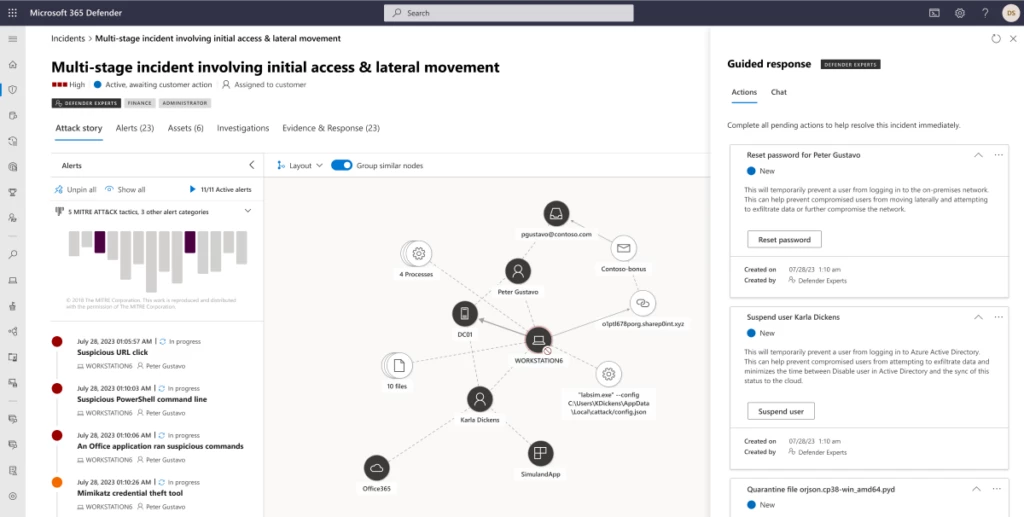
4. Microsoft Defender Experts for XDR

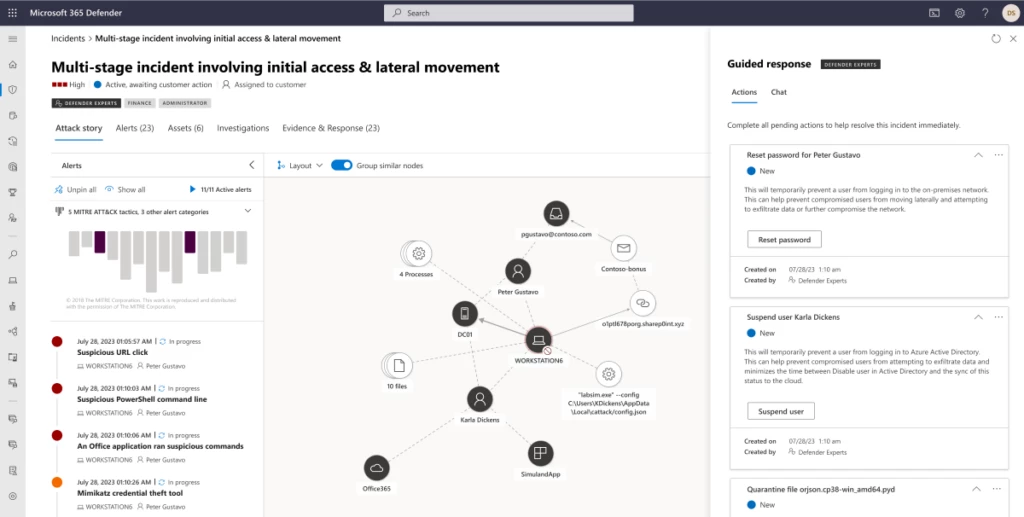
Microsoft Defender Experts for XDR is a managed detection and response service that augments internal security operations by combining Microsoft's security analyst expertise with Defender XDR automation. The service manages Microsoft Defender XDR incident queues, performs triage and investigation on behalf of customers, and either takes response actions directly or provides guided, step-by-step remediation instructions for the internal team to act on.
Key features include:
- Managed incident response across Defender suite: Analysts handle the full Defender XDR incident queue, prioritizing and investigating high- and medium-severity incidents to reduce the number of alerts internal teams must review while ensuring serious threats receive expert attention.
- Flexible response model: Organizations can choose whether Defender Experts act on their behalf or provide guided steps for the internal team to execute, allowing security teams to retain control over response actions based on their organizational policies and risk tolerance.
- Ask Defender Experts on-demand access: A live chat channel provides 24/7 access to Microsoft security analysts for deeper investigation assistance on specific incidents, attack vectors, or emerging threats, extending internal team capacity without requiring escalation workflows.
- Proactive threat hunting: Experts continuously hunt for emerging threats in the customer's environment, informed by Microsoft's visibility into global threat activity across Azure, Office 365, and Windows telemetry, identifying attacker behaviors that automated detection may not surface.
- Ongoing security posture improvement: A designated Security Delivery Expert provides tailored recommendations based on ongoing monitoring and investigation results, helping organizations address misconfigurations and control gaps identified during service delivery.
- Integration with Microsoft ecosystem: The service is natively integrated with the full Microsoft security stack, enabling investigation and response across endpoints, email, identity, and cloud applications without requiring data normalization or connector configuration.
Limitations (based on publicly available sources):
- Microsoft-only coverage: The service exclusively covers threats detected within Microsoft Defender products and does not extend to non-Microsoft security tools, creating potential blind spots for organizations with multi-vendor or hybrid environments.
- Complex initial setup: Users note that initial configuration involves a large number of settings and options, requiring time and expertise to properly tune policies and coverage before the service operates at full effectiveness.
- Advanced response requires E5 licensing: Some response capabilities are gated behind Microsoft 365 E5 licensing, which means organizations on lower license tiers may not have access to the full range of containment and remediation actions available through the service.
Source: Microsoft
Expert-Led MDR Services
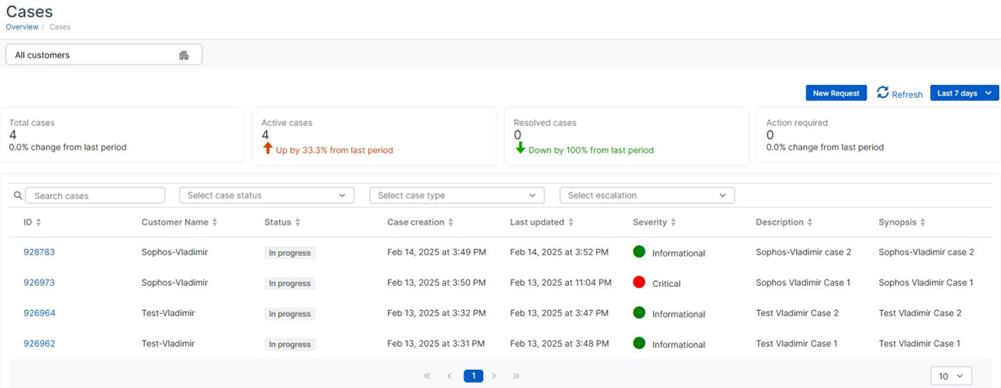
5. Sophos MDR

Sophos MDR is a fully managed 24/7 detection and response service delivered by a large Agentic SOC. The service uses an agentic AI layer that resolves 52% of cases end-to-end at an average of 89 seconds from alert to automated response, while human analysts supervise AI decisions and own all outcomes. Sophos MDR integrates with more than 350 third-party security and IT technologies, enabling deployment alongside existing tools from other vendors without requiring a full Sophos stack.
Key features include:
- Agentic SOC architecture: AI handles 52% of cases end-to-end without human intervention at an average of 89 seconds from alert to automated response, while analysts supervise AI decisions and focus their attention on the cases that require human judgment, combining speed at scale with accountability.
- Proactive threat hunting: Highly trained analysts perform proactive threat hunts using both Sophos telemetry and third-party vendor data, identifying attacker behaviors that automated detections may miss, including activity that evaded the organization's deployed security toolset.
- Broad third-party integration: The service integrates with 350+ third-party technologies for telemetry collection and response, allowing deployment on top of existing security investments without requiring replacement of existing endpoint or network tools.
- Uncapped incident response: Full incident response is included with no caps on hours, case volume, or scope, ensuring that high-severity incidents receive complete coverage without requiring additional service agreements or per-incident fees.
- Sophos Central dashboard: A centralized single-pane dashboard provides real-time alerts, reporting, and management, with weekly and monthly reports covering security investigations, cyberthreat trends, and security posture changes.
- Response action depth: The operations team can execute an extensive set of remote response actions, including disrupting and containing adversaries, blocking command-and-control communication, removing malicious files, and fully eliminating threats on behalf of the customer.
Limitations (as reported by users on G2):
- Alert notification sensitivity: Some users report that the alert notification system can be overly sensitive, generating a high volume of low-priority alerts that require manual filtering, particularly in developer environments running multiple simultaneous processes.
- Third-party integration costs: Full network-level monitoring and integration with certain non-Sophos hardware requires additional licensing, meaning the base tier is primarily endpoint-centric and broader coverage across network devices involves added cost.
- Pricing for smaller organizations: Multiple reviewers note that Sophos MDR sits on the more expensive end of the market, which can be a consideration for smaller organizations evaluating overall budget against the level of coverage required.
Source: Sophos
6. Rapid7 MDR

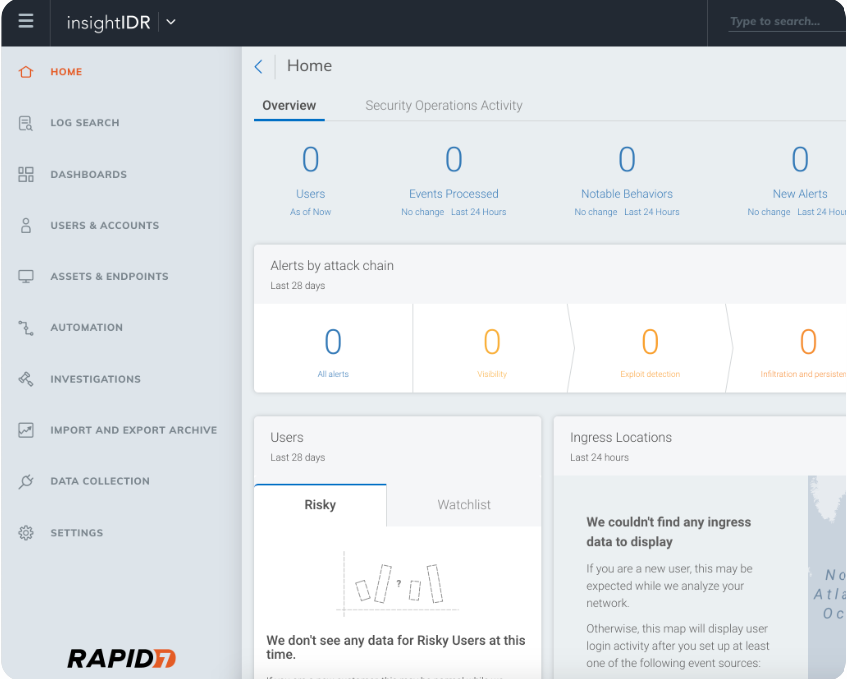
Rapid7 MDR is a managed detection and response service built around a "preemptive" approach that combines exposure context, threat detection, and expert response into a single operational loop. Rather than treating detection and vulnerability management as separate functions, Rapid7 MDR integrates InsightVM vulnerability data and asset criticality into the detection and triage process, helping analysts prioritize response based on the exposures most likely to be targeted.
Key features include:
- Risk-informed detection: Rapid7 MDR integrates vulnerability data and asset criticality from InsightVM directly into the detection workflow, enabling analysts to prioritize alerts based on exploitability and business impact rather than treating all detections as equal-weight events.
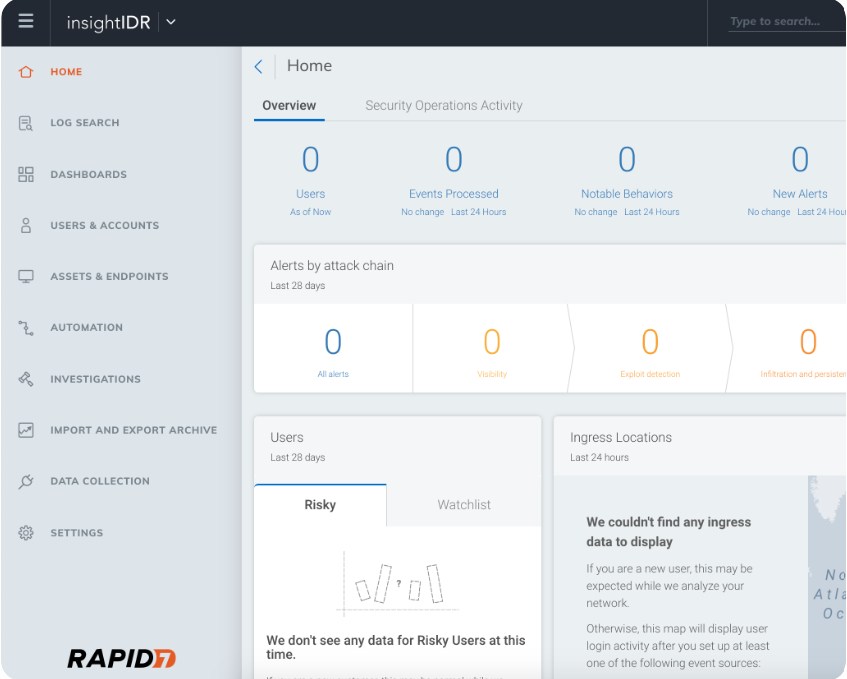
- Full customer SIEM access: Customers retain direct access to InsightIDR, their SIEM and investigation platform, allowing them to run queries, inspect investigation timelines, and view analyst actions in real time, providing transparency into how investigations are conducted rather than receiving summaries alone.
- Unlimited DFIR included: Digital forensics and incident response is bundled into the service with no caps on hours or case scope, allowing complete investigations without the risk of unexpected costs when complex incidents require extended analysis.
- Remote containment and endpoint forensics: Rapid7 MDR can perform remote endpoint isolation and forensic data collection using the Velociraptor open-source DFIR framework, enabling deep investigation of suspected compromises without requiring on-site access or separate tooling.
- 190+ ecosystem integrations: The service supports ingestion from a broad range of third-party security tools, including endpoint platforms, identity providers, cloud services, and email systems, enabling signal correlation across the customer's existing stack.
- Proactive threat hunting: Analysts use metadata from the Rapid7 Insight Agent to proactively hunt for persistent malware, historical application execution patterns, unusual process activity, PowerShell invocations, ingress authentications, and anomalies that may indicate compromise.
Limitations (as reported by users on PeerSpot):
- Higher false positive rate: Some users report that Rapid7 MDR generates more false positives compared to other platforms, describing the detection tuning as more aggressive, which can increase the volume of alerts requiring analyst validation.
- Limited forensic depth compared to some competitors: Users note that while DFIR is included, the forensic capabilities are not as comprehensive as those offered by some dedicated incident response firms, particularly for complex on-premises environments.
- Support responsiveness: Multiple reviewers rate customer service responsiveness lower than expected, noting delays in getting support on non-emergency tickets and occasional challenges escalating issues to appropriate technical resources.
Source: Rapid7
7. Arctic Wolf MDR

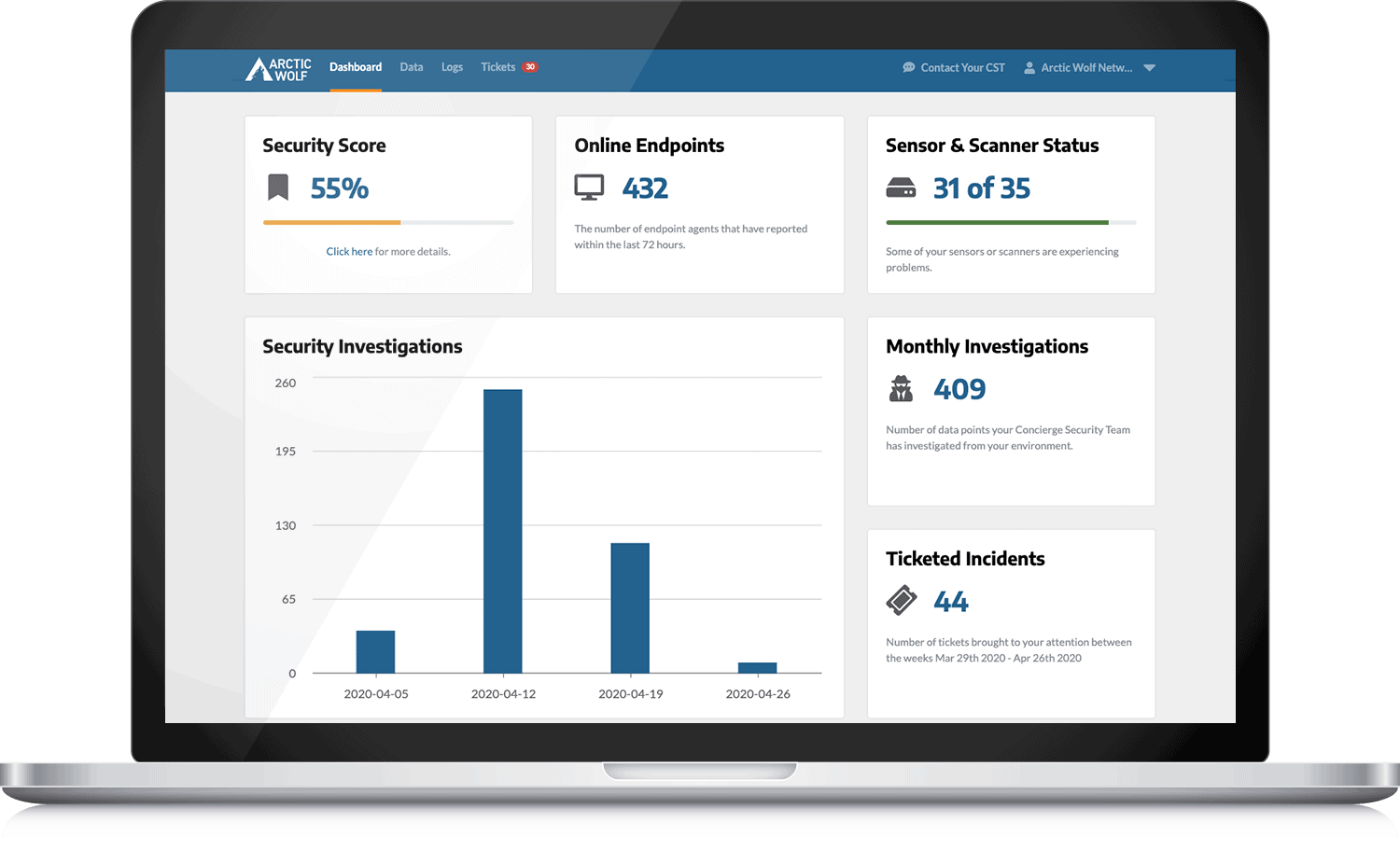
Arctic Wolf MDR is a technology-agnostic managed detection and response service built on the Aurora Superintelligence Platform, which uses an open XDR architecture to ingest and correlate telemetry from more than 200 integrations across endpoints, networks, cloud environments, and identity systems, without requiring replacement of the customer's existing tools. Each customer is assigned a named Concierge Security Team (CST), a group of dedicated security engineers who develop organizational context over time.
Key features include:
- Concierge Security Team model: Each customer is assigned a named team of security engineers who maintain organizational context (understanding the customer's environment, priorities, and risk profile) enabling more precise investigation and response rather than treating each alert in isolation.
- Aurora Superintelligence Platform: The platform uses AI and machine learning to triage and correlate telemetry across the full attack surface, dramatically reducing alert noise before routing to analysts and enabling detection of threats that span multiple signal types simultaneously.
- Technology-agnostic coverage: The service integrates with 200+ third-party tools without requiring displacement of existing investments, ingesting telemetry from the customer's current security stack and applying Aurora detection capabilities on top of it.
- Managed Containment with Active Response: When threats are confirmed, Arctic Wolf can execute host-based containment to block lateral movement and data exfiltration, with containment reporting and notifications providing transparency into actions taken on the customer's behalf.
- Security Posture in-Depth Reviews: Beyond incident response, the Concierge Security Team delivers regular structured reviews (over 74,000 completed in 2025) that identify security hardening opportunities and track progress against the customer's evolving risk posture.
- Breach warranty up to $3 million: The service includes a financial warranty covering cybersecurity incidents, with coverage tiers based on the service bundle purchased, providing additional financial protection alongside the operational security coverage.
Limitations (as reported by users on G2):
- Self-service data access limitations: Some users note that the ability to directly query the platform's data set is limited compared to what they would prefer, with historical data requiring archive requests rather than being immediately accessible through the portal.
- High cost for SMBs: Multiple reviewers identify pricing as a constraint, particularly for smaller organizations where the service cost represents a significant portion of the security budget.
- Limited government cloud support: The platform does not currently support government cloud environments, which is a restriction for public sector organizations or contractors with data residency or sovereign cloud requirements.
Source: Arctic Wolf
8. eSentire MDR

eSentire is a dedicated MDR provider that serves more than 2,000 organizations across 80 countries. The service operates on the Atlas Security Operations Platform, which uses purpose-built Atlas Agents to investigate threats at machine speed across multiple attack surfaces. eSentire operates a multi-signal MDR model, ingesting and correlating data from endpoints, networks, logs, cloud environments, and identity systems through over 300 technology integrations.
Key features include:
- Contractual 15-minute MTTC: eSentire's SLA commits to containing threats within 15 minutes, with published performance of 99.3% first-host isolation, providing measurable accountability for response speed that organizations can reference during vendor evaluation and contractual negotiations.
- Atlas Agents for machine-speed investigation: Purpose-built Atlas Agents execute task-specific threat investigations at machine speed across endpoint, network, log, cloud, and identity signals, with each investigation outcome explained transparently so analysts and customers can review the reasoning and evidence.
- Multi-signal attack surface coverage: The Atlas XDR platform correlates telemetry across five attack surfaces simultaneously, automatically blocking millions of known threats daily through a global IP deny list with over 12,000 indicators while enabling detection of complex multi-vector attacks.
- Unlimited threat hunting and IR: Both threat hunting and incident response handling are included without caps on volume or hours, ensuring that high-severity events receive complete coverage and that proactive hunting is not constrained by service-hour limitations.
- Vendor-agnostic integration model: eSentire supports 300+ integrations and a bring-your-own-license (BYOL) approach for four leading EDR platforms, allowing organizations to maintain their existing endpoint investments while gaining eSentire's multi-signal coverage on top.
- Threat Response Unit intelligence: The TRU delivers continuous counter-threat research, proprietary detection content, and new threat protections (over 200 added daily) that are distributed across the global customer base through the Atlas platform.
Limitations (as reported by users on G2):
- Higher cost relative to budget MDR options: Pricing is positioned at the premium end of the market, which creates cost sensitivity particularly for SMBs evaluating eSentire against lower-cost alternatives with similar surface-level feature sets.
- SOC response delays on non-emergency tickets: Some users note that while high-severity incidents receive rapid response, lower-priority support requests can experience slower turnaround, which can affect operational efficiency for teams relying on the portal for routine queries.
- Atlas portal self-service limitations: Users looking for forensic-level independent query access report that the portal could offer more granular self-service capabilities, as the current experience is primarily focused on reviewing investigation outputs rather than running custom queries.
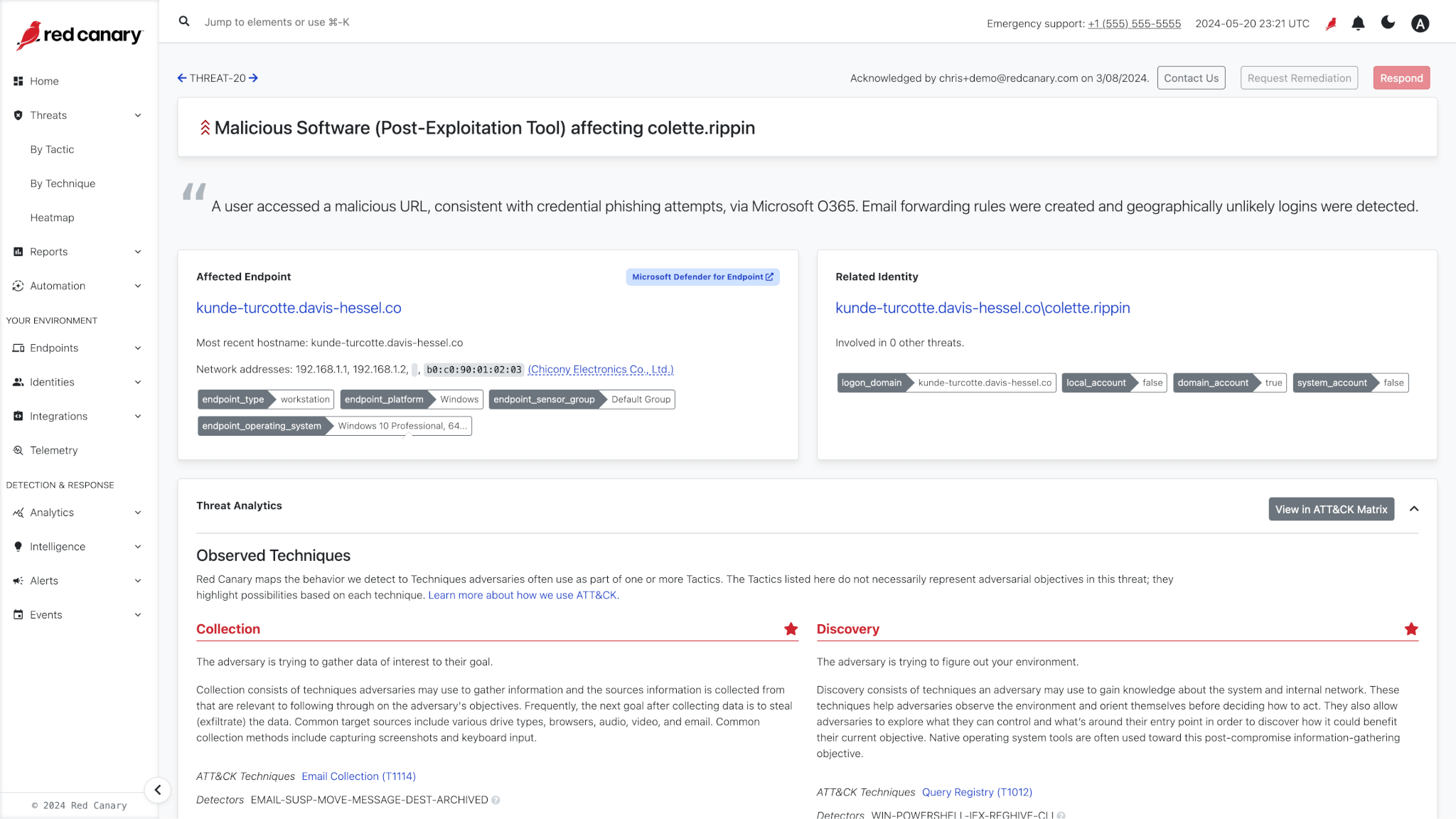
9. Red Canary MDR (a Zscaler company)

Red Canary MDR is a managed detection and response service that was acquired by Zscaler in August 2025 and currently operates as a separate business unit within Zscaler. The service is built around high-fidelity threat detection, agentic AI-driven investigation, and behavioral analytics that correlate endpoint, identity, and SaaS signals into readable investigation narratives. Red Canary operates on a threat intelligence model that blends proprietary analytics with global attacker behavior data from Zscaler's ThreatLabz research team.
Key features include:
- High-fidelity detection engineering: Red Canary's detection stack is built on behavioral analytics and threat intelligence that produce actionable, exportable investigation reports, integrating endpoint, identity, and SaaS signals into a single narrative that simplifies analyst review and provides a clear audit trail of attacker activity.
- Agentic AI investigation: AI automation handles initial investigation and evidence correlation at speed, allowing the service to scale threat analysis across large alert volumes while maintaining the investigation quality associated with human-led analysis.
- Stack-agnostic deployment: The service can run on top of the customer's existing EDR platform, providing managed detection and response capabilities without requiring replacement of deployed endpoint agents, which reduces deployment friction and time-to-value for organizations with established tooling.
- Zscaler threat intelligence integration: Following acquisition, the service benefits from Zscaler's ThreatLabz research team and the visibility into adversary behavior derived from Zscaler's global Zero Trust Exchange, expanding the threat intelligence foundation for detection rule development.
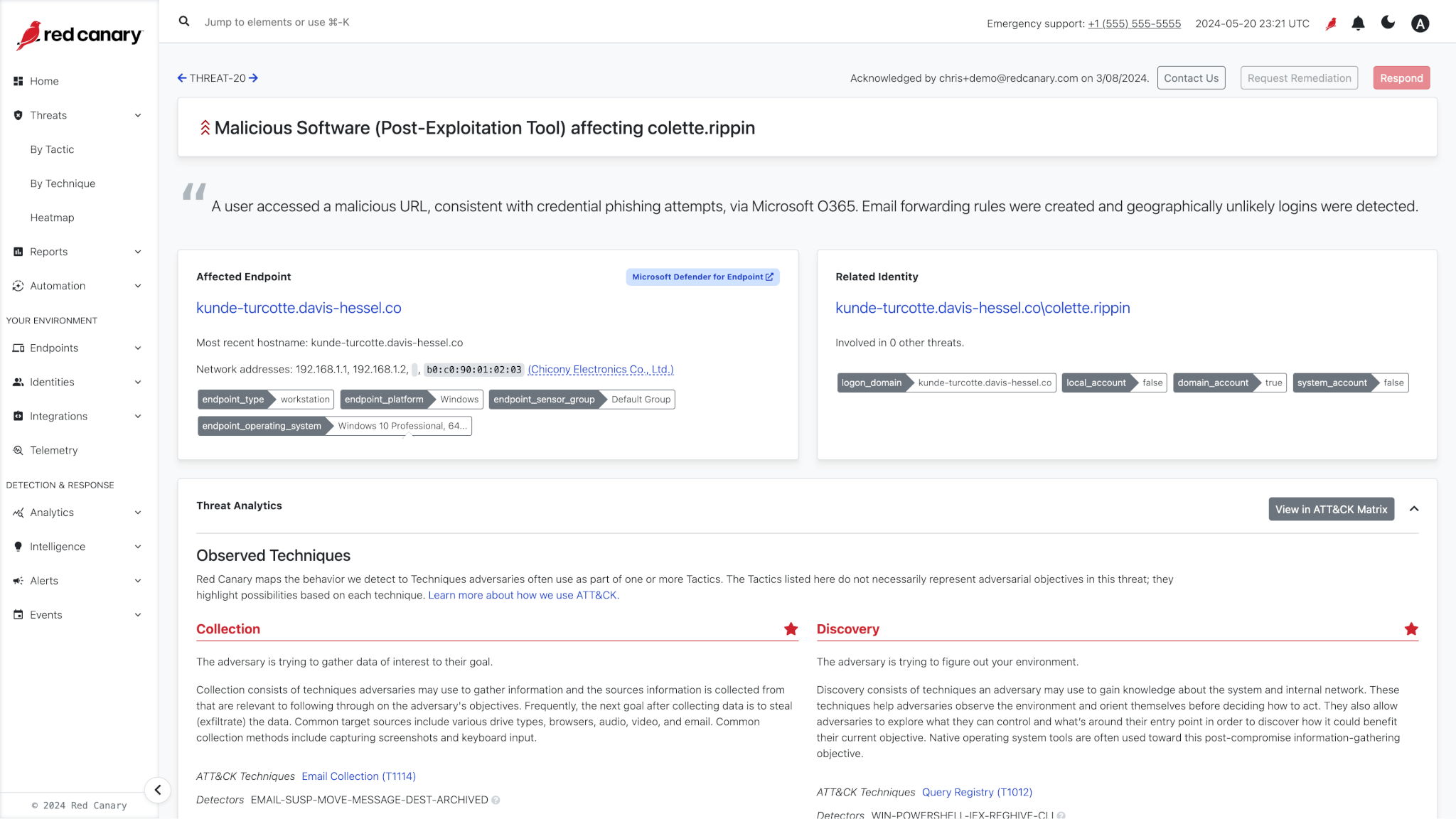
- 24/7 monitoring with investigation transparency: The service provides continuous monitoring with detailed investigation outputs that show the full scope of confirmed threats, including which assets were affected, what attacker actions were observed, and what remediation steps were taken or recommended.
- Unified SecOps platform direction: Zscaler is integrating Red Canary's capabilities into a broader platform combining exposure management with agentic AI-driven threat management, allowing organizations to connect their Red Canary MDR service with Zscaler's security data and automation infrastructure.
Limitations (based on publicly available sources):
- Limited network response capability: Red Canary MDR has historically focused on endpoint and identity signals and does not offer native network response actions, which can leave gaps in environments where network-level containment is a required response capability.
- SMB customer transition: Following the Zscaler acquisition, Red Canary has communicated that it is reducing its SMB customer focus, which may affect continuity and service levels for smaller organizations currently using the service.
- No published response time SLAs: Unlike some competitors, Red Canary does not publish contractual SLA commitments for response times, which makes it harder for organizations to evaluate response speed guarantees during procurement.
Source: Red Canary
Platform-Native and Enterprise MDR
10. Palo Alto Networks Unit 42 MDR

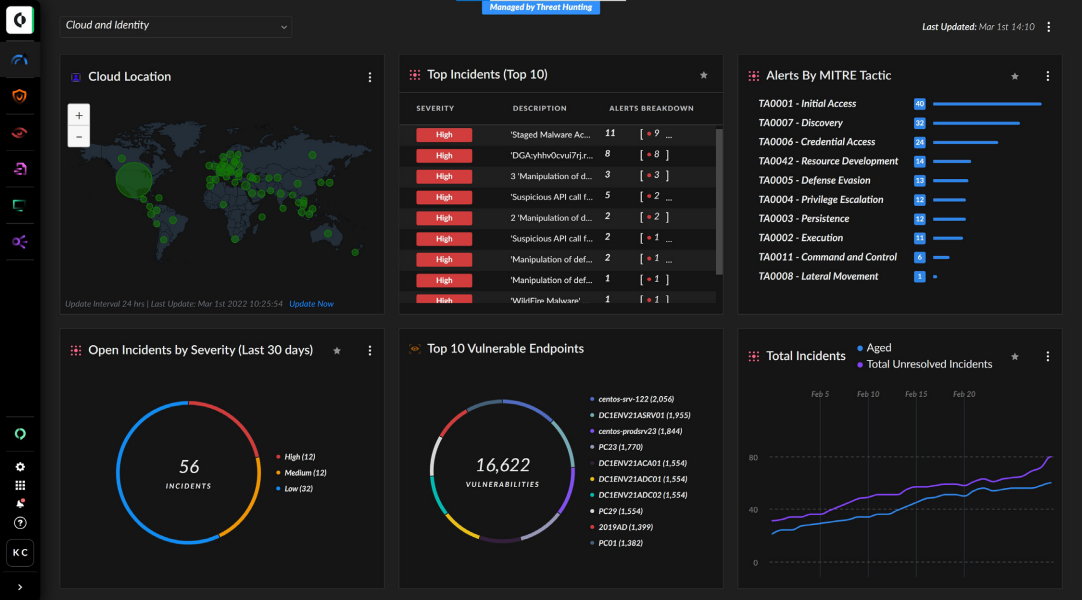
Palo Alto Networks Unit 42 MDR is a managed detection and response service built on Cortex XDR, operated by Unit 42, Palo Alto's threat intelligence and incident response team. The service aggregates telemetry from endpoints, network, cloud, and identity sources through Cortex XDR Pro, applying Palo Alto's threat intelligence from over 10 years of malware analysis, 30 million+ new samples, and 500 billion daily events to detection and investigation.
Key features include:
- Cortex XDR-native investigation: Unit 42 analysts operate within Cortex XDR Pro's unified telemetry environment, using behavioral indicators, AI analytics, and Palo Alto threat intelligence to investigate incidents with full endpoint, network, cloud, and identity context in a single platform.
- Alert triage and noise reduction: The Cortex XDR platform is specifically designed to correlate and stitch multiple alerts into single incidents, dramatically reducing the total number of alerts customers receive while improving detection coverage compared to alert-per-event approaches.
- Full investigation, containment, and remediation: Unit 42 analysts take responsibility for the complete incident response lifecycle within the Cortex XDR environment, from initial detection through investigation, containment of active threats, and remediation of malicious artifacts.
- Proactive threat hunting: Unit 42's threat hunters use deep knowledge of Cortex XDR data sources and Palo Alto's global threat intelligence to proactively search for complex attacks, emerging attack campaigns, and advanced adversary techniques that automated detection may not surface.
- Co-managed interface with customer visibility: A shared Cortex XDR interface provides transparent, two-way communication between Unit 42 analysts and customer security teams, with real-time dashboards showing incident timelines, investigation status, and response actions taken.
- Security posture optimization: The service includes periodic health checks and expert recommendations on policy configurations, detection rule tuning, and control improvements, helping customers reduce their overall attack surface between incident events.
Limitations (as reported by users on PeerSpot):
- Requires Cortex XDR as the underlying platform: Unit 42 MDR is exclusively available to organizations running Cortex XDR, meaning existing customers of other EDR or XDR platforms must replace or add Cortex XDR as a prerequisite, creating a significant switching cost and minimum endpoint threshold.
- High cost relative to competitors: Multiple reviewers identify pricing as a meaningful challenge, describing Unit 42 MDR as expensive compared to alternatives and noting that the cost structure can be difficult to justify for organizations that do not already have broad Palo Alto investments.
- Limited data residency options: Some users express concern about the limited availability of local or in-region data centers, which can conflict with data sovereignty requirements for organizations in jurisdictions with strict data localization regulations.
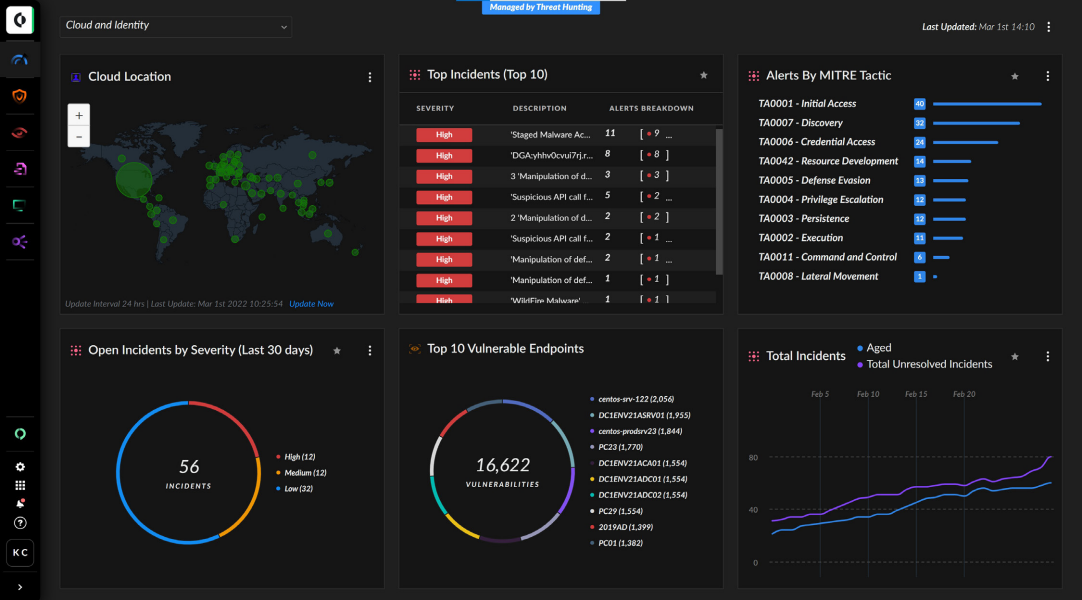
Source: Palo Alto Networks
11. Bitdefender MDR

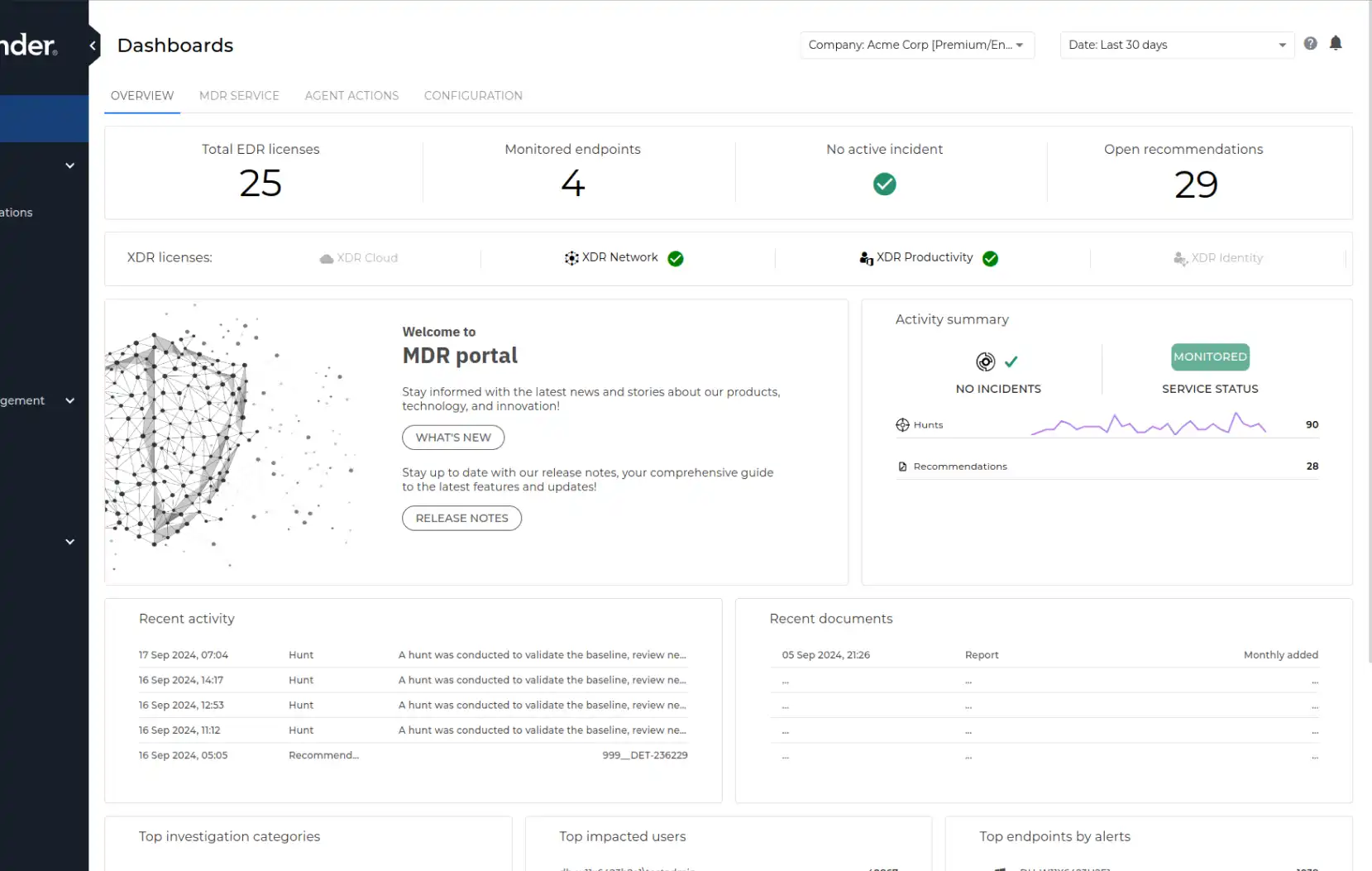
Bitdefender MDR is a managed security service that combines the GravityZone Business Security Enterprise endpoint platform with 24/7 SOC monitoring delivered from a global network of three security operations centers located in North America (Texas), Europe (Romania), and Asia-Pacific (Singapore), organized in follow-the-sun shifts. The service team includes more than 285 security analysts, researchers, and threat hunters holding certifications including GCIH, GCFA, CISSP, and cloud forensics credentials.
Key features include:
- Pre-Approved Actions for immediate containment: Customers define a set of pre-authorized response actions the SOC can execute without waiting for approval, including endpoint isolation, process termination, file blocking, account disabling, and email purging, enabling sub-30-minute response to confirmed threats regardless of time zone.
- GravityZone platform integration: The service is built on GravityZone Business Security Enterprise, an endpoint detection and response platform that provides behavioral analysis, fileless malware detection, lateral movement detection, and network attack defense, giving SOC analysts direct access to full endpoint telemetry for investigation.
- Follow-the-sun SOC coverage: Three geographically distributed SOCs operate in overlapping shifts to provide in-region expertise during local business hours in each zone, maintaining continuous coverage without reliance on remote analysts for regional incident response.
- MDR Customer Portal with real-time dashboards: Customers access investigation results, threat hunt data, SOC activity, and compliance reports through a dedicated portal, with live dashboards providing ongoing visibility into the security posture and monthly reports summarizing MDR service outcomes.
- Proactive threat hunting: SOC analysts conduct proactive hunts using the latest threat intelligence and behavioral patterns, complemented by Bitdefender's Threat Intelligence platform, which feeds new indicators and attacker TTPs into the detection engine in real time.
- MITRE ATT&CK-aligned detection: The service demonstrated the highest actionability with the lowest false positive rate in the 2024 MITRE Engenuity ATT&CK Evaluations for Managed Services, indicating detection precision that reduces analyst time spent on noise.
Limitations (as reported by users on G2):
- Threat hunting search functionality: Some users report that the platform's search feature for threat hunting and IOC hunting is not as capable as expected, limiting the ability to conduct independent investigative searches without involving the SOC team.
- High false positive rate in some environments: Reviewers note a higher-than-expected false positive alert rate in certain configurations, which can require additional tuning time and back-and-forth with the SOC to reduce noise to acceptable levels.
- Policy configuration complexity: Some policies are described as extensive and complex to configure, requiring familiarity with the GravityZone platform to set up correctly, which can create a learning curve during initial deployment and PAA configuration.

Source: Bitdefender
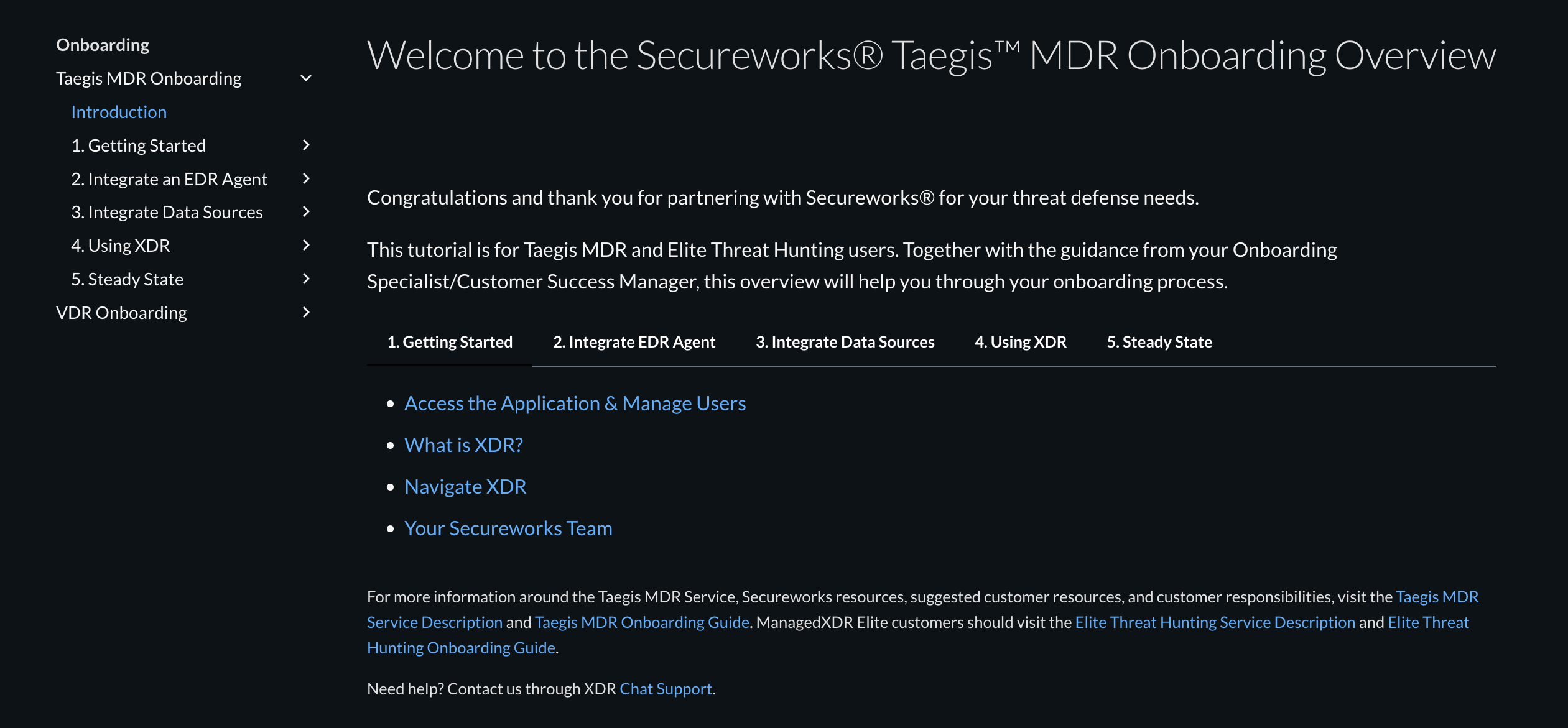
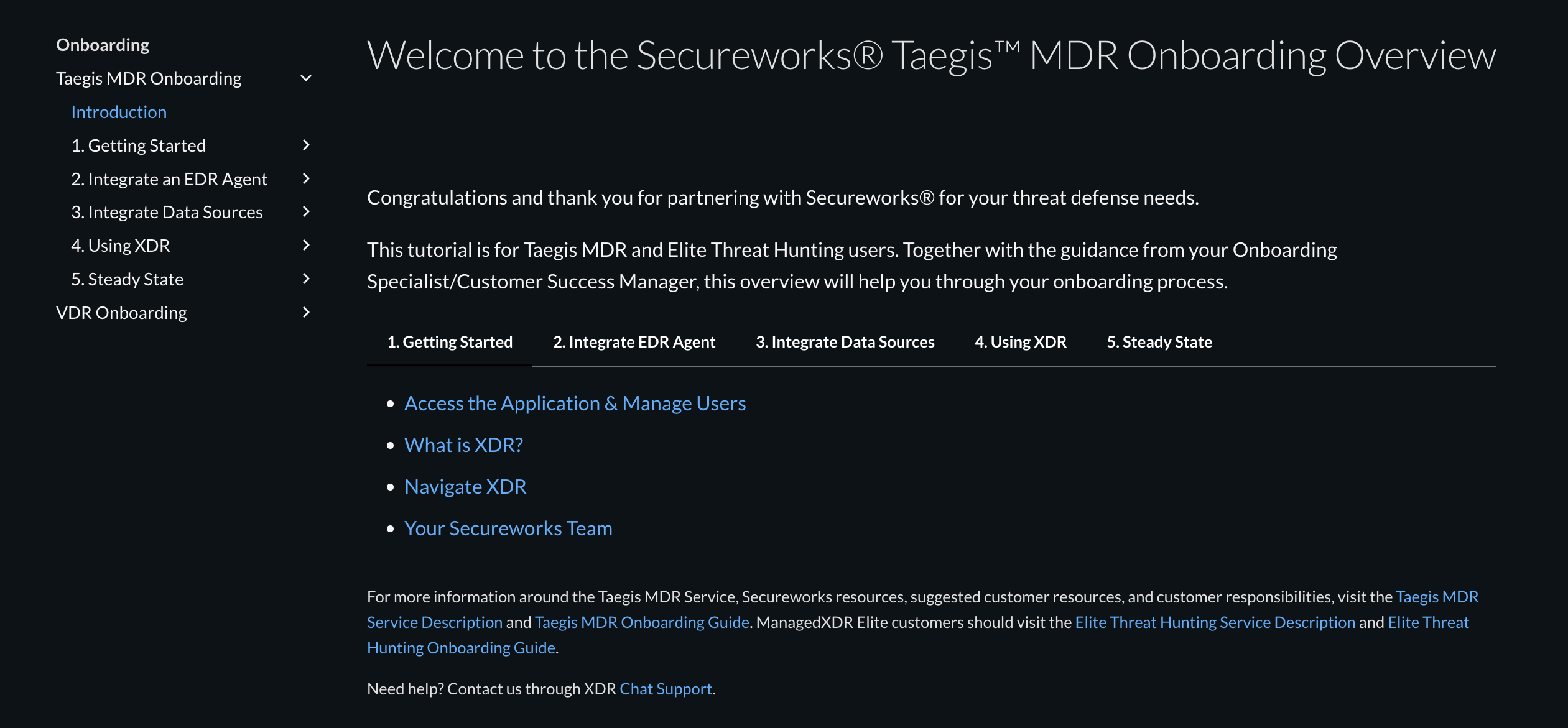
12. Secureworks Taegis ManagedXDR

Secureworks Taegis ManagedXDR is a managed detection and response service built on the Taegis XDR platform, now part of the Sophos portfolio following Sophos's acquisition of Secureworks in February 2025. The service processes 5 trillion events weekly across thousands of customer environments, combining machine learning, behavioral analytics, and threat intelligence from Secureworks' Counter Threat Unit (CTU) to detect advanced threats across endpoints, networks, cloud, and identity.
Key features include:
- Taegis XDR platform with customer access: Unlike black-box MDR services, customers have full access to the Taegis XDR platform (including advanced queries, custom alerting, report creation, and investigation collaboration with Secureworks analysts) providing operational transparency throughout the detection and response lifecycle.
- CTU threat intelligence integration: The Counter Threat Unit feeds continuous intelligence (derived from incident response engagements, threat research, and global telemetry) directly into the Taegis detection engine, keeping detection rules current against the latest attacker TTPs and emerging campaigns.
- Live chat analyst access within 90 seconds: Direct live chat access to security analysts is available 24/7, providing rapid escalation paths for active incidents and enabling collaborative investigation without the delays associated with ticketing systems or scheduled check-ins.
- 350+ integrations for broad coverage: The service integrates with a wide range of security tools (including multiple EDR platforms, identity systems, cloud environments, and network appliances) without requiring displacement of existing investments, enabling ManagedXDR to operate across diverse customer environments.
- Unlimited response with IR hours included: Response actions and incident response hours are included without volume caps, covering the full scope of containment, eradication, and remediation activities for confirmed security incidents.
- Proactive threat hunting: Analysts proactively hunt for threats that have evaded existing controls, using deep Taegis platform analytics and CTU intelligence to identify conditions that could lead to future intrusions before they develop into incidents.
Limitations (as reported by users on G2):
- Platform complexity for new users: Users report that the platform has a steep learning curve, particularly for those unfamiliar with XDR environments, and that initial setup and alert tuning require time and expertise before the service operates at optimal efficiency.
- Alert noise requiring manual tuning: Reviewers note that alert noise can be high without proper configuration, and that reducing false positives through custom suppression rules and detection tuning is an ongoing process that requires active collaboration with the Secureworks team.
- Support follow-up challenges: Some users describe difficulty getting timely follow-up on complex technical support questions, noting that while routine monitoring and response work well, resolving underlying platform issues can require extended engagement.
Source: Secureworks
How to Choose an MDR Provider for Fast Threat Containment
Look for Real Response Capabilities, Not Just Alert Forwarding
Many MDR vendors claim to offer threat containment, but some only forward alerts to internal teams for action. True MDR providers take direct steps to isolate and neutralize threats instead of only notifying clients. When evaluating providers, verify that they can execute containment actions, such as endpoint isolation or credential disablement, on your behalf, 24/7.
Ask for examples of past incidents where the provider contained threats and clarify their authority to act within your environment. Real containment capabilities protect organizations from fast-moving attacks and reduce the burden on internal teams.
Validate Integrations
Effective containment depends on how well the MDR provider integrates with your environment. Native or API-level integrations with endpoints, identity providers, firewalls, and cloud platforms allow direct action without delays. Limited integrations can slow response or restrict available actions.
Ask which tools the provider can control and at what depth, read-only versus enforcement. Clarify deployment requirements, such as agents or connectors, and typical integration timelines. Confirm that integrations support bidirectional communication so telemetry and response actions flow in real time.
Ask About Automation Governance
Automation is critical for speed but must be controlled. Poorly governed automation can disrupt operations or trigger unnecessary containment actions. Providers should use predefined playbooks with rules for when automation is allowed and when human approval is required.
Understand how decisions are made, how exceptions are handled, and how automation policies can be customized. Ask whether thresholds can be defined for automatic actions, such as isolating devices only for high-confidence threats. Look for audit trails and approval workflows that provide visibility into automated actions.
Review Reporting and Metrics
Clear reporting helps evaluate how effective the MDR provider is at containment. Key metrics include mean time to detect (MTTD), mean time to respond (MTTR), and dwell time. These indicators show how quickly threats are identified and stopped. Reports should include timelines of incidents, actions taken, and affected assets.
Ask how metrics are calculated and whether they reflect end-to-end response or only detection. Consistent measurement matters when comparing providers or tracking improvements. Reporting should also highlight trends and recurring issues.
Confirm 24/7 Escalation Paths
Fast containment requires uninterrupted operations and clear escalation procedures. The provider should offer round-the-clock monitoring with defined paths for escalating incidents based on severity. Ask how incidents are handed off between shifts and how context is preserved.
Providers should use centralized case management systems to maintain continuity. Ensure there are direct communication channels with your team during high-severity events, such as phone or secure messaging. Clarify expected response times for escalations and decision-making authority.
Conclusion
Threat containment is one of the most important measures of MDR effectiveness because the value of detection depends on how quickly a provider can stop an active attack. The strongest MDR services combine continuous monitoring, efficient investigation workflows, automation, and experienced analysts to move from detection to containment with minimal delay. Organizations should evaluate providers based on their ability to execute response actions directly, integrate with existing security controls, maintain clear escalation processes, and demonstrate measurable response outcomes.