
What Are AI SOC Solutions?
To choose the right AI SOC solution, assess your security team’s maturity, integration requirements, and automation goals. The best platforms reduce alert fatigue by independently investigating alerts end-to-end, producing verifiable evidence, and providing transparent, customizable response workflows rather than just summarizing tickets.
Evaluate AI SOC solutions against these critical pillars:
- Automation and agentic depth:
Avoid “AI-washed” tools that are merely traditional Security Orchestration, Automation, and Response (SOAR) playbooks using “if/then” scripts. Look for:
- End-to-end investigation: The platform should investigate alerts entirely without human intervention, reaching senior-analyst depth by gathering evidence from endpoint, identity, and cloud data.
- Multi-agent collaboration: Dedicated agents for specific SecOps roles that share knowledge and context across the entire workflow.
- Continuous learning: The ability to learn from past analyst verdicts to improve future accuracy and limit false positives.
- Integrations and existing stack:
A strong AI SOC should adapt to your environment, not force you to replace your existing SIEM or EDR infrastructure. Ensure the platform offers:
- Two-way integration: Deep, bidirectional integration with your current tools (e.g., CrowdStrike Falcon or Microsoft Sentinel).
- Data gravity: If your organization uses log and data aggregators like Splunk, confirm if the AI integrates where your data lives or requires costly data migration and storage fees.
- Human-in-the-loop and trust:
Autonomous containment can be dangerous if the AI acts on false signals (e.g., trying to block legitimate Microsoft IPs). Check for:
- Transparency and explainability: The system must clearly log exactly what it did, how it investigated, and provide structured, evidence-linked summaries with citations.
- Configurable guardrails: You should be able to set strict boundaries on which actions run autonomously and which require human approval.
- Enterprise compliance and usability:
The solution should provide data governance controls, support audit and regulatory obligations, and deliver improvements to security operations without adding complexity for analysts:
- Data privacy: Confirm whether the vendor uses your sensitive telemetry to train or fine-tune their general AI models, or if your data remains strictly isolated.
- Measurable ROI: Establish a baseline of your current Mean Time to Detect (MTTD) and Mean Time to Respond (MTTC) to objectively measure if the platform is improving operational efficiency.
- Check deployment complexity:
Avoid solutions that require lengthy implementation projects, extensive custom engineering, or major workflow changes before delivering value. Look for:
- Fast time-to-value: The platform should connect to existing security tools and begin investigating alerts within days or weeks, not months.
- Minimal maintenance burden: AI workflows should adapt automatically to environment changes rather than requiring constant tuning, playbook updates, and rule maintenance.
Why Organizations Are Evaluating AI SOC Solutions Now
Alert Fatigue and Analyst Burnout
Security analysts face a high volume of alerts daily, many of which are false positives or low-priority issues. This constant flow leads to alert fatigue, where analysts become desensitized and may overlook real threats. As the number of security tools and monitoring systems grows, the challenge of reviewing alerts increases, raising the risk of missing critical incidents. This environment can lead to burnout as analysts struggle to keep up with the pace and pressure.
How AI SOC solutions help:
These solutions address alert fatigue by automating triage and investigation, filtering out noise and prioritizing real threats. Machine learning models recognize patterns in alert data, reduce false positives, and escalate the most relevant incidents for human review. This improves detection rates and allows analysts to focus on high-impact work, reducing stress.
Faster Attacks and More Complex Environments
Cyberattacks are evolving, with threat actors using automation, AI, and advanced techniques to breach defenses at high speed. Traditional SOC workflows that rely on manual investigation and rule-based detection struggle to keep pace with these attacks. The modern IT landscape includes cloud, hybrid, and multi-cloud environments, which increases the complexity of monitoring and defending assets. Security teams must correlate signals across systems, networks, and applications, making manual processes difficult to scale.
How AI SOC solutions help:
They operate in complex environments by providing continuous, automated analysis across distributed infrastructures. They ingest data from multiple sources, correlate events in real time, and identify threats that would be difficult to detect quickly through manual analysis. By automating detection and investigation, AI SOC platforms help organizations respond faster to attacks, reduce dwell time, and limit the impact of security incidents.
The Rise of Agentic AI in Security Operations
Agentic AI refers to artificial intelligence systems that perform tasks, make decisions, and adapt to changing conditions with minimal human intervention. In security operations, agentic AI enables platforms to investigate alerts, gather evidence, and initiate remediation actions. This differs from traditional automation, which typically follows predefined workflows and requires frequent human oversight.
How AI SOC solutions help:
AI agents used by these solutions can learn from new data, refine investigation techniques, and adapt to emerging attack patterns without manual updates. As organizations face shortages of skilled security professionals, agentic AI helps fill gaps, enabling SOC teams to scale operations and maintain a strong security posture.
How to Choose AI SOC Solutions
Here’s an overview of the main criteria to consider when evaluating AI SOC solutions.
1. Automation and Agentic Depth
When evaluating AI SOC solutions, assess the depth of automation provided. Some platforms offer workflow automation such as ticketing and notification, while others provide agentic capabilities, including autonomous investigation, contextual enrichment, and remediation. The more agentic the solution, the more it can reduce manual workloads and accelerate response times.
Action items:
- Determine whether the platform can operate independently or requires human intervention for complex decisions.
- Look for platforms that learn from new incidents, update their models, and adjust investigative methods.
- Consider how much control the AI has over investigation and response, and whether it can explain its actions in clear, auditable terms.
2. Integrations and Existing Stack
AI SOC solutions must integrate with an organization’s existing security stack, including SIEM, XDR, SOAR, EDR, and cloud monitoring tools. Effective integrations ensure the AI platform receives data from relevant sources, enabling accurate threat detection and incident investigation. The best AI SOC platforms augment existing processes rather than replacing core tools.
Action items:
- Evaluate the breadth and depth of prebuilt integrations, as well as the platform’s ability to connect with custom or legacy systems through APIs or connectors.
- Beyond technical compatibility, assess how easily the solution can be deployed within current workflows without disruption.
- Consider whether the platform supports bidirectional data flow, enabling coordinated response actions.
3. Human-in-the-Loop and Trust
Despite increased automation, human oversight remains critical in security operations. AI SOC solutions should offer human-in-the-loop capabilities, allowing analysts to review, validate, or override automated decisions. This balance builds trust in AI-driven workflows and helps prevent unintended actions. Trust also depends on the system’s ability to learn from human feedback.
Action items:
- Look for platforms that provide clear explanations for recommendations so analysts understand the reasoning behind each action or alert prioritization.
- Check if the solutions incorporate analyst input into their models to improve over time, aligning with organizational risk appetite and response protocols.
- Evaluate how the platform captures and applies user feedback, and whether it allows granular control over automation thresholds.
4. Enterprise Compliance and Usability
Compliance with industry regulations and internal security policies is required for enterprise SOCs. AI SOC solutions should support auditability, data privacy, and regulatory reporting requirements. Some solutions include modules for standards such as GDPR, HIPAA, or PCI DSS, which can simplify reporting. Usability is another consideration, as complex or unintuitive interfaces can hinder adoption.
Action items:
- Evaluate whether the platform provides detailed logging, access controls, and evidence retention to satisfy compliance audits.
- Ensure the platforms provide clear dashboards, customizable workflows, and intuitive alert management features.
- Assess whether the solution supports role-based access, guided investigations, and reporting for different user profiles within the SOC.
5. Check Deployment Complexity
Deployment complexity can affect the success and ROI of an AI SOC solution. Evaluate the installation process, infrastructure requirements, and the level of customization needed to make the platform operational. Some solutions offer cloud-native, SaaS-based deployments that reduce setup time and maintenance, while others require on-premises infrastructure and integration work.
Action items:
- Consider the availability of deployment guides, professional services, and customer support during rollout.
- Assess ongoing management, including update cycles, model retraining, and scalability. Platforms that require frequent manual tuning or high resource allocation can create additional operational overhead.
- Look for solutions that automate updates, scale with organizational growth, and provide documentation for troubleshooting and maintenance.
Notable AI SOC Solutions
Agentic AI SOC and Autonomous Alert Investigation Platforms
1. Intezer

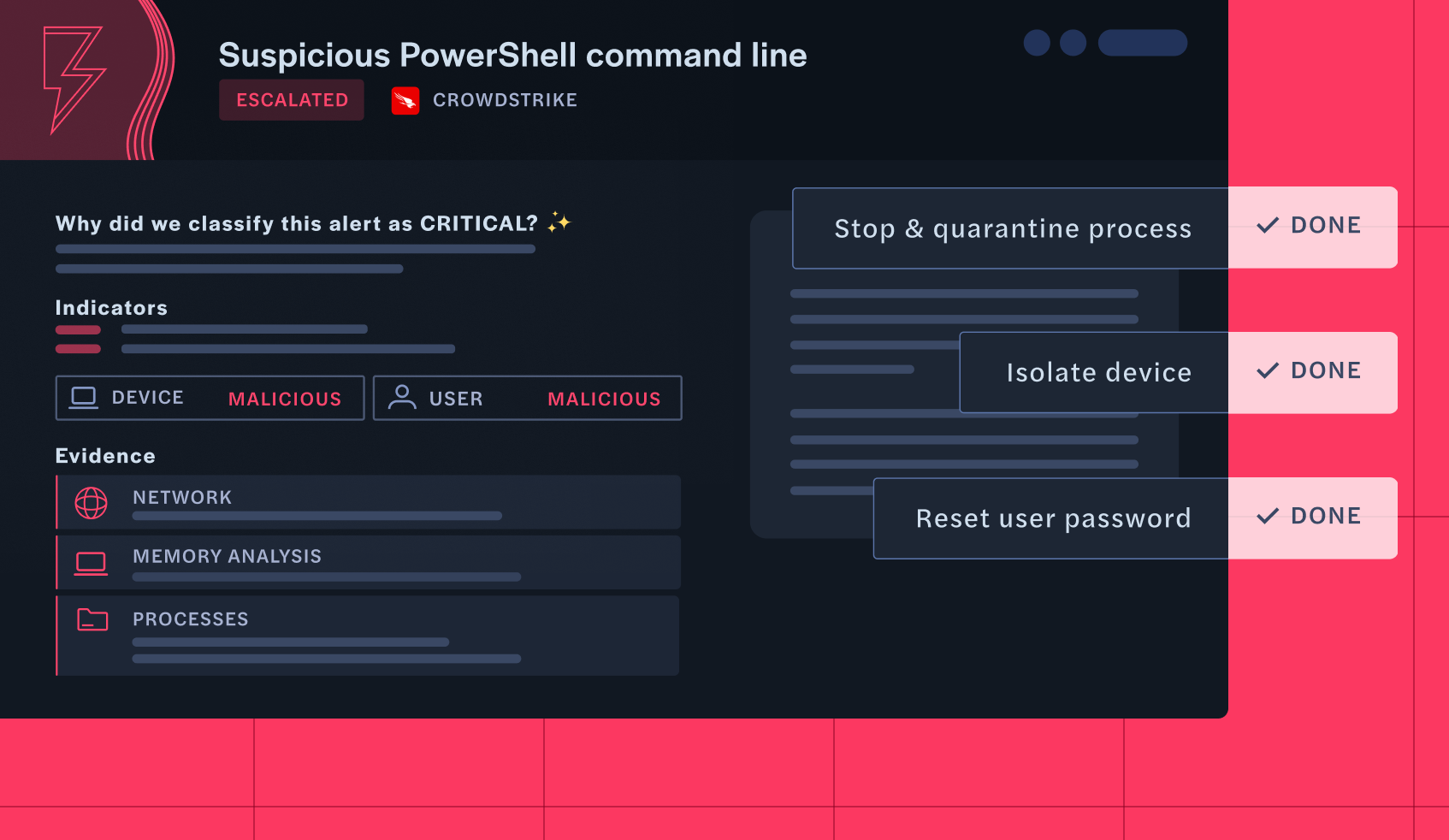
Intezer is an agentic AI SOC platform built around autonomous alert investigation. It is designed to investigate the full alert stream rather than a sampled subset, applying multi-agent workflows across endpoint, identity, cloud, network, phishing, and SIEM alert sources. The platform traces its origins to malware analysis and reverse engineering research, and forensic investigation remains central to how it handles alerts. Rather than relying primarily on LLM-based summarization, Intezer uses memory forensics, binary code analysis, and behavioral evidence collection to reach verdicts. Approximately 2% of alerts are escalated to human analysts; the rest are resolved autonomously. The platform prices per endpoint rather than per alert, which means investigation costs do not increase with alert volume.
Key features include:
- Full alert coverage across severities: Investigates all incoming alerts, including low and medium-severity signals, rather than prioritizing only high-severity events.
- Forensic-depth investigation: Uses memory scanning, Genetic analysis (binary code comparison against a database of known trusted and malicious code), sandboxing, memory scanning and behavioral analysis to gather evidence before rendering a verdict.
- Bidirectional integration with all major detection tools.
- Closed-loop detection engineering: Investigation outcomes feed back into detection logic, with noisy or broken rules identified continuously and mapped to MITRE ATT&CK coverage. Detection rules are deployed in the customer’s own SIEM.
- Per-endpoint pricing: Alert volume does not affect cost, which allows customers to ingest 100% of alerts without economic pressure to deprioritize lower-severity signals.
- Expert access: Escalations connect directly to Intezer security analysts rather than a ticketing queue or chatbot.
2. Dropzone AI
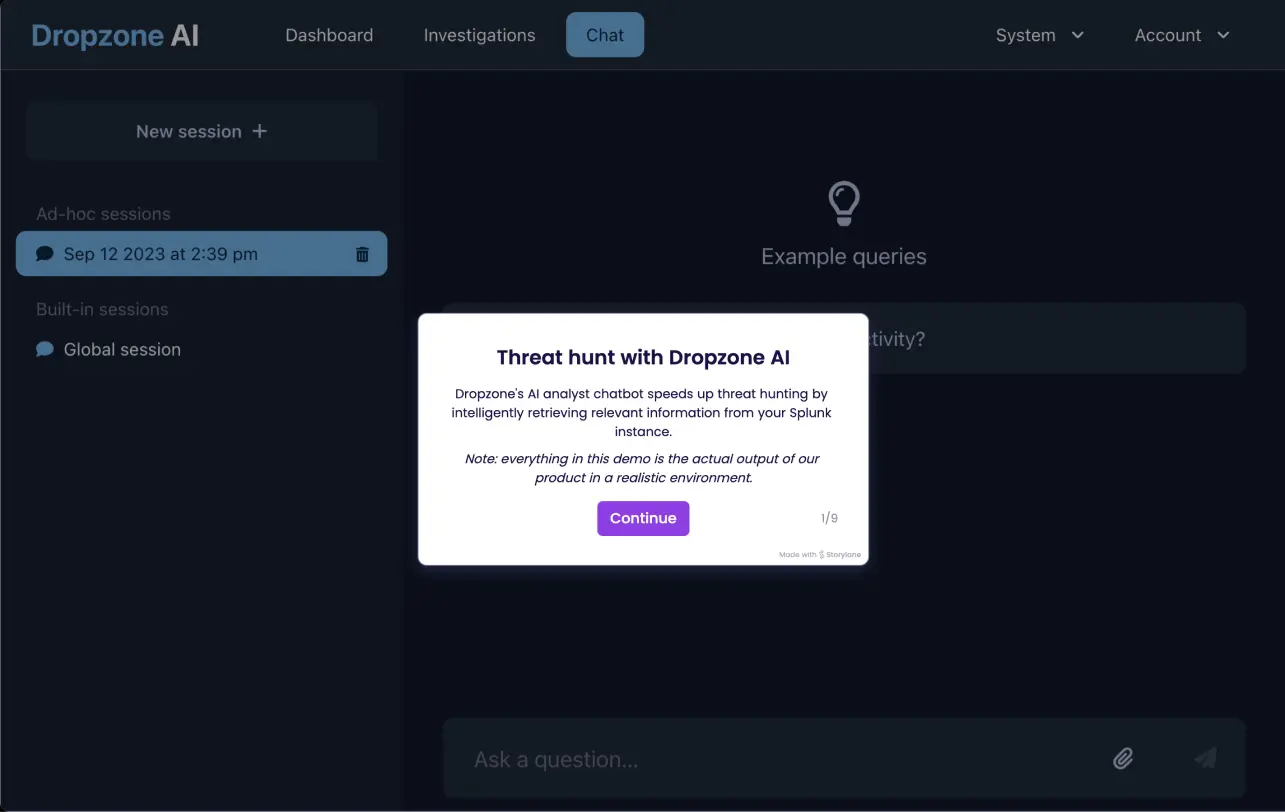
Dropzone AI is an autonomous AI SOC analyst that investigates and resolves security alerts with limited human involvement. The platform uses AI agents that replicate the workflows of security analysts, automatically collecting evidence, analyzing activity across security tools, determining whether an alert is malicious or benign, and recommending or initiating response actions.
Key features include:
- Autonomous alert investigation: AI agents investigate security alerts from start to finish, performing analysis typically conducted by SOC analysts.
- 24/7 security operations: Continuously analyzes alerts regardless of time of day or staffing availability.
- False positive reduction: Automatically triages alerts and filters out benign activity.
- Explainable investigations: Provides findings and reasoning in plain language with visibility into how decisions were made.
- Custom investigation strategies: Supports organization-specific investigation workflows and outcome rules.
3. Torq AI SOC Platform
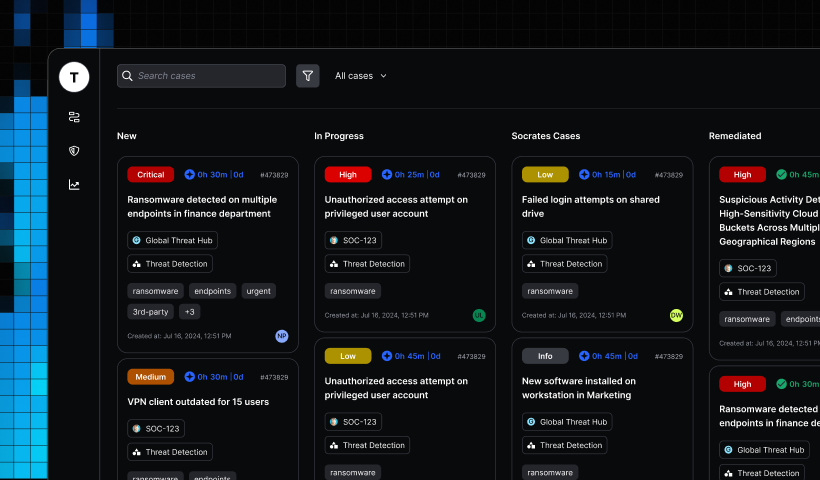
Torq AI SOC Platform is a security operations platform that automates the threat management lifecycle, from alert triage through investigation, response, and remediation. The platform combines AI agents with automation capabilities to help security teams manage high alert volumes and reduce manual workloads. Torq ingests telemetry from across the security stack, analyzes risk and threat context, investigates incidents using specialized AI agents, and can execute response actions to close security cases.
Key features include:
- End-to-end threat lifecycle management: Manages security incidents from initial alert through investigation, response, remediation, and case closure within one platform.
- Autonomous case resolution: Uses AI-driven workflows and response actions to remediate and close security cases without analyst intervention.
- Alert triage and noise reduction: Ingests and normalizes telemetry from multiple security tools, correlates related events, and removes duplicate alerts.
- Risk-based threat analysis: Evaluates alerts using threat intelligence and contextual risk analysis to distinguish false positives from security threats.
- Specialized AI agents: Assigns investigations to AI agents that gather evidence, build timelines, and summarize findings.
AI-Enhanced SIEM, XDR, and Enterprise SecOps Platforms
4. Microsoft Security Copilot

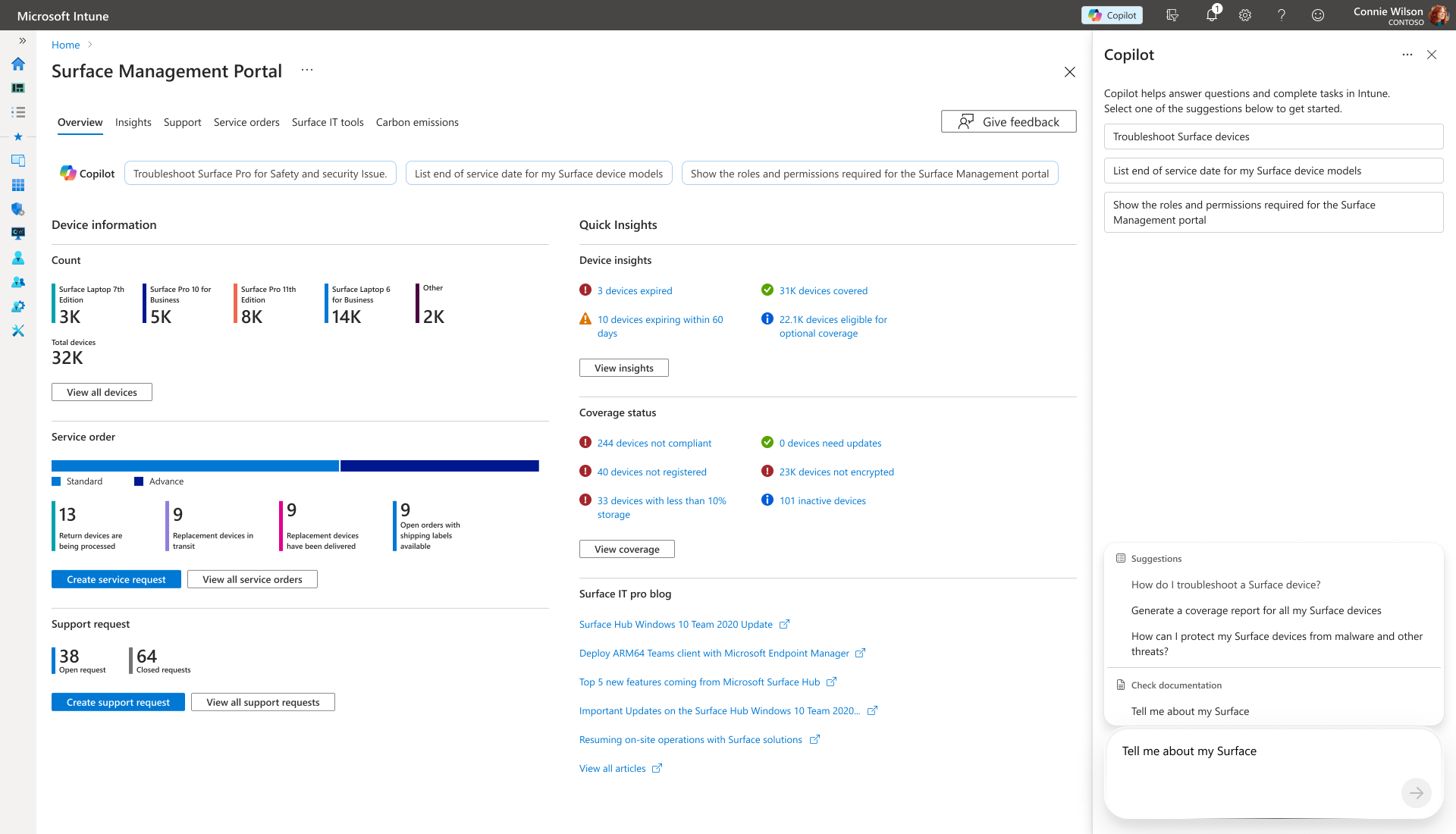
Microsoft Security Copilot is a generative AI-powered security assistant that helps security teams investigate threats, analyze incidents, manage security posture, and perform operational tasks using natural language. Built on OpenAI models and Microsoft’s security ecosystem, the platform combines AI capabilities with organizational data, threat intelligence, and security telemetry to provide context-aware guidance and insights.
Key features include:
- Natural language security assistant: Enables professionals to interact with security data and tools using conversational prompts instead of manual workflows.
- Incident investigation and response support: Helps analysts understand alerts and incidents, generate summaries, gather context, and receive remediation recommendations.
- Threat hunting and intelligence analysis: Provides access to threat intelligence and security telemetry to support investigation activities.
- AI-assisted query generation: Converts natural language requests into KQL queries.
- Suspicious script and malware analysis: Assists with understanding scripts and potentially malicious code by translating technical content into clear explanations.
5. Google Security Operations

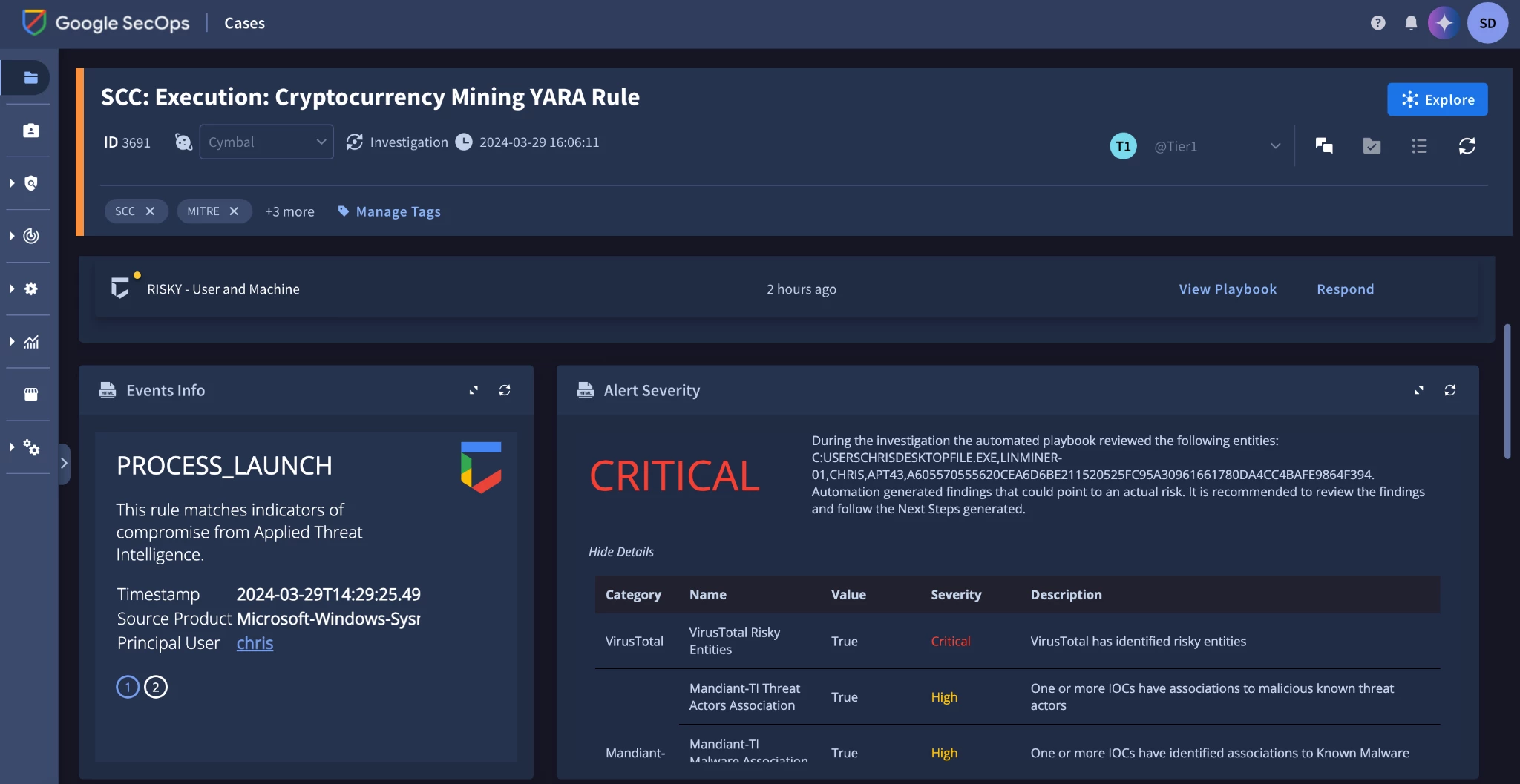
Google Security Operations (Google SecOps) is a cloud-native security operations platform that combines SIEM, SOAR, threat intelligence, and AI capabilities in a single environment for threat detection, investigation, and response. The platform helps security teams collect and analyze large volumes of security telemetry, apply Google’s threat intelligence to identify emerging threats, and automate workflows.
Key features include:
- Unified security operations platform: Combines SIEM, SOAR, threat intelligence, case management, and security analytics in one platform.
- Cloud-native scale: Ingests, stores, and analyzes large volumes of security telemetry using Google Cloud infrastructure.
- Curated threat detections: Provides a library of prebuilt detections maintained by Google’s threat research teams.
- AI-powered detection engineering: Uses Gemini to help teams create and refine detections through natural language interactions.
- Custom detection authoring: Supports the creation of custom threat detections using YARA-L.
6. Palo Alto Networks Cortex XSIAM

Cortex XSIAM (Extended Security Intelligence and Automation Management) is an AI-driven security operations platform that unifies threat detection, investigation, and response. The platform consolidates capabilities typically spread across SIEM, XDR, SOAR, attack surface management, threat intelligence, and analytics tools to reduce operational complexity.
Key features include:
- Unified security operations platform: Combines SIEM, XDR, SOAR, threat intelligence, and attack surface management in a single interface.
- AI-driven threat detection: Uses AI and machine learning models to identify threats and correlate activity across data sources.
- Automated threat correlation: Connects low-confidence events across systems to create higher-confidence incidents.
- Converged SOC architecture: Centralizes security operations workflows to reduce reliance on multiple consoles.
- Data integration: Collects, normalizes, and correlates security telemetry from endpoint, network, cloud, identity, and third-party tools.

Conclusion
AI SOC solutions are becoming an important part of modern security operations as organizations seek to reduce alert fatigue, accelerate investigations, and improve response times. The most effective platforms combine autonomous investigation capabilities, strong integrations, transparent decision-making, compliance controls, and manageable deployment requirements. By carefully evaluating these areas and measuring operational outcomes, security teams can identify solutions that improve efficiency while maintaining the oversight and governance required for enterprise security operations.