
What Is Managed Detection and Response?
Top-tier Managed Detection and Response (MDR) services that include automated response capabilities, often referred to as Managed Extended Detection and Response (MXDR), focus on combining 24/7 human threat hunting with machine-speed containment. Key providers offering automated response include Intezer, Darktrace, and Torq HyperSOC.
When evaluating, consider the level of trust you place in automated actions versus human validation. While automation is fast, some organizations prefer a hybrid approach where AI-driven automation suggests actions that human analysts then quickly approve to ensure accuracy
How automated response works in MDR:
These services typically use AI-driven engines to detect threats and then execute pre-approved, automated playbooks to minimize “attacker dwell time”.
- Endpoint isolation: Immediately disconnecting a compromised machine from the network.
- Process termination: Stopping malicious scripts or processes.
- User suspension: Freezing user accounts that show signs of being compromised.
- Policy adjustment: Automatically updating firewall or endpoint policies to block malicious IPs.
This is part of a series of articles about MDR security
How Automated Response Works in MDR
Endpoint Isolation
Endpoint isolation is an automated response capability in MDR solutions that contains threats at their source. When suspicious or malicious activity is detected on a device, the MDR platform can automatically disconnect the affected endpoint from the rest of the network. This prevents attackers from moving laterally, stealing data, or deploying ransomware to other systems, reducing the impact of the incident.
Isolating an endpoint does not mean completely shutting it down. The device can still communicate with the security team for investigation and remediation while being cut off from network resources. Automated endpoint isolation is valuable for organizations with distributed workforces or large numbers of endpoints, enabling rapid containment without manual intervention. This helps maintain business continuity while addressing the threat.
Process Termination
Process termination is an automated response action where malicious or suspicious processes are stopped on affected endpoints. MDR platforms monitor processes in real time, and when a process matches known threat patterns or behaviors, it is killed automatically to prevent further damage. This can halt malware execution, stop data exfiltration, or disrupt attack chains.
Automated process termination reduces the time attackers have to achieve their objectives, making it harder for them to maintain persistence or escalate privileges. Security teams can review terminated processes to understand the attack and determine whether additional action is needed. This approach simplifies incident response and ensures that threats are neutralized early.
User Suspension
User suspension is an automated response in MDR, triggered when a user account exhibits suspicious or unauthorized behavior. MDR systems can automatically disable or suspend compromised accounts to prevent attackers from using stolen credentials for lateral movement, privilege escalation, or data theft. This is important in scenarios involving insider threats or credential-based attacks.
Suspending user accounts as soon as suspicious activity is detected limits potential damage and buys time for investigation. Automated user suspension can integrate with identity and access management systems, allowing rapid enforcement without disrupting unaffected users. After the incident is resolved, accounts can be reinstated or further reviewed.
Policy Adjustment
Automated policy adjustment enables MDR platforms to update security controls in response to emerging threats. For example, if a new vulnerability is exploited in the wild, the MDR system can automatically tighten firewall rules, restrict network access, or deploy updated endpoint protection settings across the organization. These adjustments help close security gaps before attackers exploit them.
Policy adjustment is not limited to network or endpoint controls. It can also include email filtering, web access restrictions, and other security configurations. By automating these changes, MDR supports rapid response to evolving threats without waiting for manual policy updates. This is important for organizations facing constantly changing attack techniques.
Key Features of MDR with Automated Response
24/7 Threat Monitoring
MDR solutions provide round-the-clock threat monitoring using automated tools and human analysts. This surveillance enables organizations to detect threats at any time, including outside regular business hours when attacks are more likely to go unnoticed. Automated systems analyze logs, network traffic, and endpoint activity in real time, flagging suspicious behavior for review or response.
Having 24/7 monitoring reduces dwell time, the period between an attacker’s initial compromise and detection. By minimizing this window, MDR services can stop attacks before they escalate, limit damage, and prevent data loss. This is important for organizations with limited internal resources, as it ensures threats are addressed regardless of when they occur.
Automated Containment and Remediation
Automated containment and remediation enable immediate action when a threat is detected. Upon identifying a malicious event, the MDR system can isolate affected endpoints, terminate harmful processes, or block malicious network traffic without waiting for human intervention. These automated actions are guided by predefined playbooks that are updated based on threat intelligence.
By automating containment and remediation, MDR platforms reduce response time to incidents. This limits the spread of threats and helps organizations recover with less disruption. Automated remediation can include restoring files from backups, rolling back changes made by malware, or resetting compromised credentials.
Threat Intelligence Integration
Threat intelligence integration enhances the ability of MDR platforms to detect and respond to emerging threats. MDR providers aggregate data from sources including global threat feeds, industry-specific intelligence, and internal telemetry to build a view of the threat landscape. This information is used to identify indicators of compromise (IOCs), track attacker tactics, and inform automated response actions.
With threat intelligence integration, MDR platforms can recognize new attack patterns, adapt to evolving adversary techniques, and prioritize responses based on risk assessments. Automated systems use this intelligence to update detection rules, block known malicious domains, and deploy countermeasures.
Behavioral Analytics and AI Detection
Behavioral analytics and AI-driven detection are central to MDR platforms with automated response. Instead of relying solely on static signatures or known IOCs, these systems use machine learning to establish baselines of normal activity and identify deviations that may indicate malicious intent. This enables detection of threats such as zero-day attacks or insider threats that traditional security tools might miss.
AI detection refines itself by learning from new data, improving accuracy over time. Automated response actions are triggered when abnormal behaviors are detected, supporting rapid containment and investigation. By using behavioral analytics and AI, MDR platforms can detect threats earlier and respond as attackers adapt their techniques.
Incident Reporting and Root Cause Analysis
Incident reporting and root cause analysis provide organizations with insights into each security incident. Automated reporting tools collect data on detected threats, response actions taken, and outcomes. These reports help security teams understand the sequence of events, assess impact, and demonstrate compliance with regulatory requirements.
Root cause analysis identifies how and why an incident occurred. MDR platforms use automated and manual investigation techniques to trace attacks to their origin, uncover vulnerabilities, and recommend measures to prevent recurrence. This information supports improving security posture and refining detection rules.
Related content: Read our guide to MDR threat containment (coming soon)
Common MDR Automated Response Use Cases
Ransomware Containment
Ransomware containment focuses on stopping encryption and preventing spread across the network. When ransomware behavior is detected, such as rapid file modification or suspicious process activity, the MDR platform can isolate the affected endpoint and terminate the encryption process. Network-level controls may also block command-and-control communication used to fetch encryption keys or propagate the attack.
Automated containment reduces the blast radius by acting within seconds of detection. In many cases, it can prevent shared drives and other endpoints from being encrypted. Follow-up actions often include restoring affected files from backups, identifying the initial entry point, and closing the vulnerability that allowed the attack.
Phishing Attack Mitigation
Phishing mitigation in MDR involves detecting and responding to malicious emails and compromised accounts. When a phishing attempt is identified, automated actions can remove the email from inboxes, block the sender domain, and disable links or attachments associated with the campaign. If a user has interacted with the email, MDR can trigger credential resets and session revocation.
These actions limit the ability of attackers to use stolen credentials or deploy malware. Integration with email security and identity systems allows MDR to respond across multiple layers. This reduces the time between user exposure and containment.
Insider Threat Detection
Insider threat detection uses behavioral analytics to identify unusual user activity. Examples include abnormal data access, large file transfers, or login patterns that deviate from established baselines. When such behavior is flagged, MDR can automatically suspend the account, restrict access to sensitive systems, or require reauthentication.
Automated response helps prevent data exfiltration or misuse of privileges while the activity is investigated. MDR platforms also log context around the event, which supports analysis and decision-making. This applies to both malicious insiders and compromised internal accounts.
Malware Isolation
Malware isolation targets endpoints and files exhibiting known or suspicious malicious behavior. When detected, the MDR system can quarantine infected files, block execution, and isolate the host device from the network. This prevents the malware from spreading or communicating with external infrastructure.
Isolation actions are often combined with process termination and registry or configuration rollback. These steps remove persistence mechanisms and return the system to a clean state. Automated isolation is useful in large environments, where manual containment would be too slow to stop fast-moving threats.
Notable Services That Include Automated Response
AI SOC Platforms with Built-In Automated Response
1. Intezer

Intezer is an AI SOC platform that investigates 100% of alerts at forensic depth, positioning it as an alternative to traditional MDR for organizations looking to move beyond a human-capacity operating model. Rather than outsourcing investigation to a team of analysts, Intezer shifts the SOC model so AI executes triage and investigation while human analysts supervise outcomes and engage only on escalated incidents.
Unlike platforms that rely on LLMs for alert summarization, Intezer is built on deterministic forensic analysis such as binary code comparison, and memory forensics, enabling evidence-based verdicts at machine scale. Less than 2% of alerts are escalated to humans. The remaining 98% are resolved autonomously, covering endpoint, identity, cloud, network, and phishing alert sources. Intezer uses per-endpoint pricing rather than per-alert pricing, so customers can investigate all alerts without cost penalties as volumes grow.
General features include:
- 100% alert coverage: Every alert is triaged and investigated regardless of severity, including low and medium signals that human-scaled teams typically deprioritize.
- Forensic investigation depth: Automated evidence collection includes memory analysis, reverse engineering, process tree reconstruction, and code-level analysis all orchestrated by Intezer’s AI.
- Closed-loop detection engineering: Investigation outcomes continuously feed back into detection logic, identifying noisy rules, broken telemetry, and coverage gaps mapped to MITRE ATT&CK.
- Expert access on demand: When escalations occur, customers connect directly to Intezer security experts rather than a ticketing queue or automated chat.
- Per-endpoint pricing: Costs are tied to the number of monitored endpoints, not alert volume, keeping economics stable even as detection coverage expands.
Automated response-related features:
- Policy-driven automated response: Endpoint isolation, hash blocking, and account disabling execute automatically when forensic investigation warrants action with no pre-built playbooks required.
- Evidence-based response triggering: Response actions are driven by forensic verdicts, not static signatures, reducing false positive containment and supporting accurate, consistent outcomes.
- Automated triage and case correlation: Alerts are correlated into cases and resolved autonomously, with escalations representing only real, confirmed incidents.
- Human-supervised response model: Analysts supervise and approve outcomes at the decision point rather than executing each investigation step manually.
- Continuous tuning without customer effort: AI models and detection logic improve proactively through platform-wide learning, independent of customer-triggered requests.
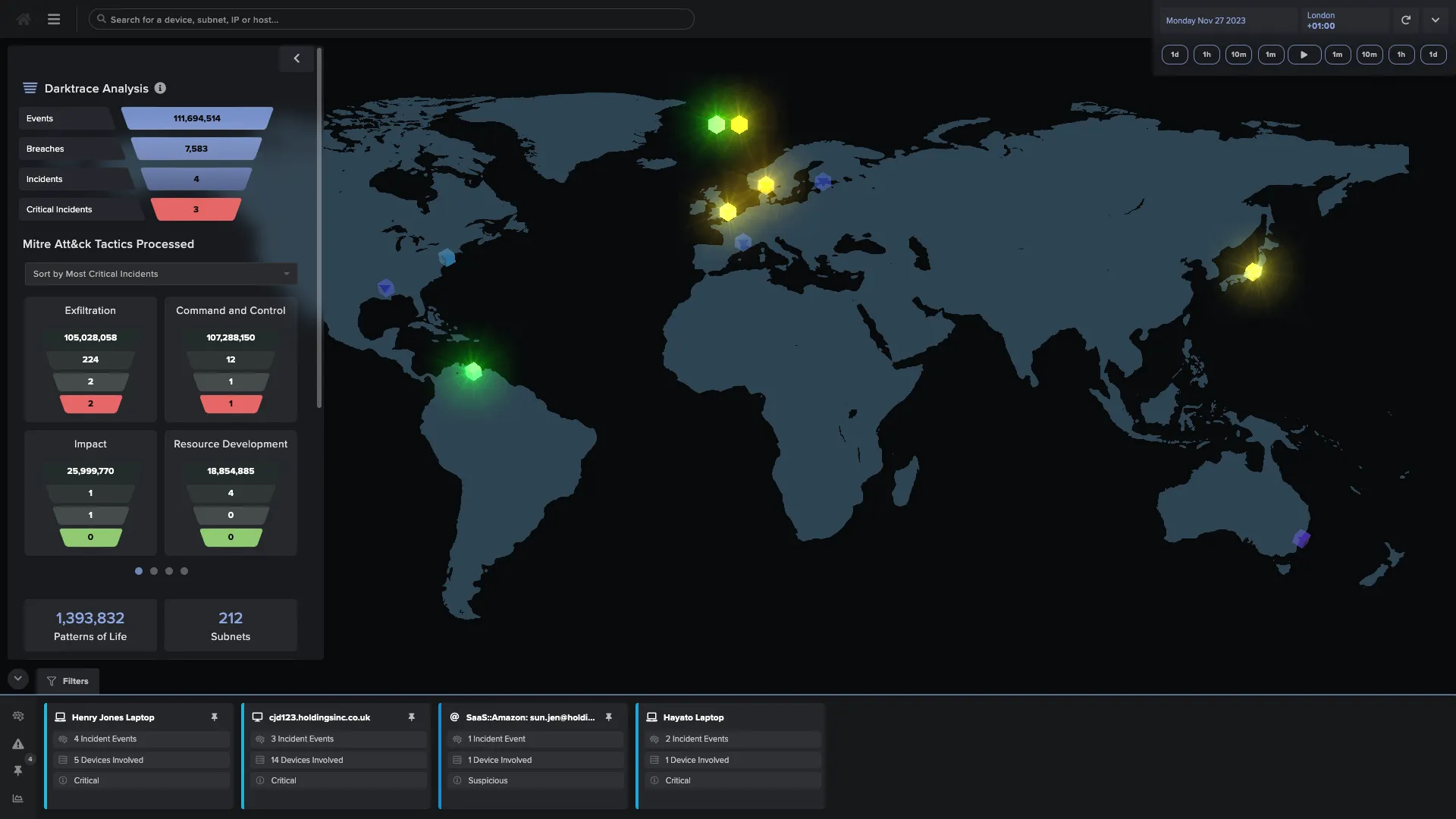
2. Darktrace
Darktrace is an AI-driven cybersecurity platform that combines detection, investigation, and autonomous response. It uses self-learning AI to understand normal behavior across an organization and identify deviations that may indicate threats. This allows it to detect known and unknown attacks.
General features include:
- Self-learning AI modeling: Builds an understanding of normal behavior across users, devices, and systems, enabling detection based on anomalies rather than predefined signatures.
- Continuous adaptation: Updates behavioral models as the organization evolves, maintaining detection accuracy as infrastructure and usage patterns change.
- Comprehensive environment coverage: Provides visibility across network, cloud, email, identity, endpoint, and operational technology environments within a single platform.
- Contextual threat correlation: Connects signals from different systems and applies business context to identify multi-stage threats.
- Third-party integration: Ingests alerts and threat intelligence from external tools to enhance detection and broaden visibility.
Automated response-related features:
- Autonomous real-time response: Executes response actions when threats are detected.
- Behavior-triggered actions: Initiates containment and mitigation based on deviations from normal activity identified by AI models.
- Automated alert investigation: Analyzes and prioritizes alerts automatically, including those from third-party systems.
- Playbook-driven remediation: Applies response workflows guided by predefined and adaptive playbooks.
- Detection of unknown threats: Identifies and responds to attacks that do not match known signatures by focusing on abnormal behavior.
3. Torq HyperSOC

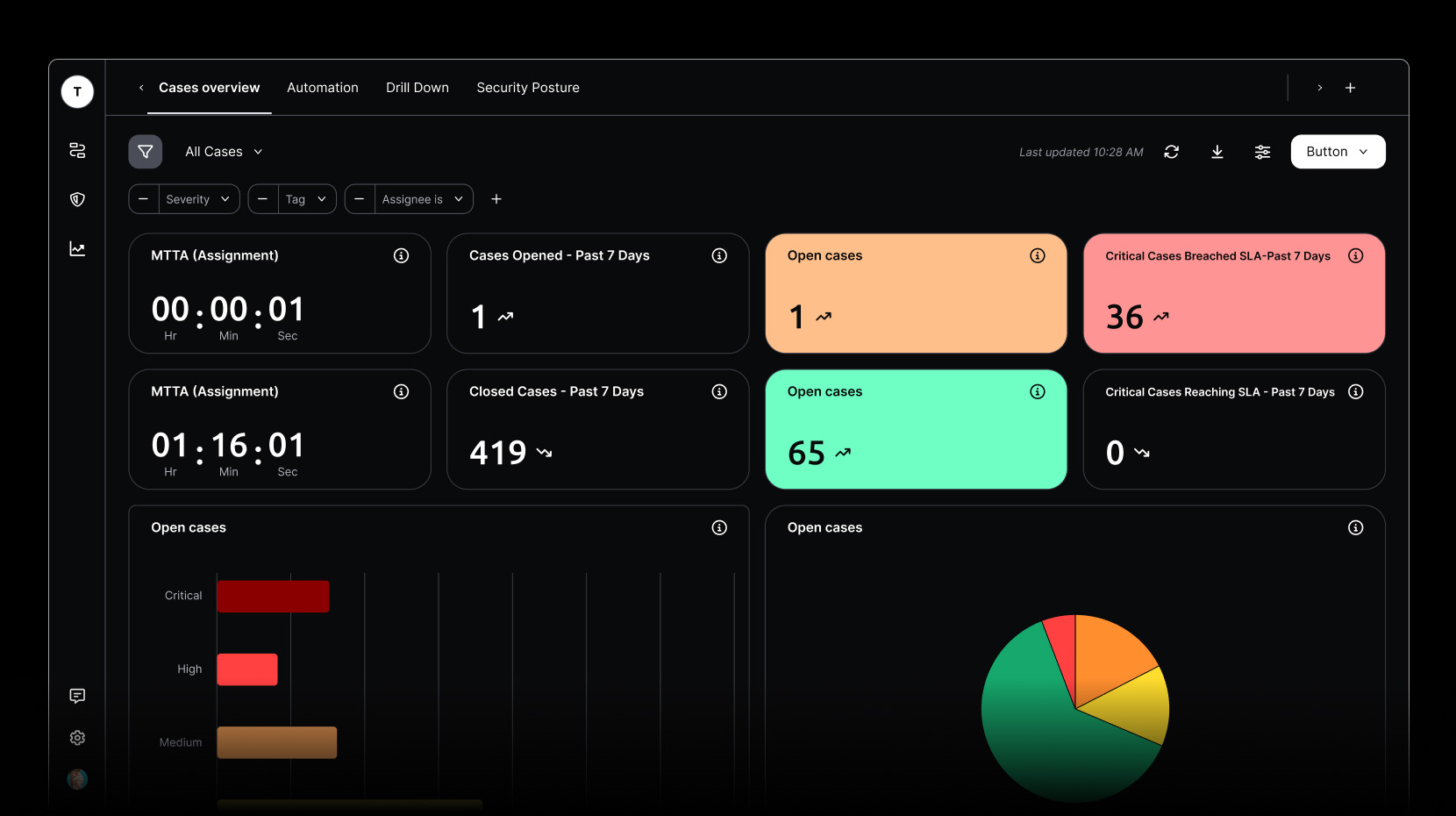
Torq HyperSOC is an AI-driven security operations platform that automates the threat lifecycle, from alert triage to investigation and response. It uses agentic AI and hyperautomation to reduce alert noise, analyze risk context, and take action without constant human input. By deploying autonomous AI agents that handle repetitive tasks, Torq enables security teams to focus on high-priority threats.
General features include:
- Threat lifecycle management: Handles the process from alert ingestion through triage, investigation, and remediation within a single platform.
- Telemetry ingestion and normalization: Collects and standardizes data from across the security stack to create a consistent foundation for analysis.
- Noise reduction and deduplication: Correlates and filters events to eliminate redundant alerts and reduce false positives.
- Contextual risk analysis: Applies threat intelligence and environmental context to distinguish threats from benign activity.
- AI-driven case management: Automatically creates, assigns, and manages cases.
Automated response-related features:
- Autonomous case resolution: Closes over 90% of security cases automatically.
- Agentic response execution: Uses AI agents to carry out containment, coordination, and remediation actions across systems.
- Automated triage decisions: Determines alert severity and validity automatically, filtering out false positives before escalation.
- AI-led investigation: Gathers evidence, builds timelines, and summarizes findings.
- Coordinated response actions: Engages relevant stakeholders and systems during incident response.
MDR Platforms With Built-in Automated Response
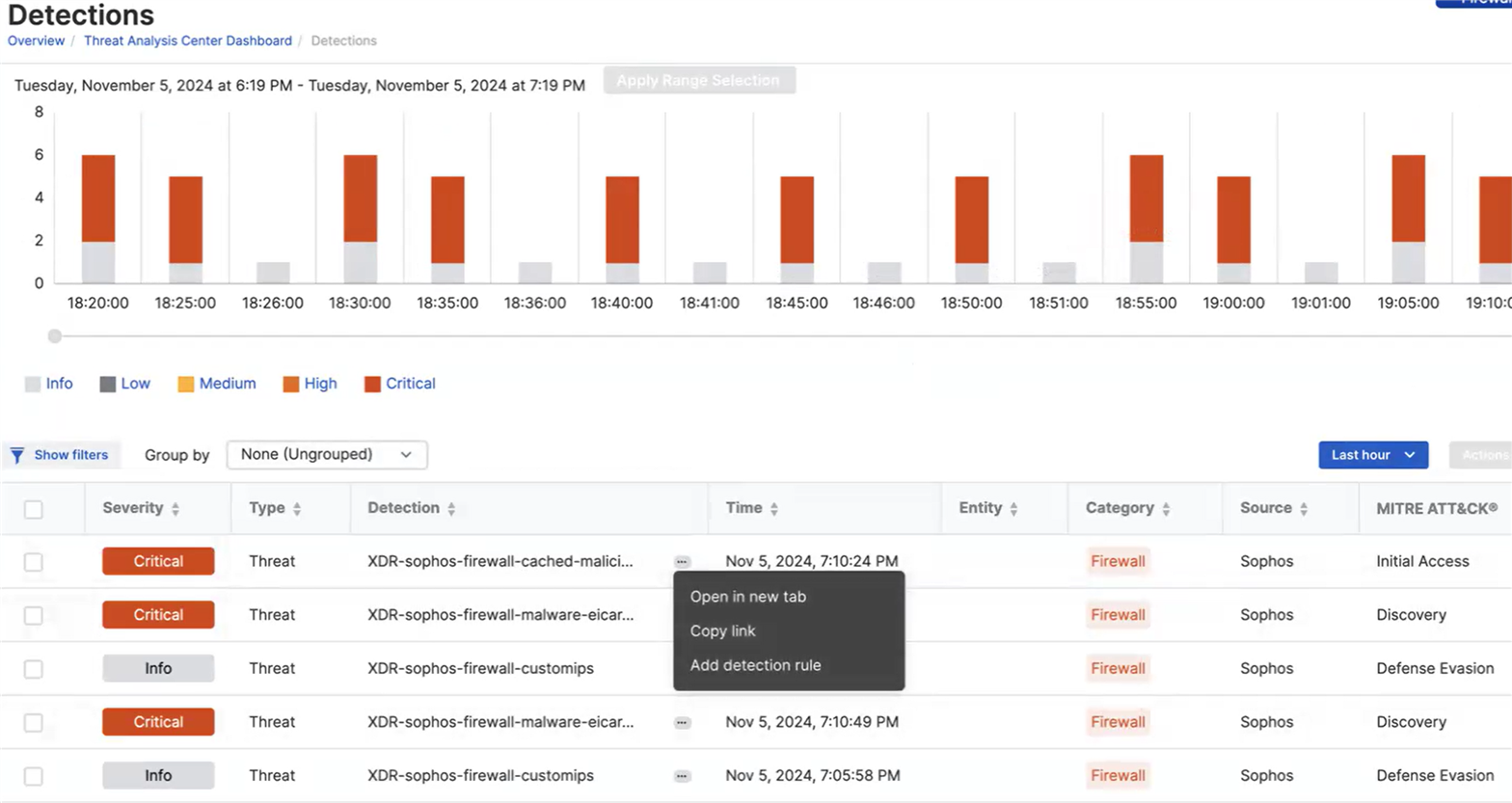
4. Sophos MDR

Sophos MDR is a managed detection and response service that combines AI-driven automation with human expertise to deliver continuous security operations. It uses agentic AI to investigate and respond to threats while human analysts provide oversight. The service handles the incident lifecycle, from detection to remediation, across diverse environments.
General features include:
- 24/7 managed SOC: Provides monitoring, investigation, and response through a global team of security experts supported by AI.
- AI and human collaboration: Combines automation with human decision-making to support accurate outcomes.
- Vendor-agnostic integration: Works across diverse security environments, integrating with over 350 tools across endpoint, network, cloud, identity, email, and applications.
- Threat lifecycle coverage: Handles detection, investigation, response, and remediation.
- Global threat intelligence: Uses data from over 600,000 protected organizations to improve detection and response.
Automated response-related features:
- AI-accelerated response in seconds: Initiates automated response actions within seconds of alert detection.
- Autonomous case resolution: Resolves a portion of incidents end-to-end using AI.
- Human-governed automation: Allows AI to act independently when appropriate, while escalating to human analysts when required.
- End-to-end threat removal: Eliminates threats and returns systems to a secure state.
- Automated investigation workflows: Uses AI to analyze alerts, prioritize risks, and gather context before action.
5. CrowdStrike Falcon Complete MDR

CrowdStrike Falcon Complete MDR is a managed detection and response service that combines AI-driven automation, autonomous agents, and human oversight to stop breaches at scale. Built on the Falcon platform, it provides continuous monitoring, investigation, and remediation across endpoints, identities, and cloud workloads.
General features include:
- Agentic MDR architecture: Combines deterministic automation, adaptive AI agents, and human expertise to deliver coordinated detection and response.
- Expert-led operations: Analysts and threat hunters monitor, investigate, and respond to threats continuously.
- Unified cross-domain visibility: Provides visibility across endpoints, identity systems, cloud workloads, network, email, and third-party data through a single platform.
- Real-time threat intelligence: Uses adversary tradecraft and global threat intelligence to inform detection and response decisions.
- Next-gen SIEM integration: Correlates telemetry across environments to identify multi-stage attacks.
Automated response-related features:
- Deterministic automated actions: Executes predefined response actions using automation logic.
- Adaptive AI agent response: AI agents analyze context and drive investigation and response actions.
- Autonomous threat containment: Initiates containment actions to stop threats early and reduce attack spread.
- Real-time response orchestration: Coordinates response actions across endpoints, identity, and cloud environments.
- Full-cycle remediation automation: Handles system isolation, persistence removal, and recovery to a secure state.
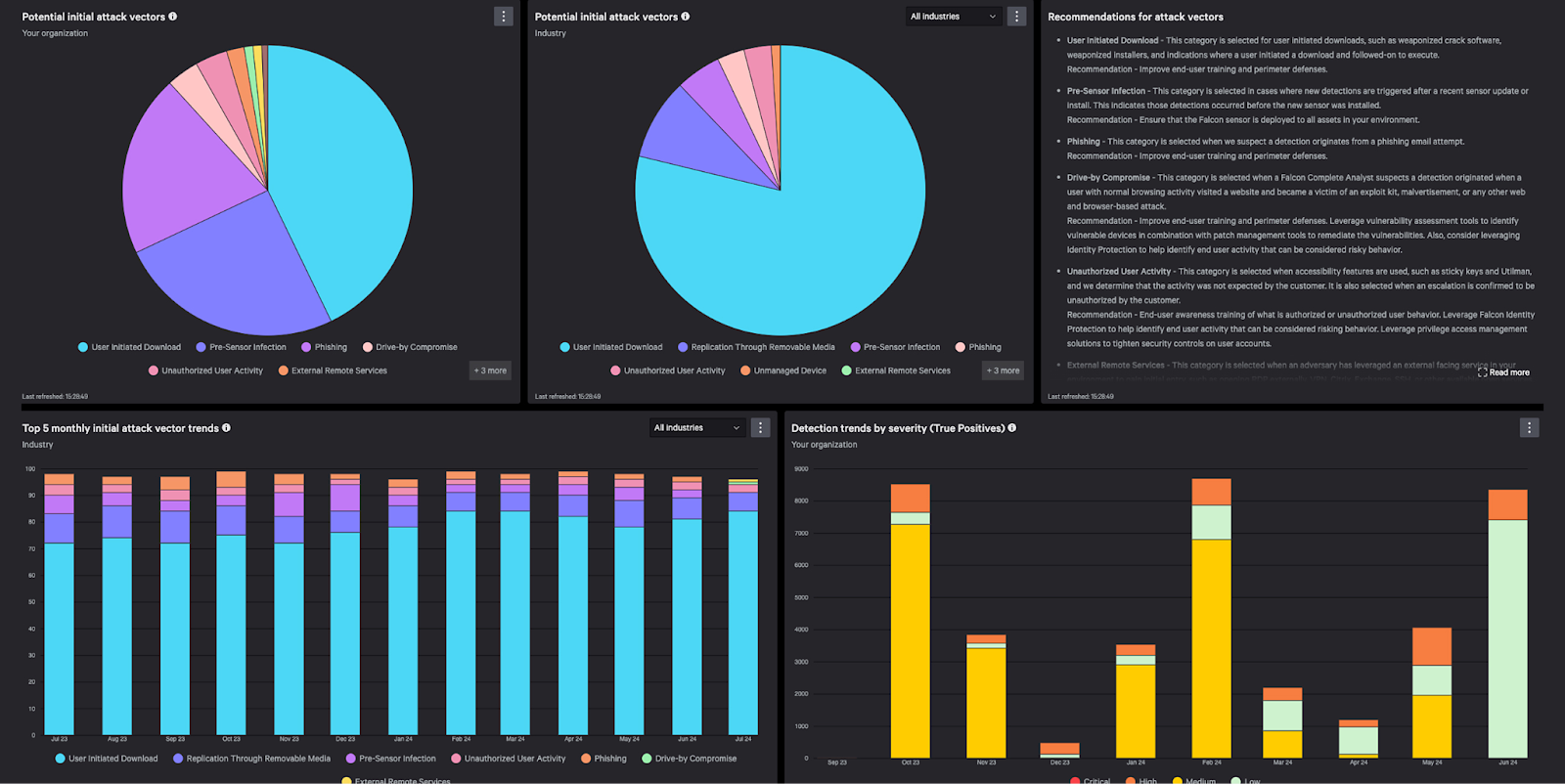
6. SentinelOne Wayfinder MDR

SentinelOne Wayfinder MDR is a managed detection and response service that combines AI-powered detection, curated threat intelligence, and human oversight to deliver continuous protection across the enterprise. It uses the Singularity Platform along with SentinelOne and Google Threat Intelligence to detect, investigate, and respond to threats early in the attack lifecycle.
General features include:
- Managed SOC coverage: Provides continuous monitoring, detection, investigation, and response across endpoints, cloud, identity, and third-party telemetry.
- Integrated threat intelligence: Uses curated intelligence from SentinelOne and Google Threat Intelligence to improve detection accuracy and timeliness.
- AI-powered security operations: Uses Purple AI and Singularity Hyperautomation to support security workflows.
- Unified platform delivery: Operates within the Singularity Platform, reducing fragmented tools.
- Proactive threat hunting: Conducts hypothesis-driven and TTP-based threat hunting to identify hidden or early-stage attacks.
Automated response-related features:
- AI-driven detection and response: Uses Purple AI to detect threats and initiate response actions based on real-time analysis.
- Hyperautomation workflows: Automates investigation and response processes across the environment using Singularity Hyperautomation.
- Machine-speed threat containment: Executes rapid containment and mitigation actions when threats are detected.
- Early threat detection in kill chain: Identifies and responds to attacks early to reduce escalation or lateral movement.
- Risk-tailored response actions: Applies response strategies based on threat context and severity, guided by AI and experts.
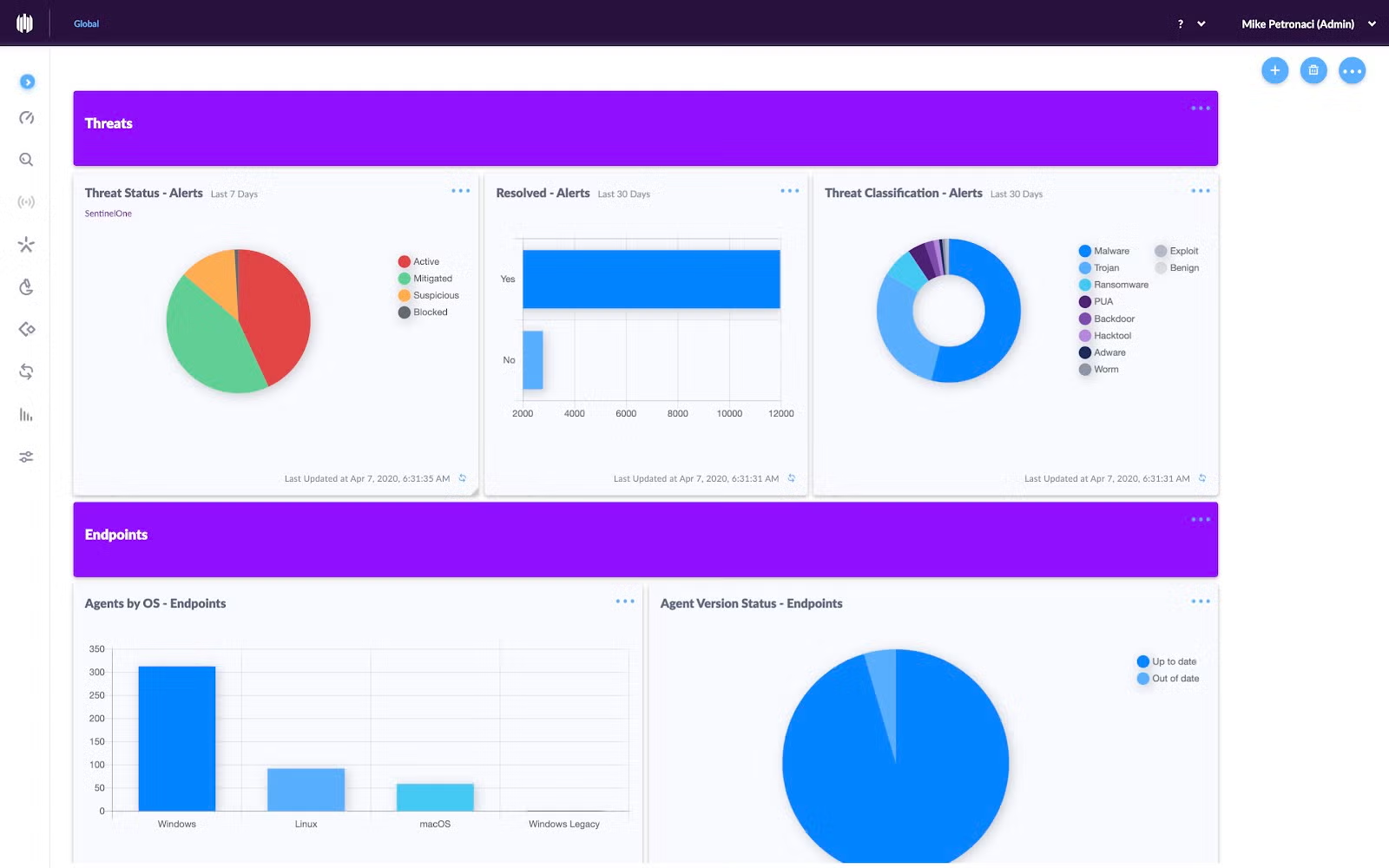
Source: SentinelOne
How to Choose an Automated MDR Service
When selecting an automated MDR service , focus on how automation is implemented, where human oversight is applied, whether every alert is actually investigated, and how the provider integrates with existing tools:
- 24/7 alert triage and investigation: Confirm that the MDR service provides continuous, around-the-clock monitoring, triage, and investigation of all alerts. In modern security environments, alert volumes can be extremely high, and services that only investigate a subset of alerts may leave meaningful risks unexamined.
- Depth of automated response capabilities: Evaluate what actions can be executed automatically, such as endpoint isolation, identity controls, and network blocking. Check whether these actions are limited to predefined scripts or adapt based on context.
- Human oversight and escalation model: Fully autonomous response can be risky in complex environments. Look for a balance where automation handles speed while analysts validate high-impact decisions and escalate confirmed threats appropriately.
- Detection engineering informed by investigation outcomes: Strong MDR providers should continuously improve detections based on the findings of triage and investigation verdicts. Each false positive, true positive, benign activity, or missed detection should feed back into detection engineering to improve accuracy and reduce future noise.
- Integration with existing security stack: Ensure the MDR service integrates with current tools, including EDR, SIEM, IAM, and cloud platforms. Poor integration leads to blind spots and limited response coverage.
- Transparency of response actions: The provider should give visibility into what actions were taken, why they were triggered, and their impact.
- Customization and playbook flexibility: Check whether response playbooks can be tailored to business needs.
- Cost structure and operational impact: Understand how pricing is calculated. Prefer scalable pricing tied to the number of monitored endpoints rather than the volume of alerts. Alert-based pricing can become prohibitively expensive as alert volumes grow, especially if the goal is to investigate every alert rather than only a sampled or filtered subset.
Learn more in our detailed guide to how to choose MDR services
Conclusion
Automated response in MDR shifts incident response from manual, reactive processes to faster, more consistent containment and remediation. The key value lies in reducing attacker dwell time while maintaining control over how and when actions are executed. Organizations should focus on balancing automation speed with human oversight, ensuring responses are accurate and aligned with business risk.